

Partnering with AGRA on Food System-Inspired Inclusive Agricultural Transformation
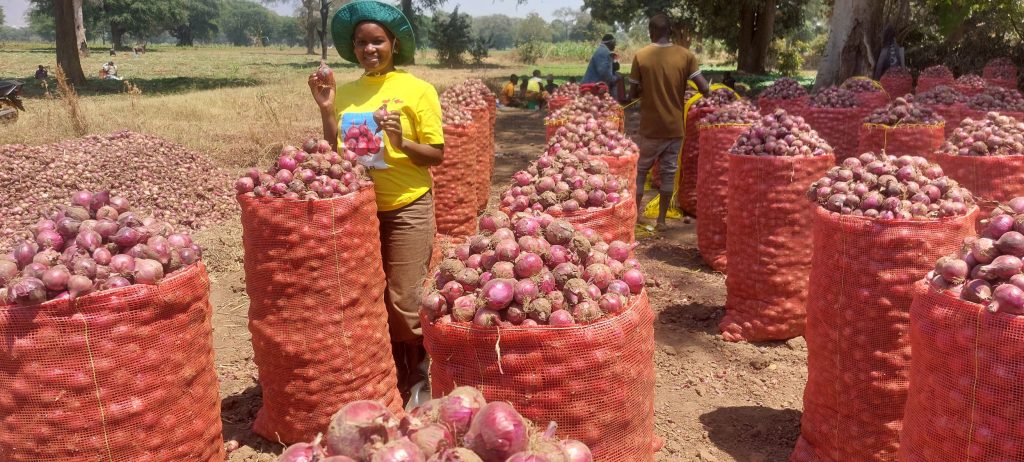
MOSHI, TANZANIA – East-West Seed Knowledge Transfer is excited to announce a 2-year initiative with AGRA that prioritizes youth in agriculture while invigorating the value chains of five key crops in Tanzania.
Called Promoting Sustainable Farming Practices to Accelerate Adoption of Agriculture Innovation in the Horticulture Value Chain, this project aims to equip 30,000 young women and men with knowledge and practical experience in climate-smart and sustainable farming practices. At least 5,000 of these youth are expected to use their training to start small agribusinesses, taking on roles such as seedling producers, aggregators, or agro-input dealers.
The Challenge
Potatoes, onions, tomatoes, bananas, and avocados are important sources of nutrition and income for many families in Tanzania. However, production of these crops faces critical challenges. Limited availability and accessibility of high-quality, market-aligned planting materials (seeds and seedlings) leave plants more vulnerable to pests and diseases and reduce product marketability.
In addition, insufficient extension services result in low awareness of yield-enhancing technologies and limited adoption of sustainable farming practices, including soil health interventions, water management techniques, and effective management of pests and diseases and post-harvest losses.
Project Partners & Strategy
Implemented by a consortium consisting of lead partner East-West Seed Knowledge Transfer (EWS-KT), Avocado Society of Tanzania (ASTA), Crop Bioscience Solutions, Farm For the Future Tanzania Ltd (FFF), and Maua Mazuri, this project aims to establish a sustainable, high-quality seedling supply chain system for avocados, potatoes, onions, tomatoes, and bananas and to advance adoption of climate-resilient and sustainable farming practices among youth, especially young women.
The project’s comprehensive strategy includes increasing the availability of quality planting materials; strengthening extension services, primarily through village-based advisors; improving access to digitalized context-specific extension content, climate information, and services; enhancing access to markets; and advancing climate-resilient and sustainable farming practices.
Within this framework, EWS-KT will concentrate on the vegetable value chain, with a focus on onion and tomato production. Maua Mazuri and Crop Bioscience Solutions will concentrate on the value chain for bananas, FFF on the potato value chain, and ASTA on the avocado value chain.
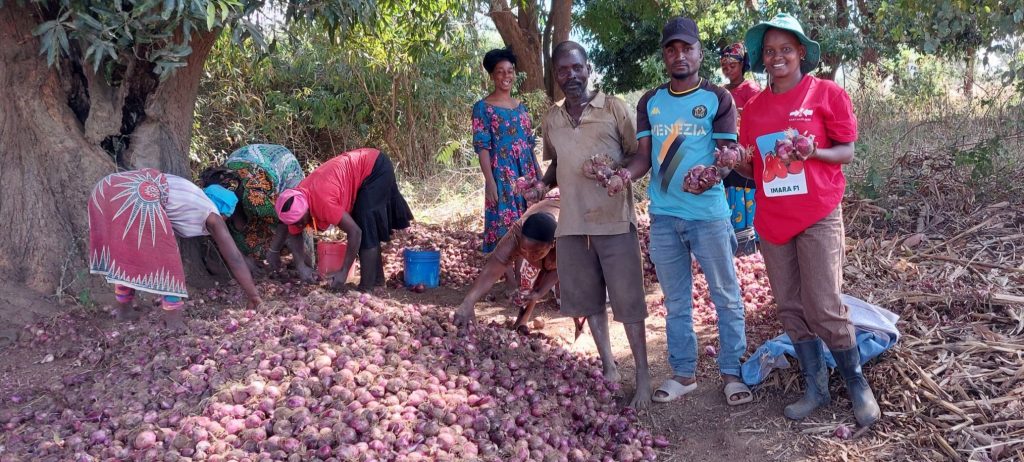
As part of the project’s sustainability plan, 300 village-based advisors will be identified and trained to continue supporting fellow farmers in the horticulture sector in the Southern Highlands, Northern Highlands, and Western Highlands. In addition, 200 nursery operators, 50 extension workers, and 20 community development workers will be trained to produce quality seedlings.
The project is co-funded by AGRA and EWS-KT. An African-led organization, AGRA aims to catalyze a food system-inspired inclusive agricultural transformation across Africa, to reduce hunger, improve nutrition, and adapt to climate change. AGRA advances uniquely African solutions to sustainably raise farmers’ productivity and connect them to a growing marketplace. Together with its partners—including researchers, donors, African governments, the private sector, and civil society—AGRA seeks to create an environment where Africa sustainably feeds itself.
Through the project activities, the consortium partners aim to reduce pest and disease prevalence, enhance product consistency to meet market demands, and ultimately open access to higher-value markets for young smallholder farmers in Tanzania.
For more information, please contact East-West Seed Knowledge Transfer Foundation.