
Embarking on a New Phase in Ghana
Since the beginning of our operations in Ghana in late 2022, the Embassy of the Kingdom of the Netherlands in Accra has been standing beside us. Our inaugural project to empower smallholder farmers, Transforming Vegetable Farming as a Business, was co-funded by the Embassy. When we opened our first learning farm, the Netherlands Ambassador to Ghana cut the ribbon.
We are especially pleased to announce that the Netherlands Embassy will continue to support our work in Ghana as we expand operations over the next 4 years.
Scaling Up
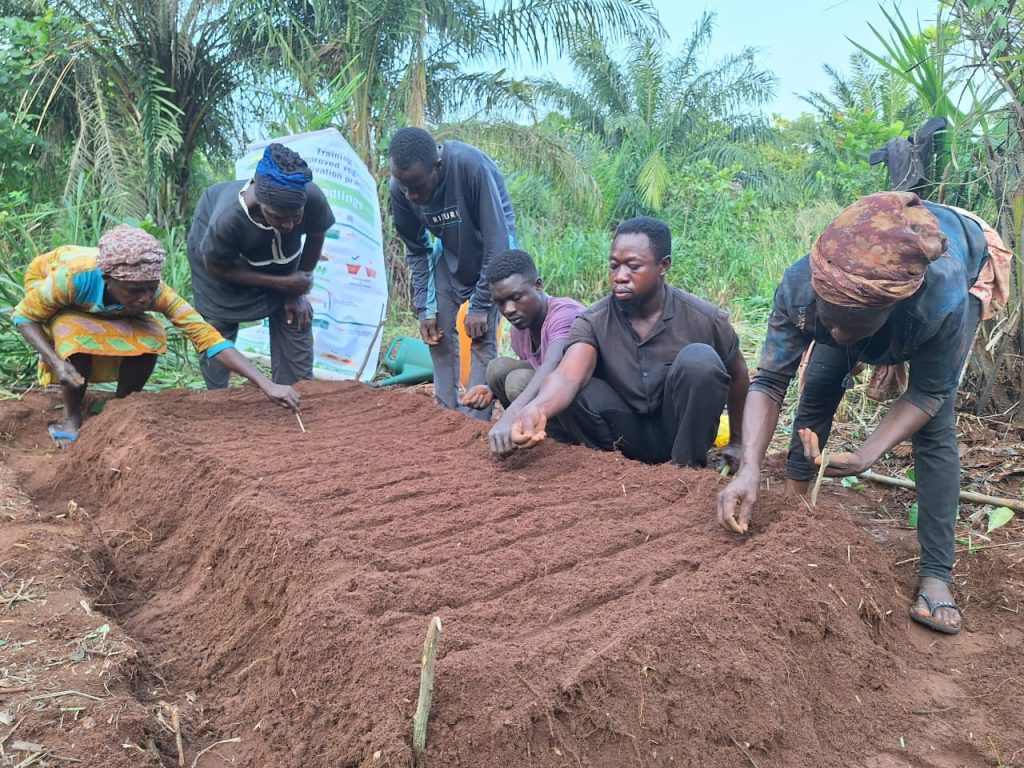
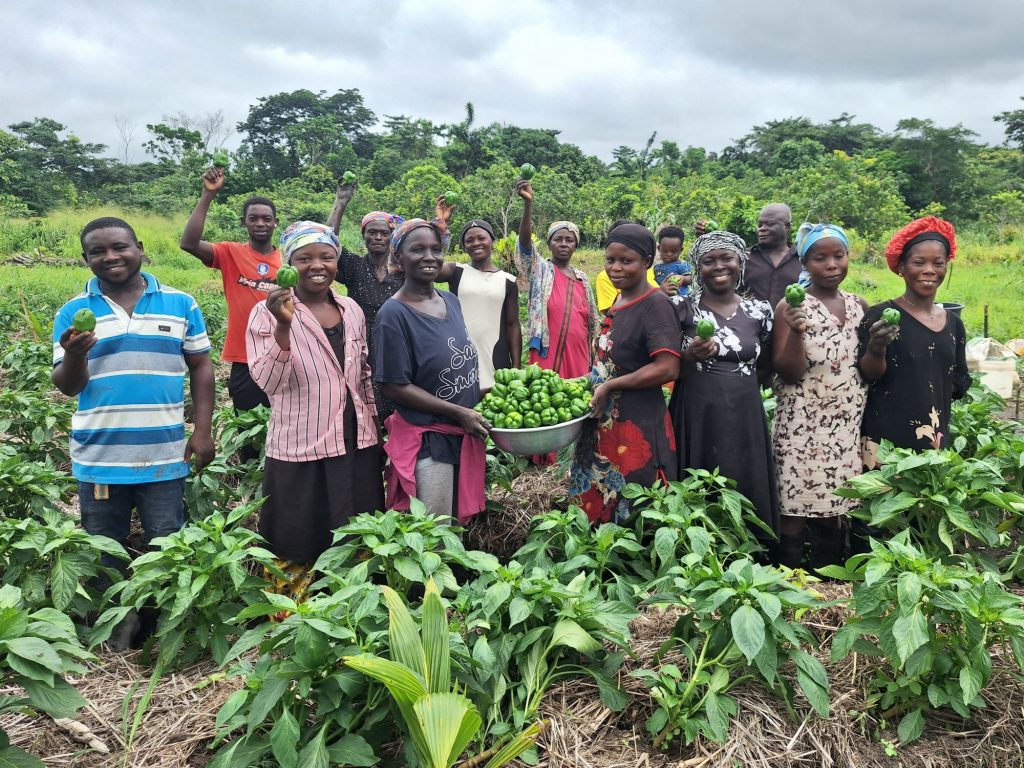
During the initial phase of the Transforming Vegetable Farming as a Business project, we provided 7,733 smallholder farmers with training in sustainable agricultural practices and business planning in the Ahafo, Bono, and Bono East regions.
The 4-year-long second phase of the project will reach an additional 39,520 farmers and extend training activities to the Ashanti and Upper East regions, enabling more farmers to increase their yields and profits through climate-smart vegetable production.
In addition to working with vegetable farmers, we will strategically boost cocoa farmers’ livelihoods through diversification into vegetable production. At least 4,680 of the total farmers trained during phase 2 will be cocoa farmers.
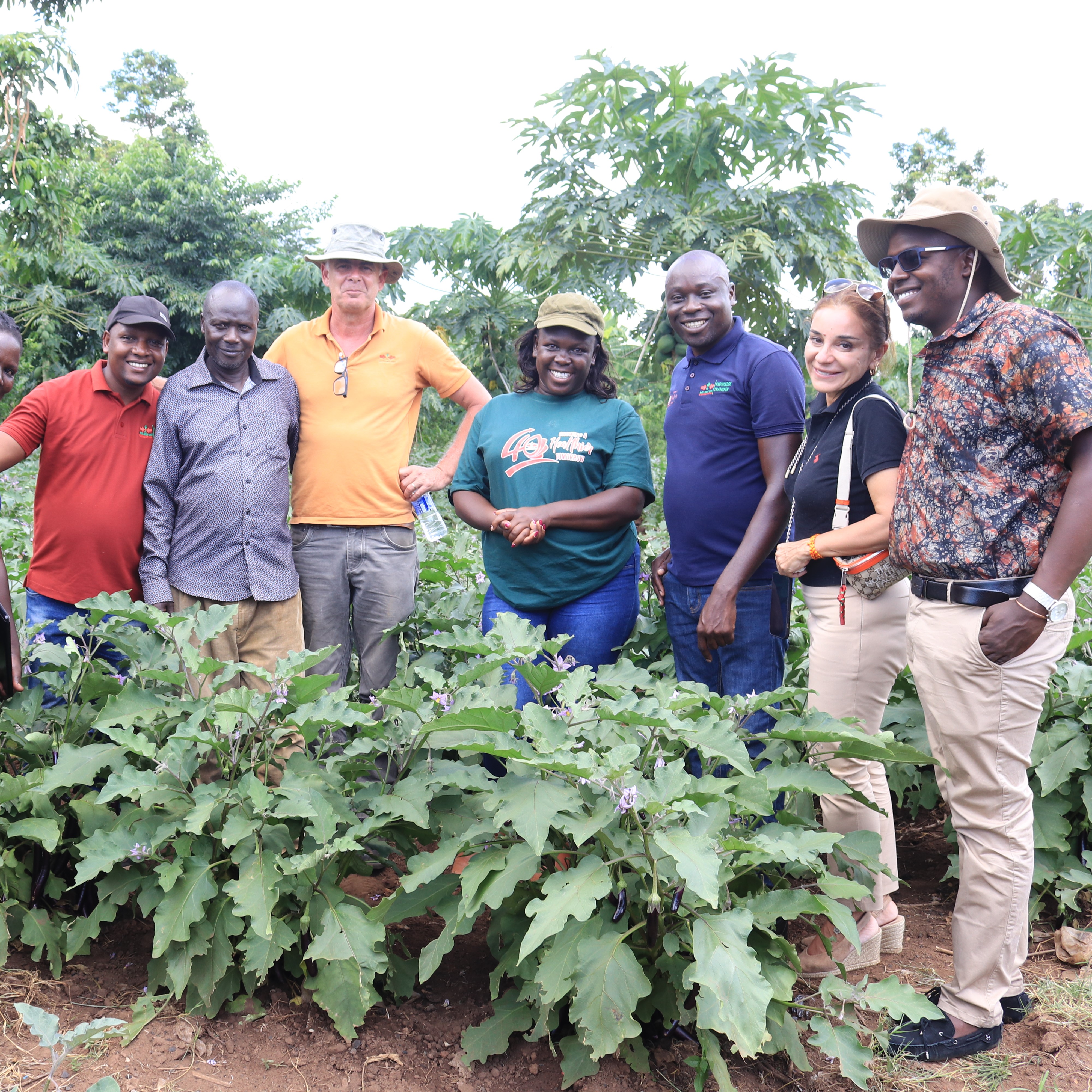
To raise the visibility of good agricultural practices and provide a training ground for extension workers, sector professionals, and farmers, we will establish 3 learning farms in different areas of the country—Duayaw Nkwanta, Accra, and the northern region—during phase 2. The first of these learning farms, located in Duayaw Nkwanta, opened on 22 July 2025 during a Mega Field Day attended by more than 300 farmers.
Our learning farms, which showcase several crops and a variety of techniques, complement our farmer-managed demonstration plots, which serve as community-based training hubs for neighboring farmers. We will also continue to share technical knowledge through social media, radio, our GrowHow online learning platform, and mobile learning apps like VeggieTap to reach even more farmers.
Many farmers rely on agro-input retailers for advice, so we will work closely with 60 agro-input retailers to increase their capacity to share technical farming messages with their customers, especially regarding responsible use of pesticides and integrated pest management (IPM) products like resistant vegetable varieties and biological agents. We will also continue to improve access to markets by fostering connections between farmers and traders.
Finally, under this project we will seek to amplify our impact by collaborating with complementary organizations in areas such as training of trainers and sector professionals, farmer certification, access to finance, and distribution of weather data to farmers.
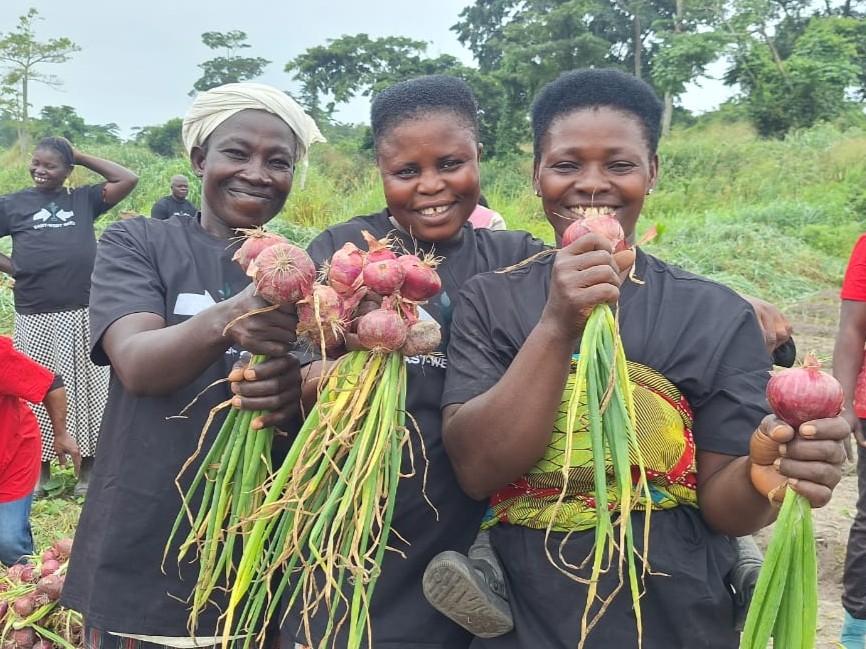
As we embark on this next phase of our vegetable farming journey in Ghana, we are grateful for the trust that the Embassy of the Kingdom of the Netherlands has shown in our work, and we are excited about the transformation we can bring to smallholder farmers and the vegetable sector over the next several years.
To learn more about our achievements during the initial phase of the Transforming Vegetable Farming as a Business project, see our recent blog post.