
Netherlands Enterprise Agency (RVO) Visits Nigeria
By Elijah Mwashayenyi, EWS-KT Head of Knowledge Transfer for Africa
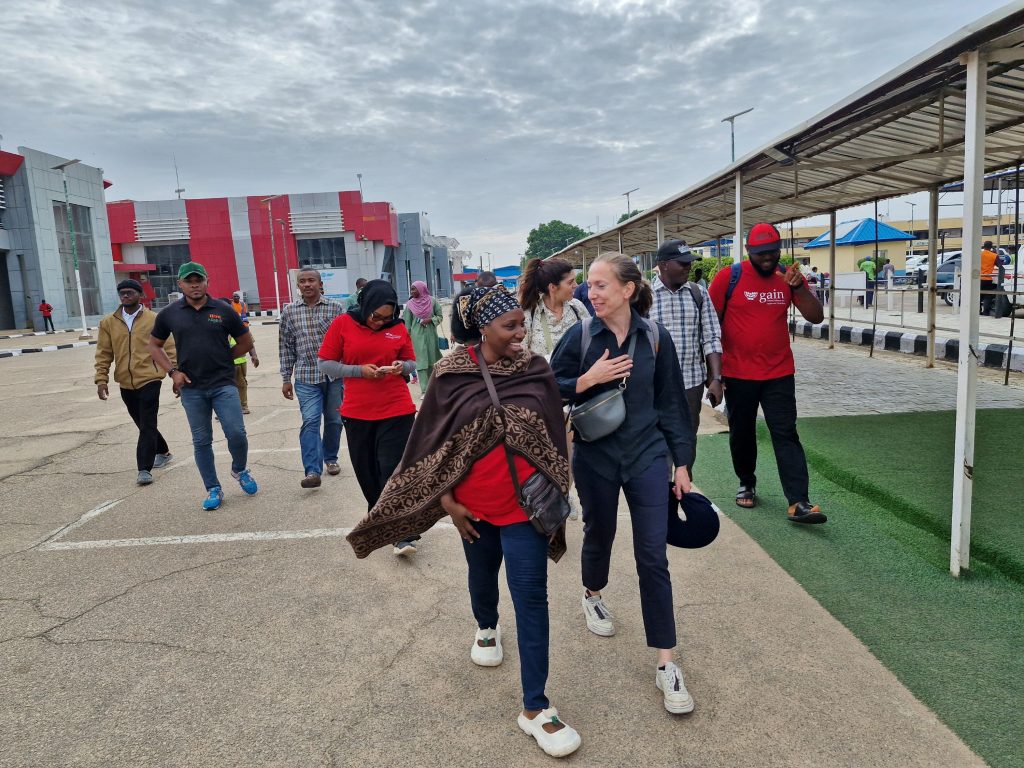
It is not every day that the Netherlands Enterprise Agency (RVO) comes to visit our team and work in Nigeria. So it was with much excitement that for 9 days in July we hosted Eline Minneboo, Senior Project Advisor at RVO, for the first time since we began to implement two RVO-supported projects that have been at the forefront of transforming the lives of smallholder farmers in northern Nigeria.
One Trip; Two Goals
Eline’s visit came at the end of one project supported by RVO and at the early stages of another. The visit therefore had two purposes:
- To showcase the impact of the Transforming Nigeria’s Vegetable Markets project (2019-2024), which ended last December. This project, funded under RVO’s SDGP initiative, was implemented by partners EWS-KT, Kaduna State Ministry of Agriculture, Solidaridad, Wageningen University & Research (WUR), and Ahmadu Bello University. The project had a goal of 136,200 smallholder farmers but reached over 208,600.
- To witness the implementation of the ongoing project dubbed DELIVER Nigeria (2024-2027), which just completed its first year. The project has a target of 50,000 smallholder farmers (25,000 previously trained under the SDGP project and 25,000 new farmers) and builds on the SDGP project by incorporating nutrition and social and financial inclusion, in addition to capacity building of smallholder farmers in vegetable production. DELIVER Nigeria is implemented by partners Global Alliance for Improved Nutrition (GAIN), EWS-KT, and WUR.
A Team Effort
Hosting Eline in Nigeria were representatives from all six project partners:
- EWS-KT: Executive Director Stuart Morris, Head of Knowledge Transfer for Africa Elijah Mwashayenyi, Knowledge Transfer Manager for Nigeria Ruth Ardzard, and DELIVER Nigeria Project Manager Usman Munkaila Bara’u
- GAIN: Deputy Country Director Dr. Abass Yusuf, DELIVER Nigeria Project Manager Martin Tajan Musa, and Development Office Junior Associate Beatriz Neves
- WUR: Senior Trainer Diep Bich Phan
- Solidaridad: Senior Program Officer Ernest Ita
- Kaduna State Ministry of Agriculture: Kaduna Agricultural Development Agency General Manager Muhammad Rili
- Ahmadu Bello University: Professor Uthman Lucky Arunah
Seeing Firsthand the Impact of the SDGP Project
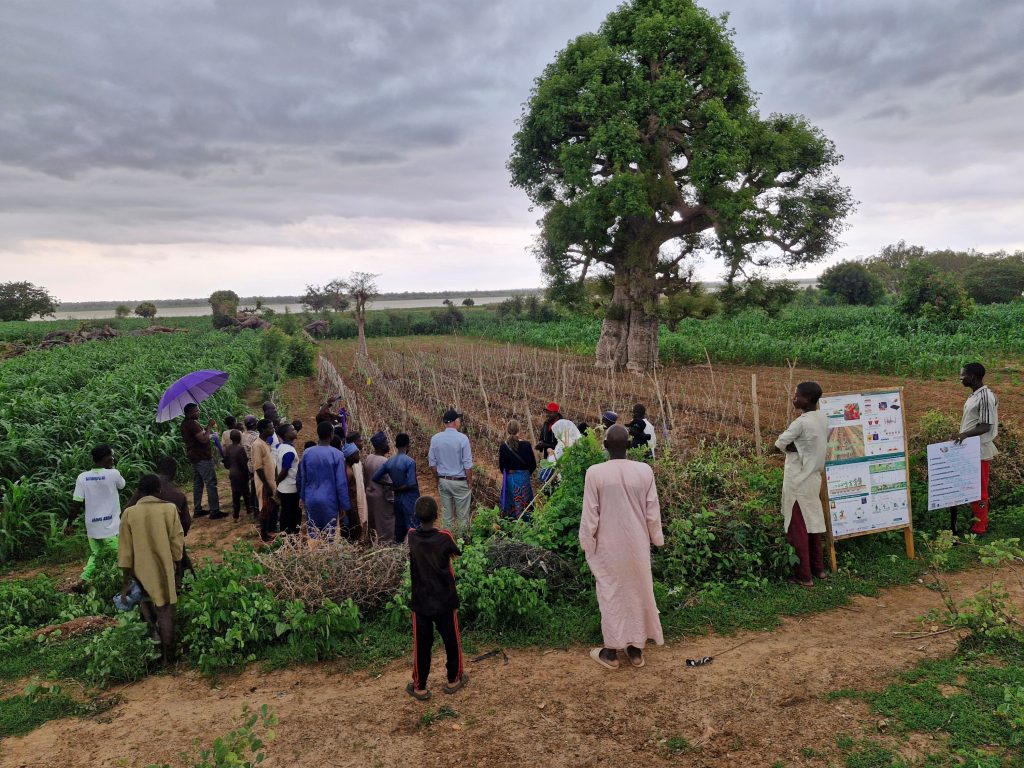
The litmus test for our interventions is going back to communities we trained a few years ago and seeing what is happening. It was heartening to witness the enduring use of improved farming techniques long after the training ended. A few examples are shown below.
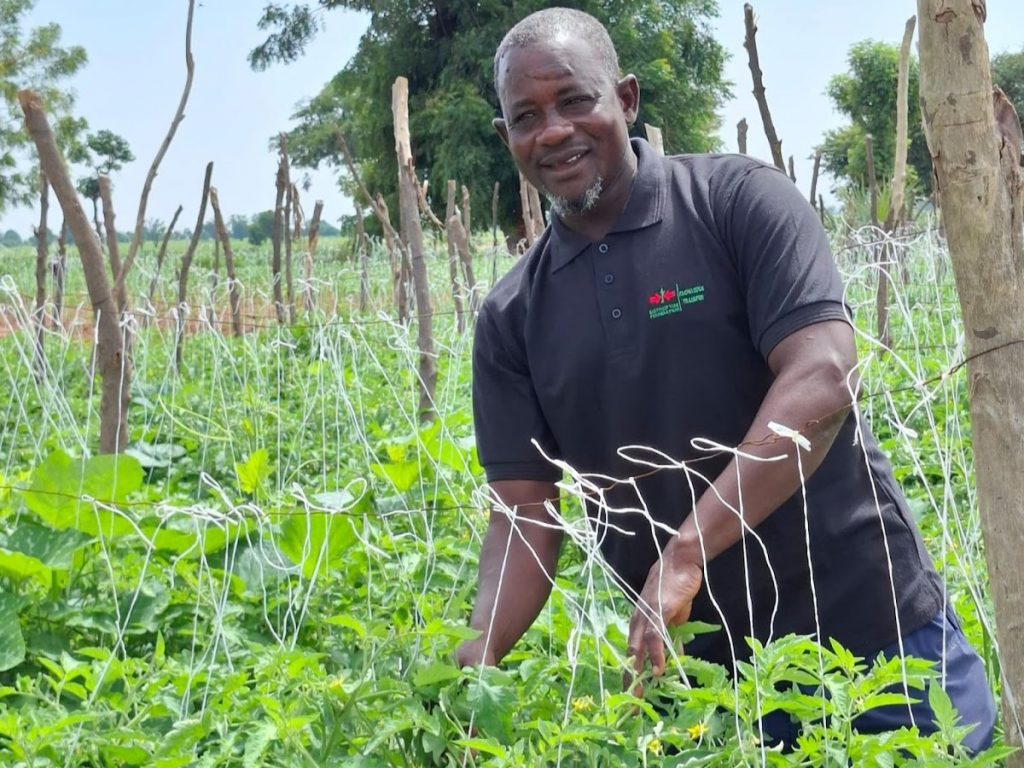
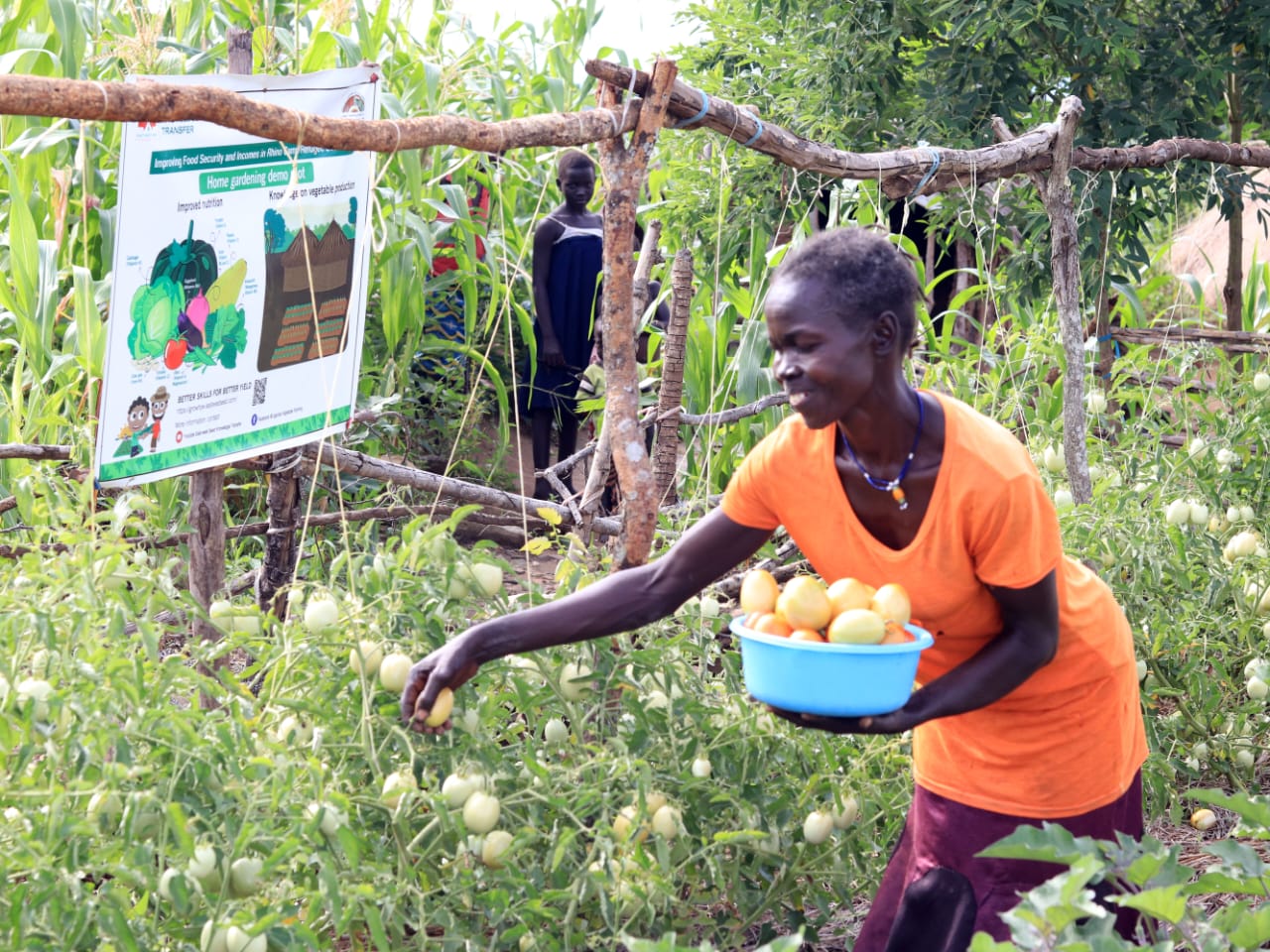
Jamilu, who lives in Imawa, Kura LGA, Kano state, is one of nearly 69,800 farmers trained directly by EWS-KT under the SDGP project. A key farmer with the SDGP project, Jamilu now proudly serves as a Community Field Trainer with the DELIVER Nigeria project. On his own land, he intercrops tomato with pumpkin.
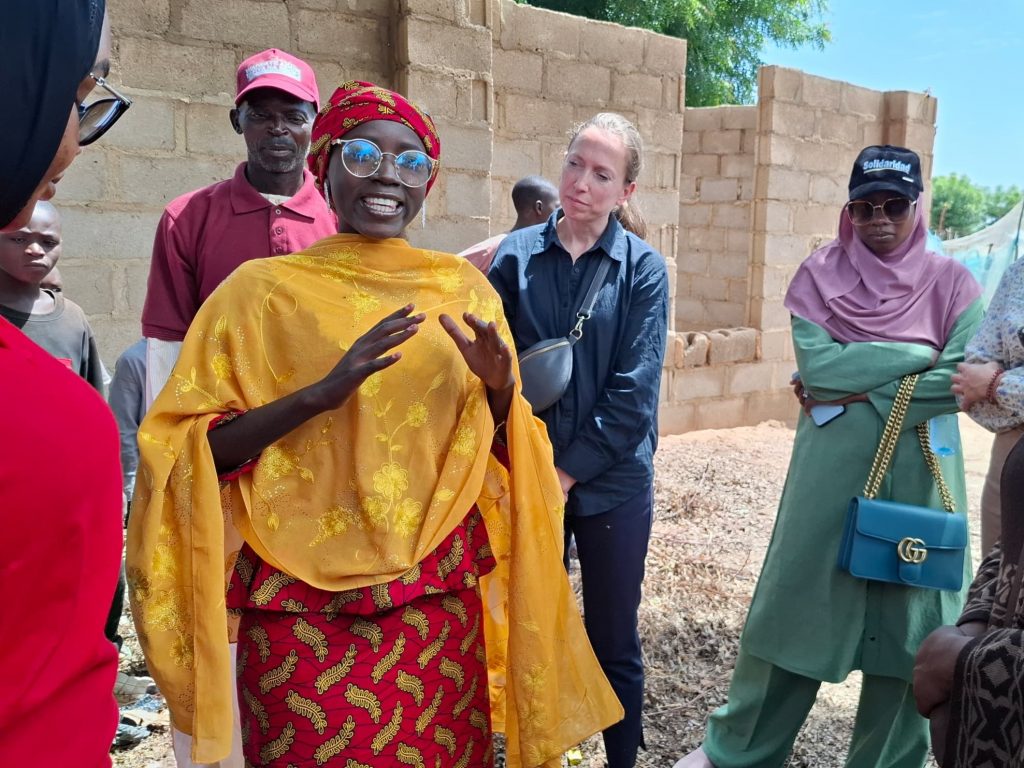
Representing Alheri Mata (Blessed Women)—a women’s savings and loan association facilitated by Solidaridad—Kaulat Ayuba shared a story of courage and transformation. Kaulat was a Community Facilitator under the SDGP project.
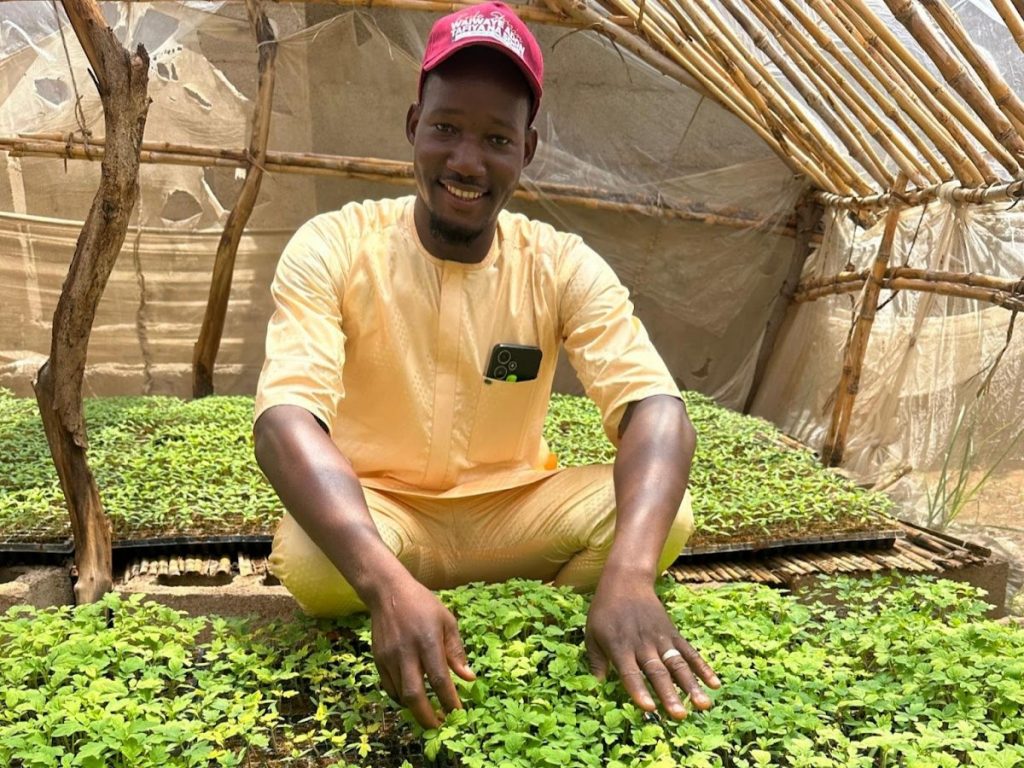
Young farmer Bashir Abdu embraced modern farming through the SDGP project and turned his life around. Today he is a renowned seedling raiser, agro-input dealer, and Community Field Trainer who is making giant strides in his community and beyond. The youth in his village no longer migrate to the south of Nigeria to look for work, as vegetable production and marketing are now sustaining them.
SDGP Outreach
We also had an opportunity to share with Eline the outputs from the project. In most of the indicators, including the number of farmers reached, the project partners overdelivered. EWS-KT directly trained nearly 69,800 farmers, compared to a target of 46,200.
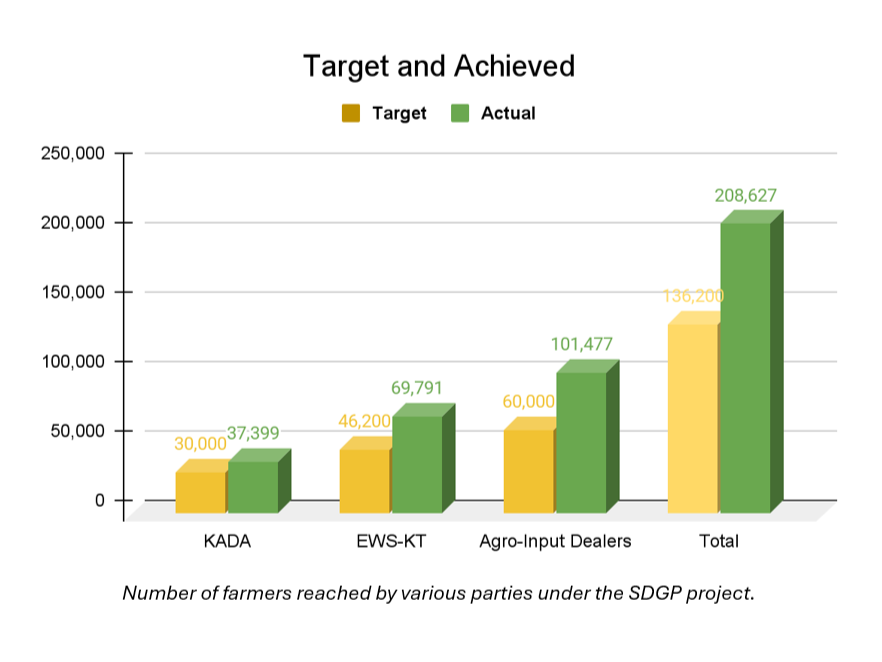
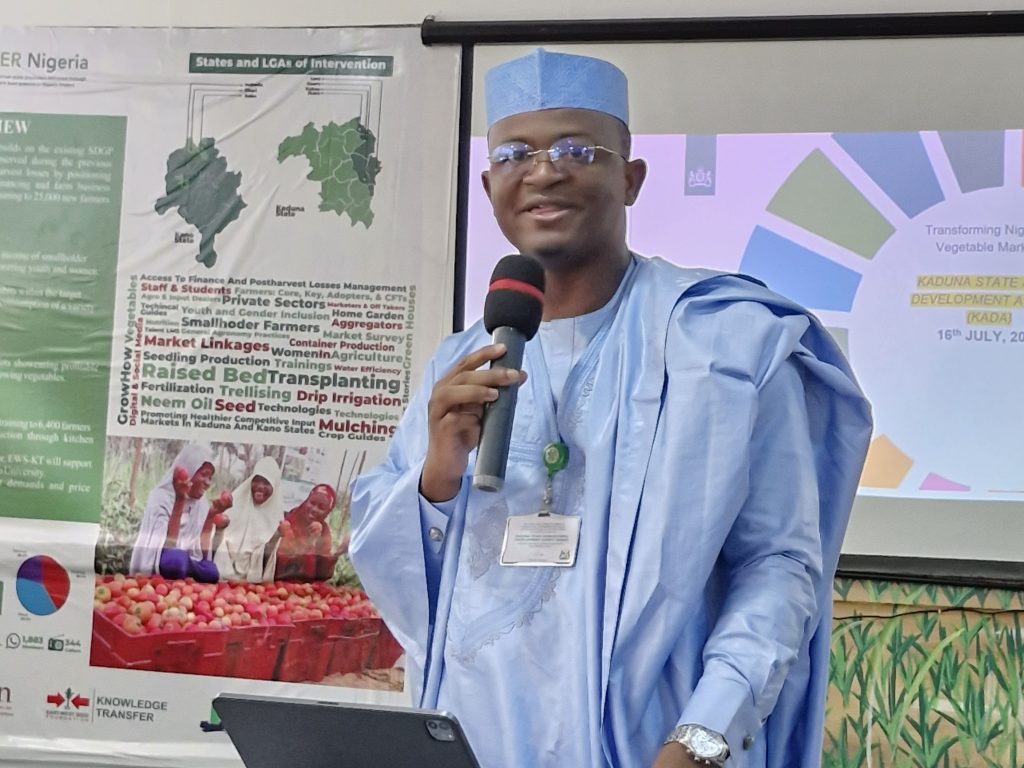
Muhammad Rili, General Manager of Kaduna Agricultural Development Agency (KADA), stressed the importance of the SDGP project to the Ministry of Agriculture. He explained that 51 KADA extension staff were trained under the project, and that they went on to reach over 37,000 smallholder farmers.
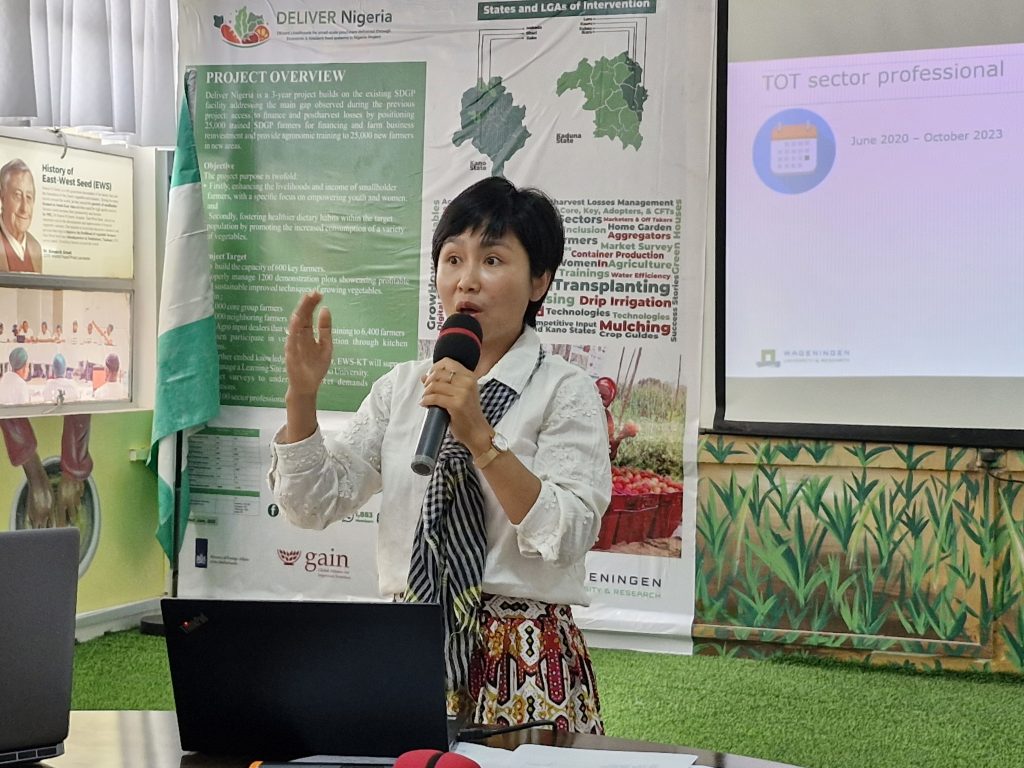
WUR Senior Trainer Diep Bich Phan spoke about the training-of-trainers component of the project, which trained 142 sector professionals in all, including the 51 KADA extension staff.
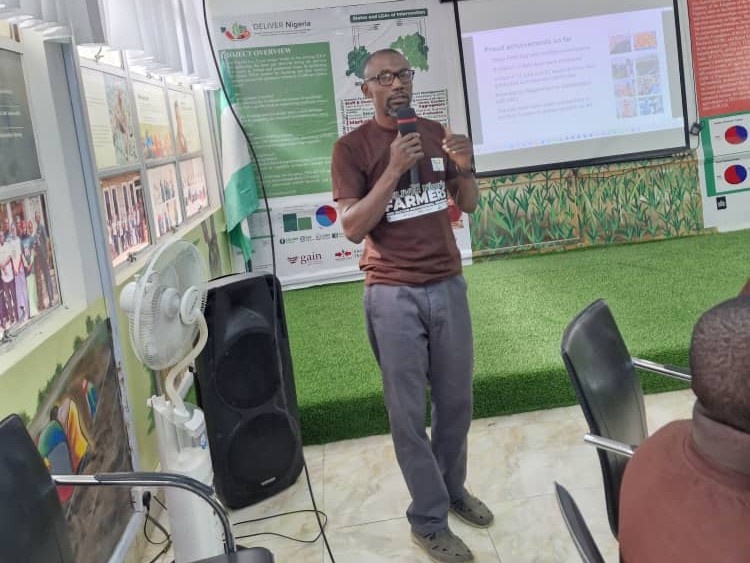
Professor Uthman Lucky Arunah of Ahmadu Bello University presented on the institutionalization of knowledge in the project.
DELIVER Nigeria in Action
The DELIVER Nigeria project began in July 2024, overlapping with SDGP for 6 months and building on the earlier project.
One year later, capacity building of smallholder farmers is in full swing in new communities. Farmer-run demonstration plots are into their second crop cycle, and farmers are beginning to talk about the importance of quality seeds and good agricultural practices, as the positive impacts of these approaches are starting to emerge.
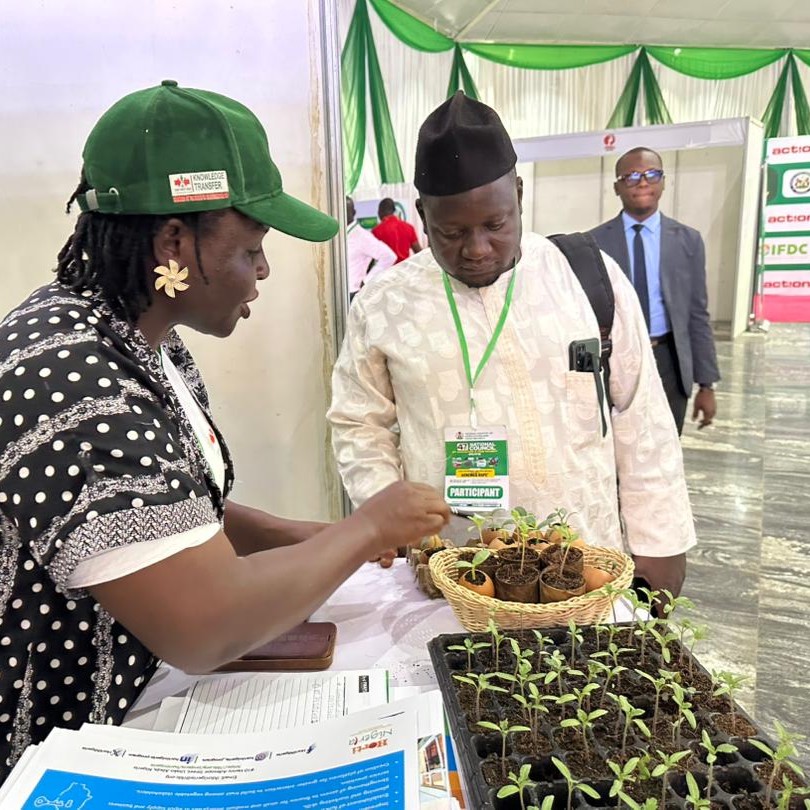
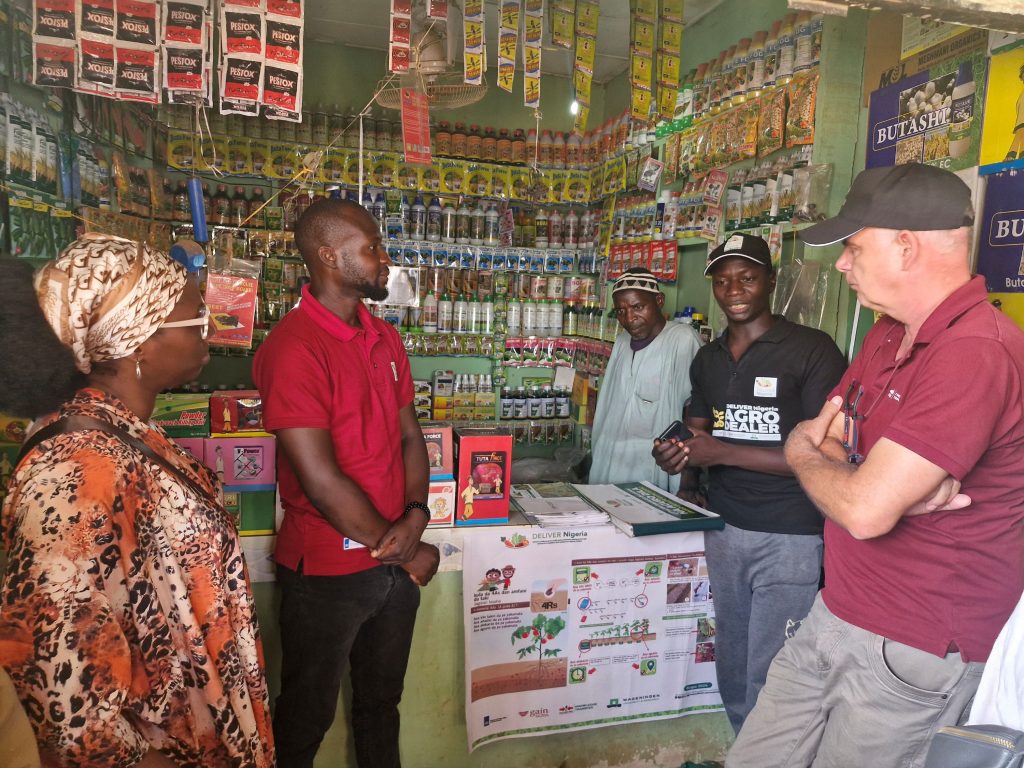
Training of agro-input suppliers under the DELIVER Nigeria project is also beginning to yield results, with these entrepreneurs gaining the right knowledge to accurately advise farmers about suitable products and appropriate and responsible use of fertilizers and chemicals. Agro-input shops also serve as distribution points for DELIVER Nigeria crop guides and technical guides.
One agro-input dealer we visited, Umar Abubakar, told us that he has almost doubled his knowledge through training by EWS-KT and that he now offers higher-quality advice to farmers.
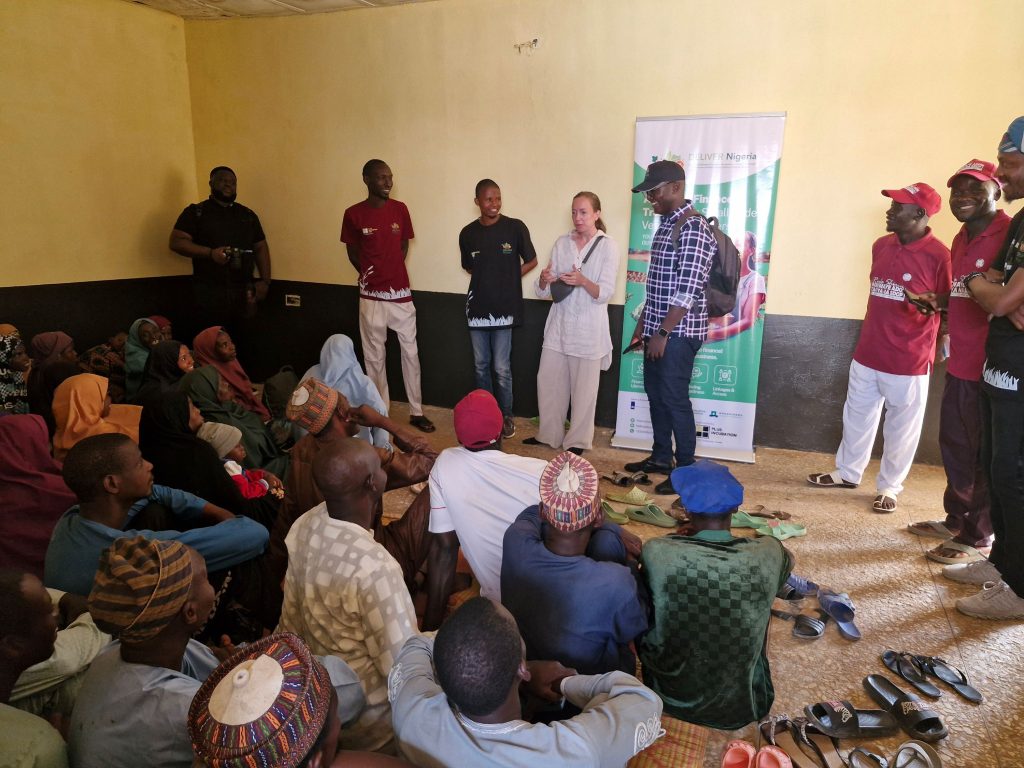
Social and financial inclusion efforts, spearheaded by GAIN, have just started. The common message from male farmers is that bank interest rates are too high and so they need another source for loans that are affordable. Women in this part of the country do not usually go to the bank for loans, preferring to use local sources like village savings and loan associations (VSLAs). While there is a hesitancy to get loans by some farmers, the majority need them to expand their business.
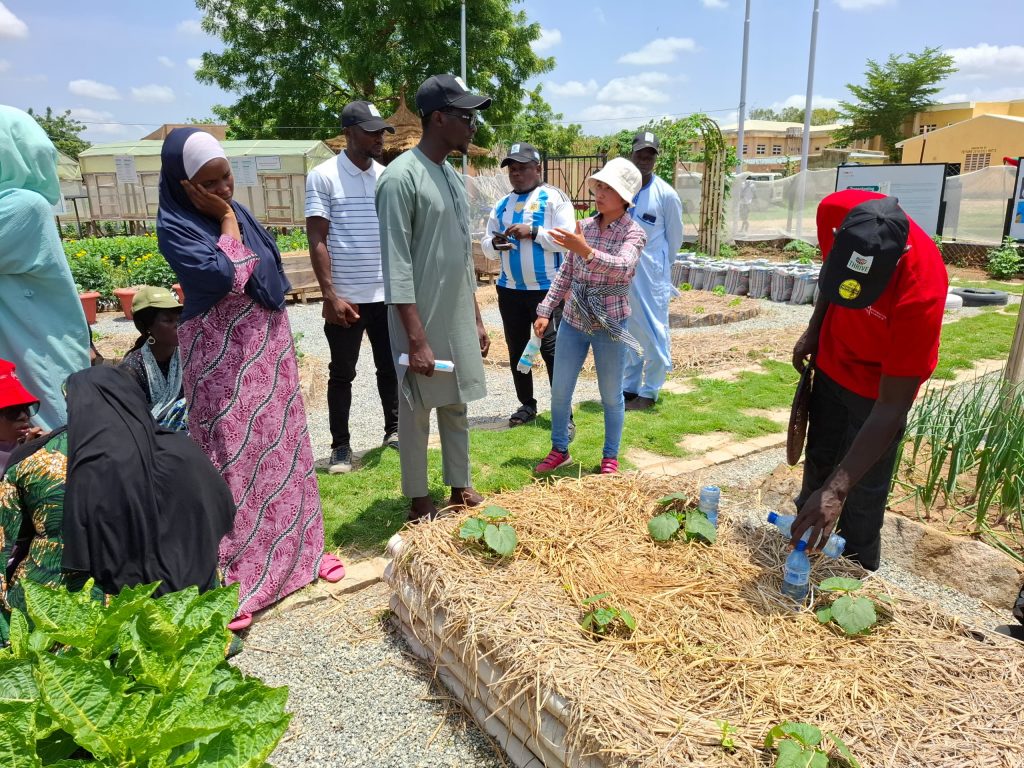
EWS-KT and WUR added spice to the visit by hosting a Field Day at the Sa’adatu Rimi College of Education (Kano) learning farm, where recent graduates of EWS-KT and WUR’s joint training program handled inquiries from some of the 150 farmers attending the event. WUR Senior Trainer Diep Bich Phan, who leads the training of trainers, was on hand to ensure that the graduates provided their best advice.
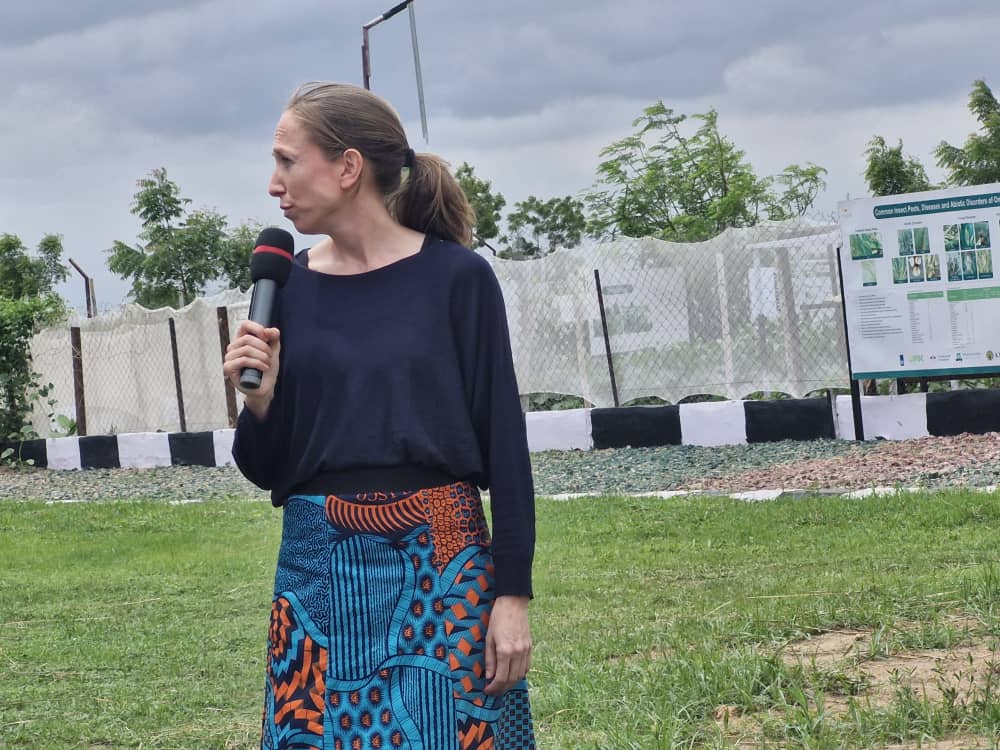
In her address to the Field Day participants, Eline had this to say: “The power is in your hands. Here is the knowledge; you have to grab it with both hands and change your lives.”
Abuja
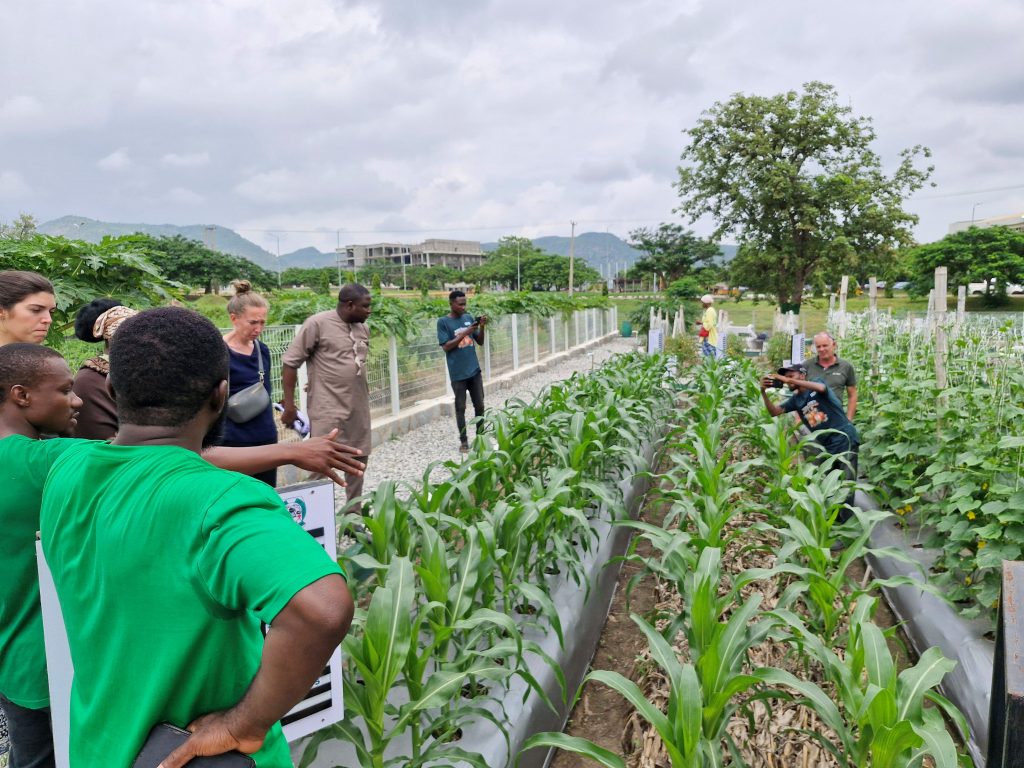
Our final stop was Abuja, Nigeria’s capital city, where we visited the EWS-KT learning farm at the University of Abuja campus. Established in November 2024, the learning farm is being used to train staff, students, and sector professionals, along with nearby farmers.
A Vegetable Revolution
Eline’s visit to Nigeria was an opportunity for her to witness the impact of RVO’s support firsthand. While RVO has seen all the reports and posts, nothing beats being on the ground in Nigeria, witnessing the enthusiasm and energy of the teams and farmers, the changing lives, and the unlimited future potential.
As EWS-KT Executive Director Stuart Morris said to farmers during the Field Day, “There is a vegetable revolution happening here in Kano and Kaduna. Given what we see and the testimonies from farmers, how can anyone not want to be a vegetable farmer?”
Partner with us to support the smallholder farmers of Nigeria.