

Beyond the Harvest: Supporting the Farming Community
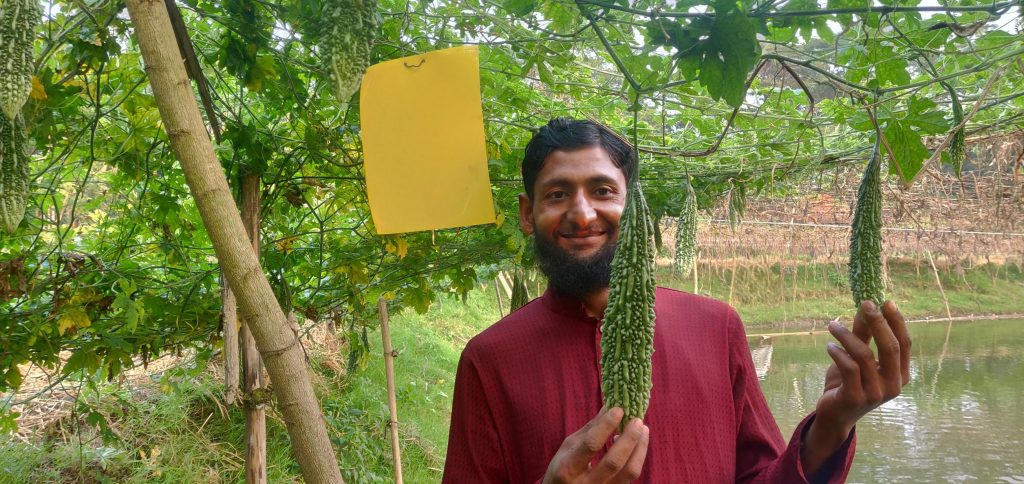
BHOLA DISTRICT, BANGLADESH – Md. Babul’s journey into farming began in 2021, after years of running a small vegetable sales shop in Charshamya Union. This shift from selling to growing was the first step in what would become a life-changing journey for Babul—and the community around him.
Finding Farming Success
While Babul was skilled at selecting fresh produce for his business, it wasn’t until he started growing vegetables himself that he truly understood the challenges farmers face.
2023 marked a turning point for his farm, as he joined the Smart Farming, Healthy Food project. Supported by the Netherlands Enterprise Agency (RVO), the project was implemented by East-West Seed Knowledge Transfer (EWS-KT), Solidaridad, and the Bangladesh Department of Agricultural Extension.
Guided by EWS-KT, Babul set up his first demonstration plot, growing bottle gourd on a small portion of his land. With an investment of just BDT 8,600, he earned BDT 35,000 in sales—a clear demonstration of the impact that improved farming practices can have. This success opened his eyes to the potential of modern farming methods and ignited his passion for growing more vegetables.
Before his involvement with EWS-KT, Babul’s annual income was BDT 200,000 from vegetables, rice, and livestock. However, through training in techniques like single-seedling planting, nursery production, and precise fertilizer use, he was able to reduce his costs, increase his yields, and earn more income. As he expanded his vegetable farming, he also began to realize that his knowledge could help other farmers in the area improve their own practices. For Babul, the ripple effect his success could have on his community was even more important than his financial gains.
Supporting the Farming Community
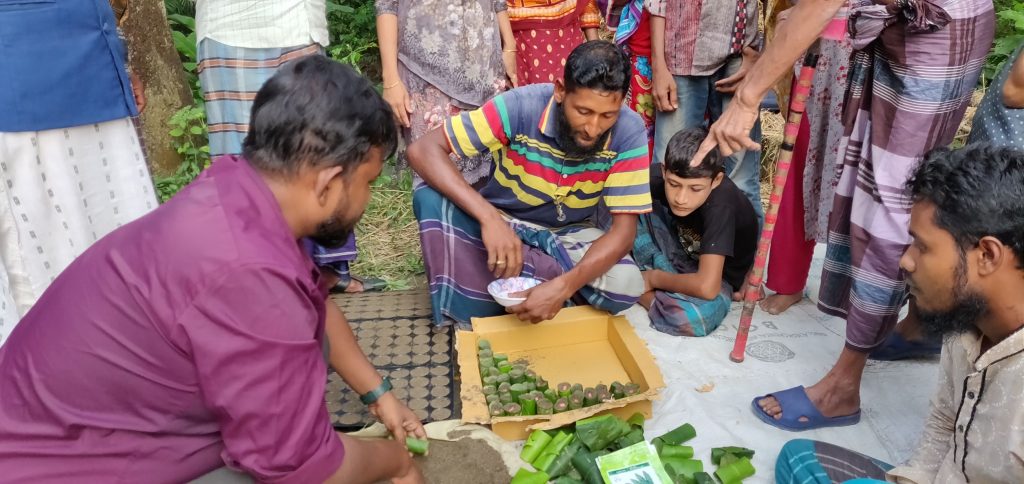
In 2024, Babul became a Community Farmer Facilitator with EWS-KT, a role that enabled him to share the knowledge he had gained with fellow farmers. He visited their fields, provided advice, and helped them adopt better farming techniques.
Farmers began trusting him, not just for guidance but also for accessing high-quality seeds and seedlings. Gathering seed orders from local farmers, he would collect the seeds from retail shops in the area and deliver them in his community. The growing trust from his fellow farmers also led him to start producing and selling seedlings, which further supported the agricultural community.
In August 2025, Babul took a bold step and opened his own agricultural shop. “Farmers trusted my advice, and seeing their interest, I knew it was time to set up a permanent shop,” he recalled. His shop has quickly become a hub for local farmers, offering not just agricultural inputs but valuable knowledge that helps the farmers grow their businesses.
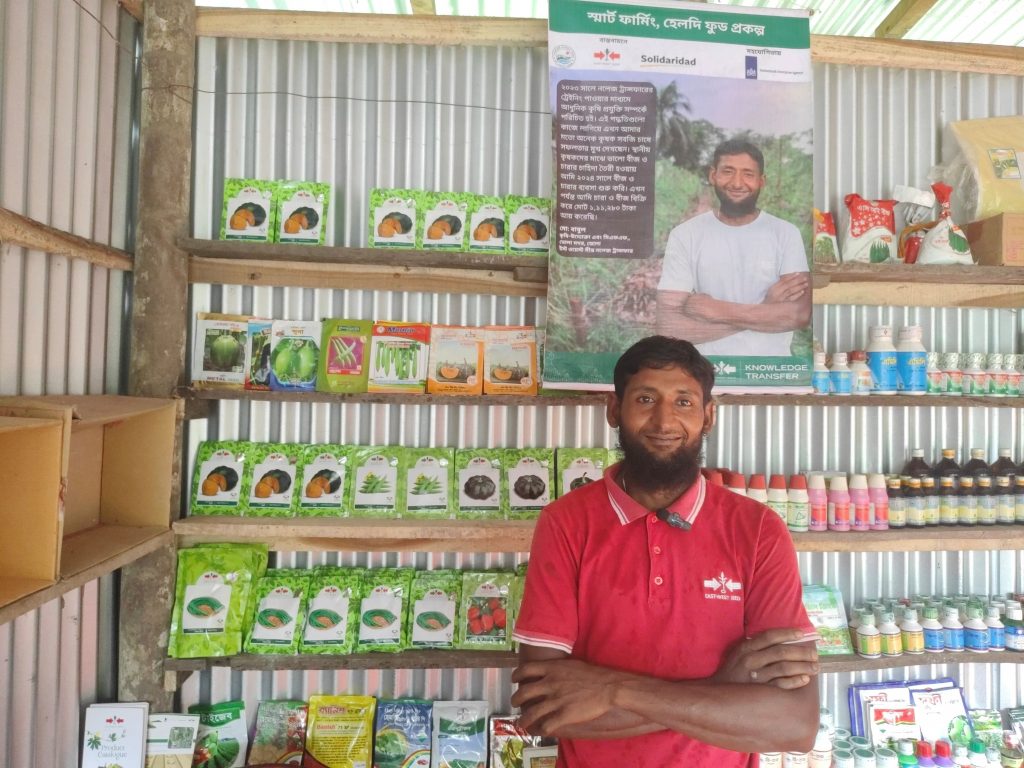
Today, Babul’s annual income has increased to BDT 310,000. His revenue comes from multiple sources—vegetable farming, rice cultivation, livestock, seedling sales, and his shop. But for Babul, the real reward lies in the impact he has on others. “The training I received improved my farm,” he said, “but it also gave me the ability to help other farmers. When they succeed, I succeed too.”
Babul’s story is a powerful example of how one person’s success can create lasting change in a community. Through the improved farming techniques he shares, Babul has helped transform the lives of many other farmers. His impact goes far beyond the farm—it’s about building a more prosperous, informed, and empowered farming community.