

The Trader Who Found His Niche in Pumpkin
By Elijah Mwashayenyi, Head of Knowledge Transfer for Africa

MITYANA DISTRICT, UGANDA – Traders play a crucial role in connecting farmers with markets and consumers. This is especially critical for the vegetable sector, as the perishable nature of vegetables calls for expedited delivery to markets.
Traders generally deal with the different crops available. However, some traders prefer to specialize in specific crops, building a pool of farmers supplying them with products. For trader Kakoza Dirisa of Mityana, in central Uganda, that niche is pumpkin.
Why Pumpkin?

Historically, pumpkin has not been on the short list of traders. It was largely regarded as a backyard crop, not requiring much attention and not amounting to much in terms of volume.
All this changed when East-West Seed founder Simon N. Groot allocated the money from his 2019 World Food Prize to catalyze pumpkin cultivation in Africa, starting with Uganda. This initiative included introducing new improved varieties and growing the crop using good agricultural practices. As farmers in the country, including in Mityana District, embraced this new development, the volume of pumpkins went up and traders started to notice, including Kakoza.
A Passion for Pumpkin
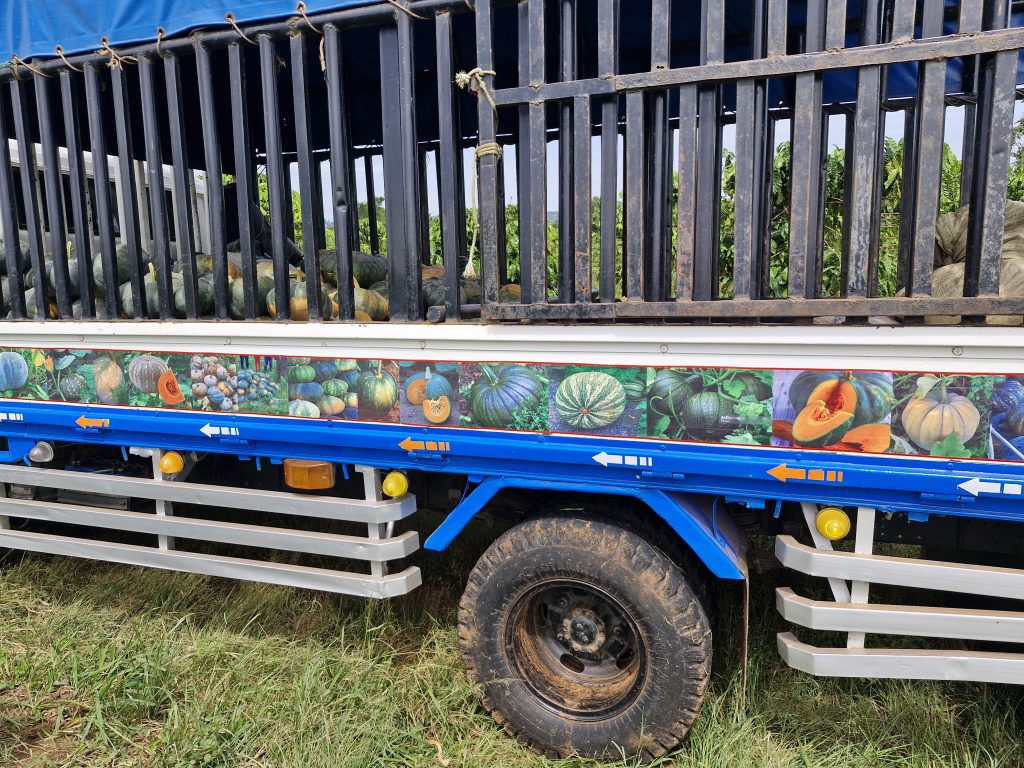
“In my trade,” Kakoza said recently, “it is good to choose a lane. I started with different crops, but on realizing the potential of pumpkin, I chose this crop. It is a crop I am passionate about. I buy and sell both local and improved varieties.”
His passion for pumpkin cannot be missed; he has branded his truck with pumpkin pictures, such that some people call him “Mr. Pumpkin.”
Reliable Suppliers
Kakoza is succeeding in the pumpkin trade, thanks to a steady pool of reliable suppliers—also known as farmers. These farmers were not difficult to find in Mityana, where EWS-KT Technical Field Officer Christine Ategeka has put her own passion for pumpkin to good use, encouraging smallholder farmers to treat the crop as a real business opportunity.
Whether the crop is monocropped or is intercropped with maize or cassava or coffee, the end result has been a good supply of pumpkin that leads Kakoza to ply the Mityana-to-Kampala route frequently.

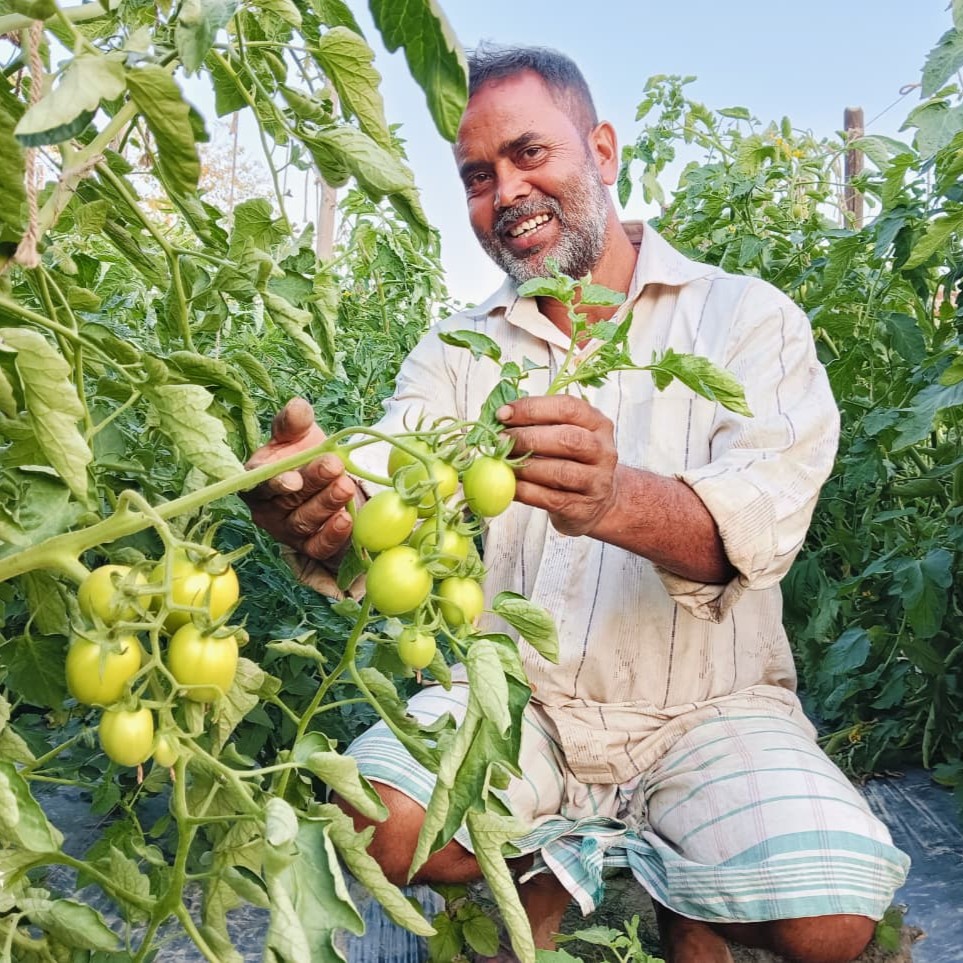
One of the farmers who supplies Kakoza is Roger Luswata in Jjungwe Village. Roger grows his pumpkin intercropped with maize. Another farmer who supplies Kakoza does the same, having learned from Roger. (Roger appears in the background of the first photo in this blog post.)
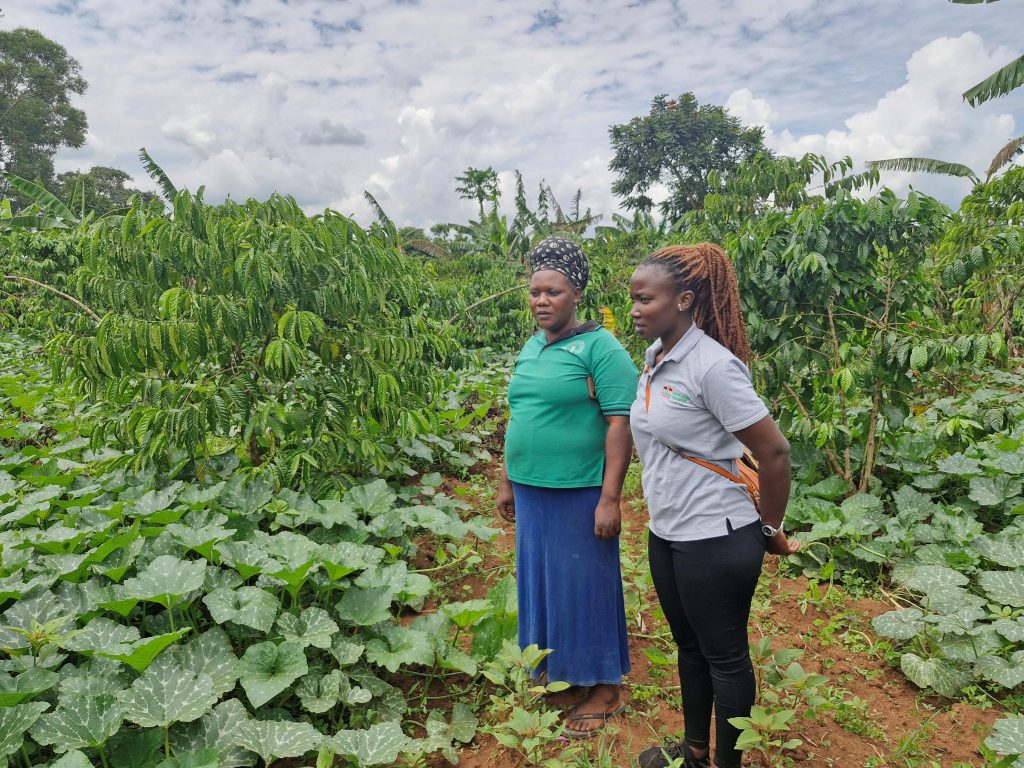
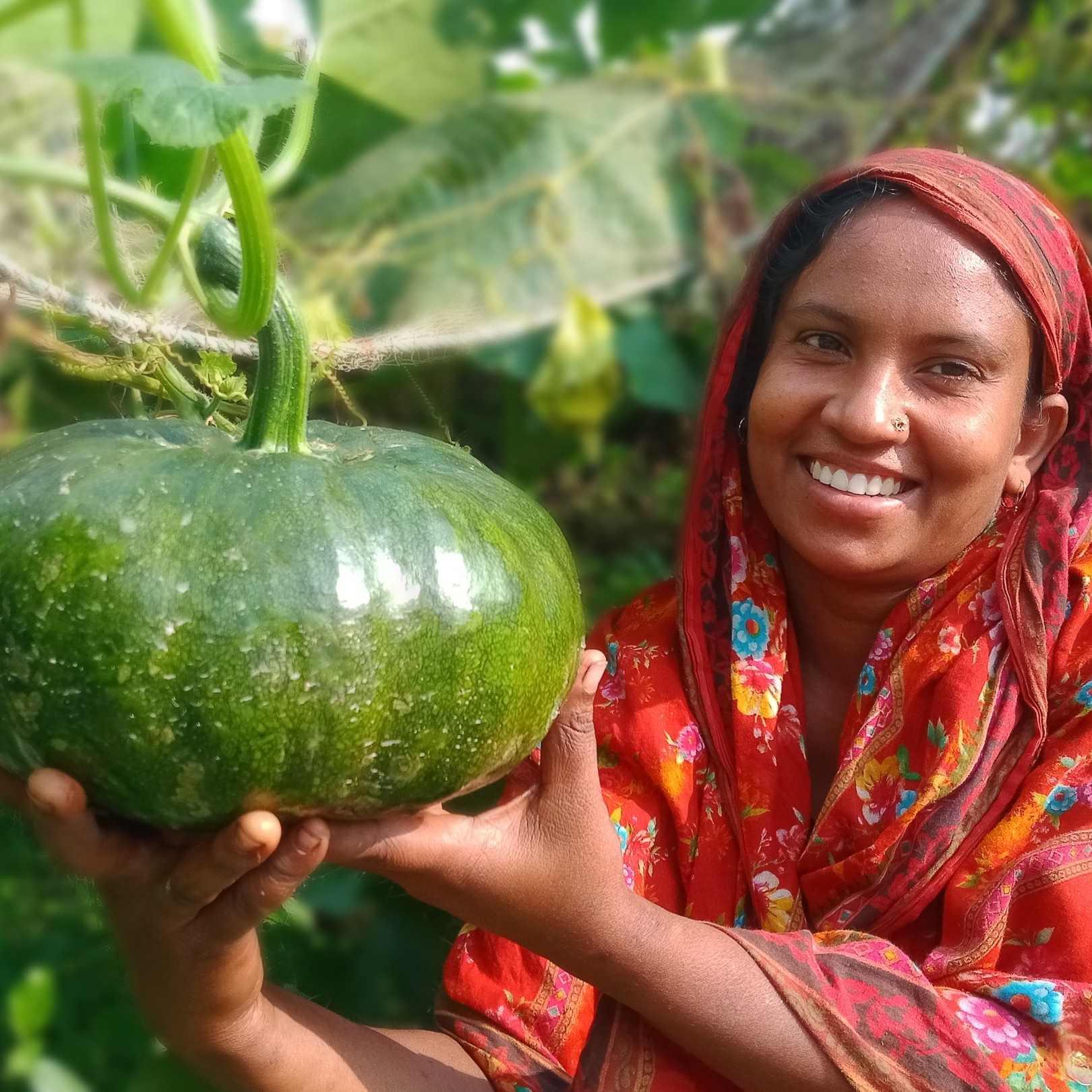
Supplier Alice Nabatte, on the other hand, intercrops pumpkin with coffee. Like the other farmers in this area, Alice learned about market-focused pumpkin farming from Christine.
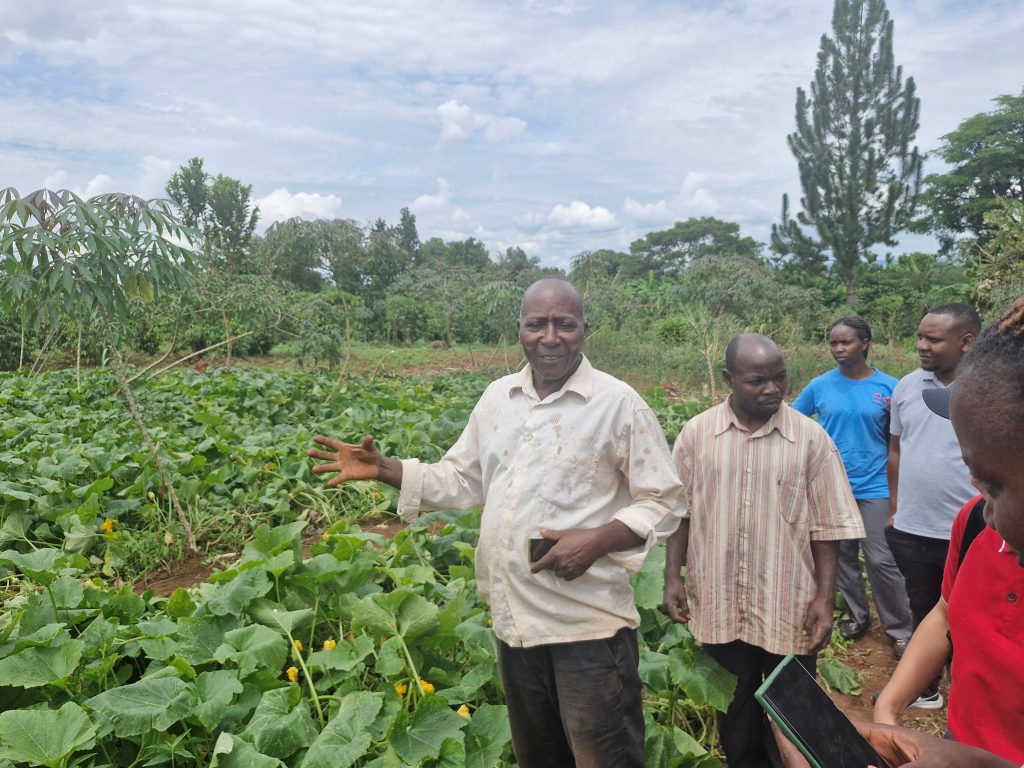
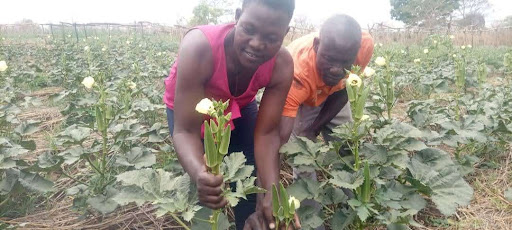
Another supplier, Jjungwe Village Chairman Saul Kabuza, decided to lead by example by becoming a pumpkin farmer. He grows pumpkin in its own field (monocropping). Here, he speaks to a group of visitors.
Trade Route
Kakoza normally makes two trips from Mityana to Kampala each week, purchasing up to 7,000 fruits in total. He says that if the volumes increase further, he is prepared to do up to five trips per week. He knows that he has competitors on this route, but his rapport with farmers gives him confidence that the farmers will always opt for him.
Pricing
Kakoza is viewed by farmers as a trader who offers fair prices. Prices vary, but farmers generally get better prices from local traders than from international buyers from Kenya, who often offer prices that are half or less than what local traders offer. However, Kenyan buyers take larger volumes compared to local traders. This gives farmers a choice: grow smaller volumes and target local trader prices, or produce large volumes and target the Kenyan market.
A Broker in the Pack
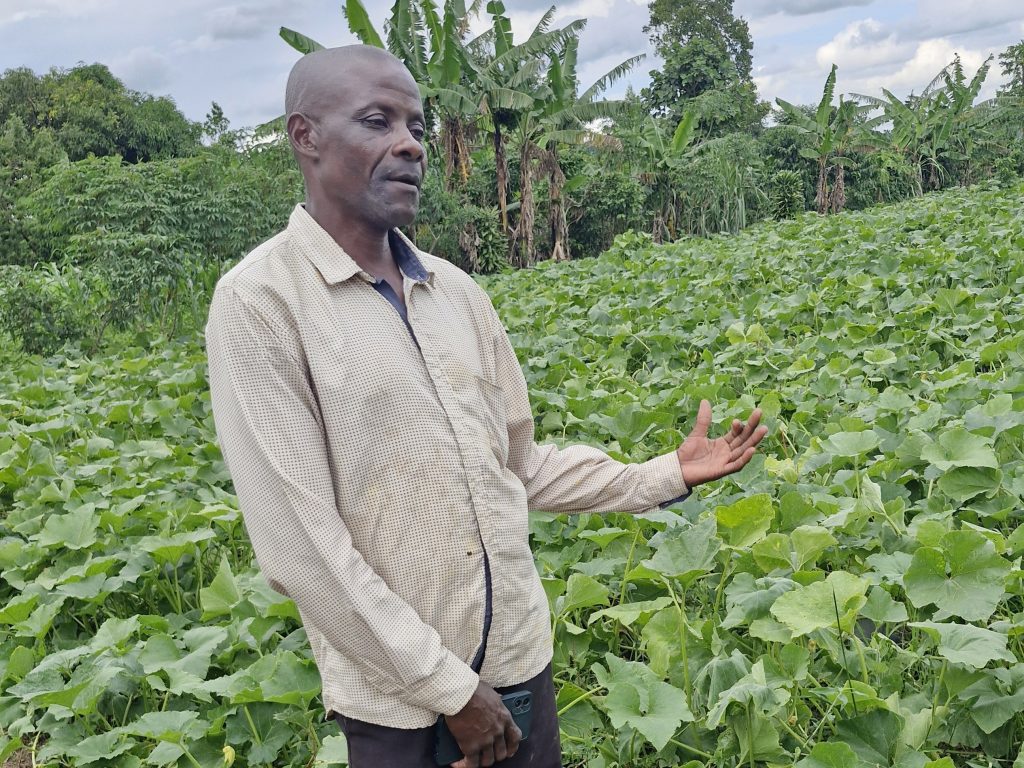
There is an interesting twist to the pumpkin trade in Mityana. Thomas Luyombya, a keen pumpkin farmer in his own right, added one more skill to his portfolio: being a broker. As a broker, his role is to connect traders with farmers, ensuring that farmers get access to a market. There is something else that is important in that role, and this is how he put it recently:
“As a pumpkin farmer myself, I would like to see farmers get good prices. So I decided to increase the competition for our pumpkins by bringing other traders. That is benefiting us,” he said recently. Indeed, it is.
A Stronger Pumpkin Sector
Traders like Kakoza Dirisa and brokers like Thomas Luyombya play a crucial role in the vegetable sector. For Kakoza, his passion for pumpkin has made him a household name in Mityana. Mityana looks set for further expansion of pumpkin production as more farmers take interest in the crop.
As they continue to embark on pumpkin production, the farmers of Mityana know that there is at least one trader in their corner and a broker who is harnessing market forces to increase their profits.