

Pumpkins from Field to Market
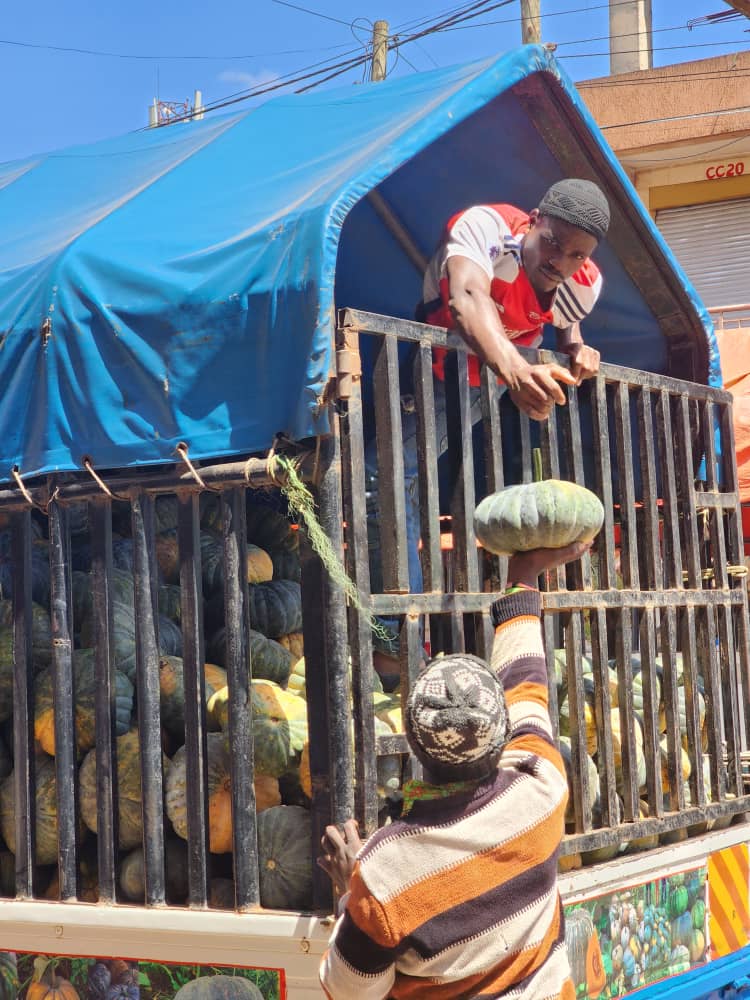
MITYANA DISTRICT & KAMPALA, UGANDA – During harvest season, traders like Kakoza Dirisa (read his story here) collect pumpkins from farmers’ fields in Mityana District and, their trucks piled high, begin the drive to the capital city of Kampala.
Christine Ategeka—a Technical Field Officer with East-West Seed Knowledge Transfer Foundation (EWS-KT) who has been instrumental in the expansion of pumpkin production among smallholder farmers in central Uganda—recently followed a shipment of pumpkins from Mityana to Kampala.
Arriving at Kampala’s Kafumbe Mukasa and Nakasero markets, Christine provided a behind-the-scenes look at the pumpkins’ journey from field to customer.
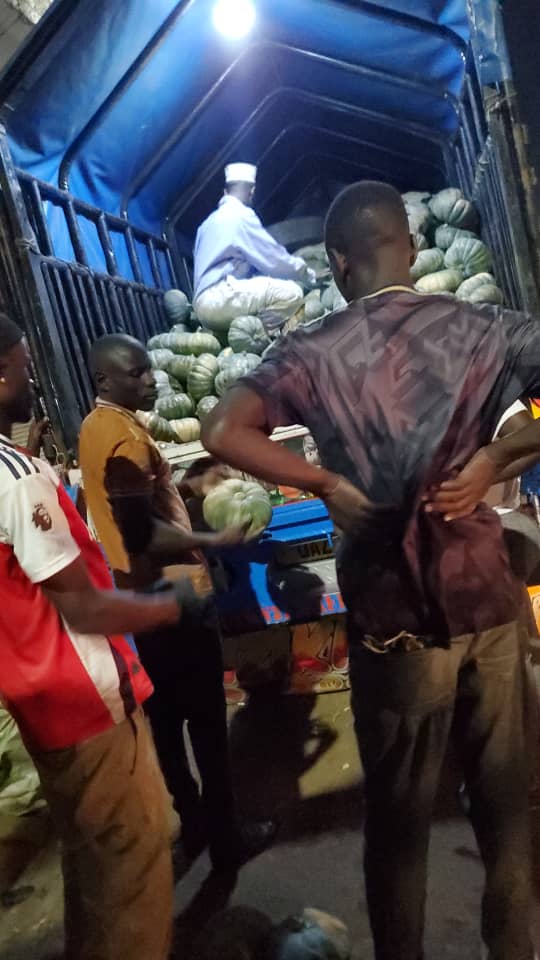
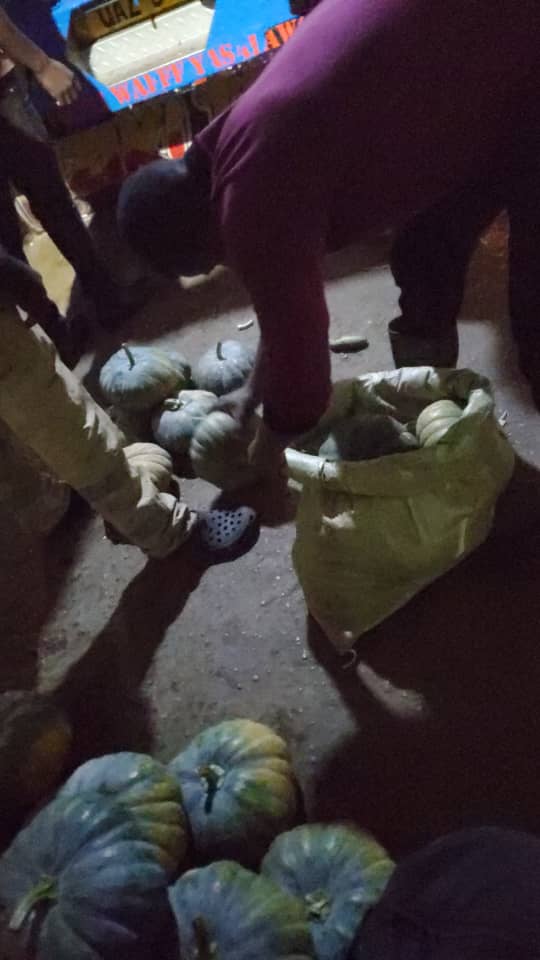
Nakasero Market
Sunday and Thursday are the two regular market days in Nakasero, and traders with stalls in other markets in the city come to pick up produce from the vegetable collectors’ trucks arriving at Nakasero. Most pumpkin traders from Mityana bring their produce on these two days because they are assured of a good market.

Kafumbe Mukasa Market
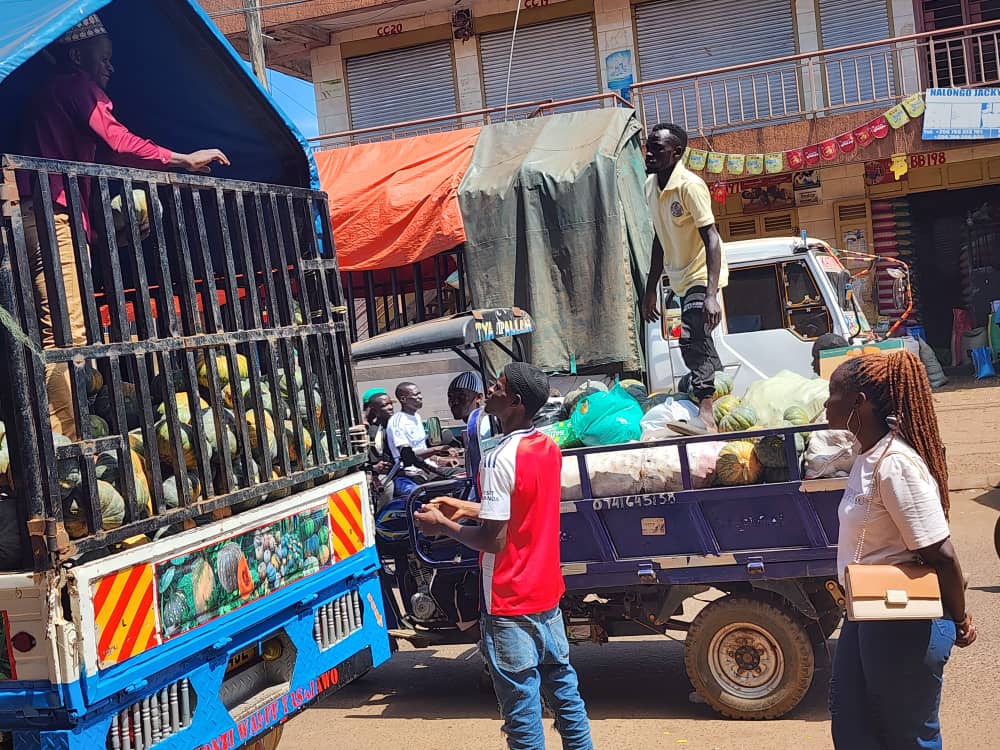
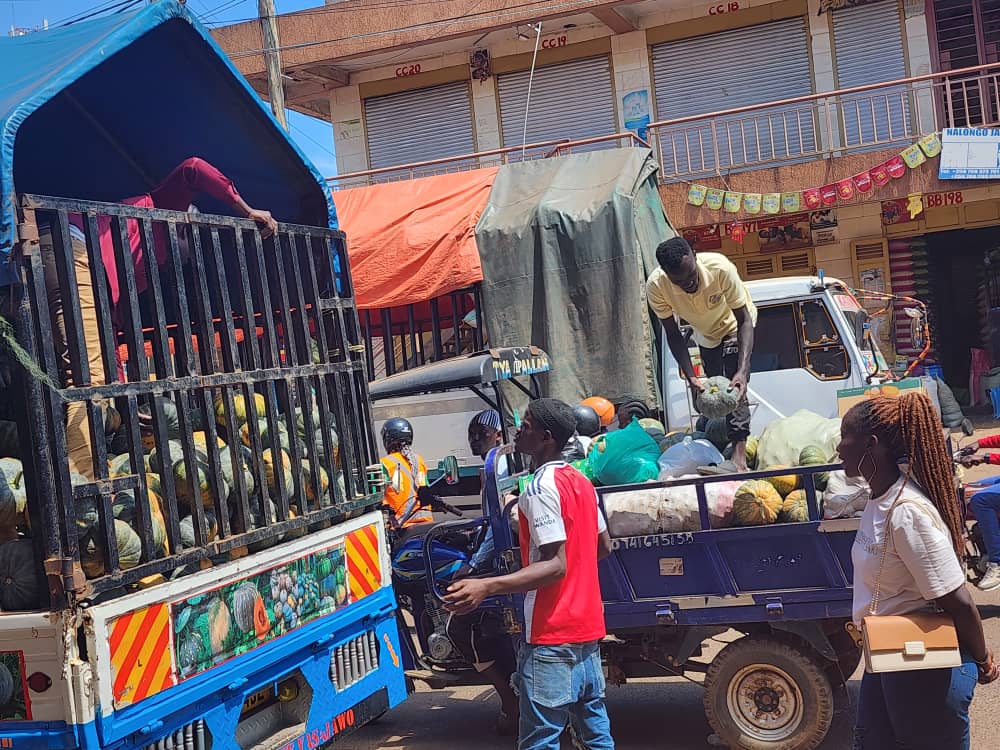
The situation at Kafumbe Mukasa market is similar, with traders from other markets, as well as traders who sell at Kafumbe Mukasa, purchasing their pumpkin supply from the trucks arriving from farming areas.
While in Kafume Mukasa, Christine spoke with a market seller known as Ssenga. Beneath the shade of an umbrella, Ssenga was displaying a pumpkin variety from East-West Seed that is a popular choice among the farmers in Mityana due to its large size and durability.
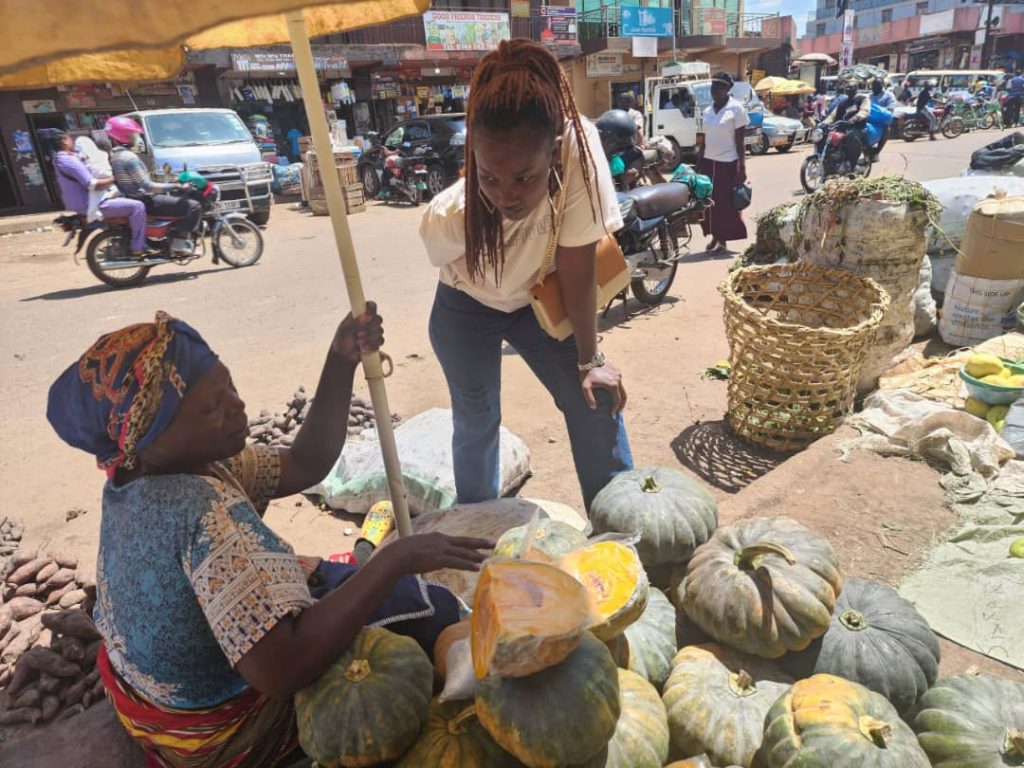
Ssenga told Christine that she has been selling this variety for about 3 years. To meet the needs of her customers, who may not all want an entire pumpkin, she cuts the pumpkin fruits into pieces. Showing the rich yellow pumpkin flesh also attracts more customers, she explained.
Ssenga prefers this variety to the local varieties because of its big size—she can earn more money from the cut pieces than from selling a whole pumpkin. She also noted that in months of scarcity, the price per piece goes up, bringing her more income. She told Christine she has been able to provide for her children through selling these pumpkins in the market.
Fulfilling Our Mission
EWS-KT has a dual mission—to improve smallholder farmers’ livelihoods and to catalyze vegetable markets. Following pumpkins from field to market shows the impact of EWS-KT’s work along the vegetable value chain. From the farmers growing pumpkins as a business, to the traders purchasing pumpkins at the farm gate, to the hotel suppliers and local vendors buying pumpkins in the markets of Kampala—everybody wins.