

Natural Pesticides for Consumer Health: Suon Sorm’s Story
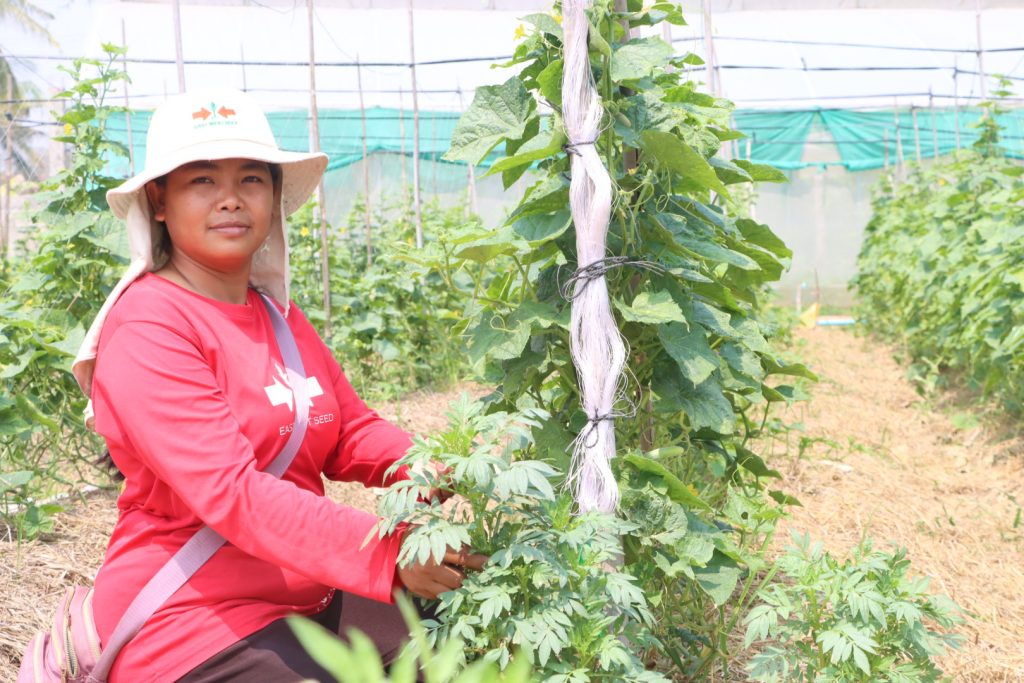
BANTEAY MEANCHEY PROVINCE, CAMBODIA – Less than 2 years after joining the Nurture Veg project with East-West Seed Knowledge Transfer (EWS-KT), 32-year-old Suon Sorm chooses her vegetable varieties based on the season and market, nourishes her land with green manure and compost, and prioritizes natural pest management techniques.
Living in Mongkol Borey District, she now cultivates an impressive array of rotating crops, including water celery, Peperomia pellucida, polygonum, spring onion, cucumber, yard long bean, hot pepper, pumpkin, wax gourd, sponge gourd, bitter gourd, tomato, and Chinese cabbage.
Getting Serious About Vegetable Farming
Suon Sorm and her husband are both passionate about vegetable cultivation, and it is their primary source of income. Her parents were also farmers, and she followed in their footsteps.
While she always loved growing vegetables, especially leafy vegetables, she struggled to identify the best varieties for each season and to protect her crops from insect pests and damaging diseases such as Cerospora leaf spot. Realizing that she lacked technical farming knowledge, she joined the Nurture Veg project in August 2023.
Nurture Veg (Nurturing Sustainable Practices for Smallholder Vegetable Farmers) is partially funded by the Swiss Agency for Development and Cooperation (SDC), HEKS/EPER, and Caritas Switzerland and is implemented by EWS-KT.
New Techniques from Seed to Harvest

Since joining the Nurture Veg project, Suon Sorm has learned about the vegetable cultivation process from sowing to harvest, including how to select the right seeds for each season and the proper timing for fertilizer application at different stages of crop growth.
Previously unfamiliar with drip irrigation, she has now adopted this method, which has significantly improved her crop cultivation. She shared, “Drip irrigation helps reduce labor costs and saves time and energy. I can now work more efficiently. I previously spent two hours watering by hand, which limited my crop production.”
To reduce costs and help the environment, she composts leftover vegetables and produces natural pesticides using resources available in her town. As part of an integrated pest management approach, she also grows marigolds and lemongrass around her vegetables to repel insects, employs yellow sticky traps to capture and identify insect pests, and uses rice straw or banana leaves as organic mulch. Additionally, she grows sunn hemp—a rich source of green manure—to add nutrients to the soil.
Whenever she wants to introduce a new crop, Suon Sorm consults the Knowledge Transfer technical team, and a staff member assesses her land and advises her on the cultivation process. When her crops experience issues, she contacts the team for assistance, and they visit to recommend the appropriate fertilizers and pest management strategies.
In Tune with the Market
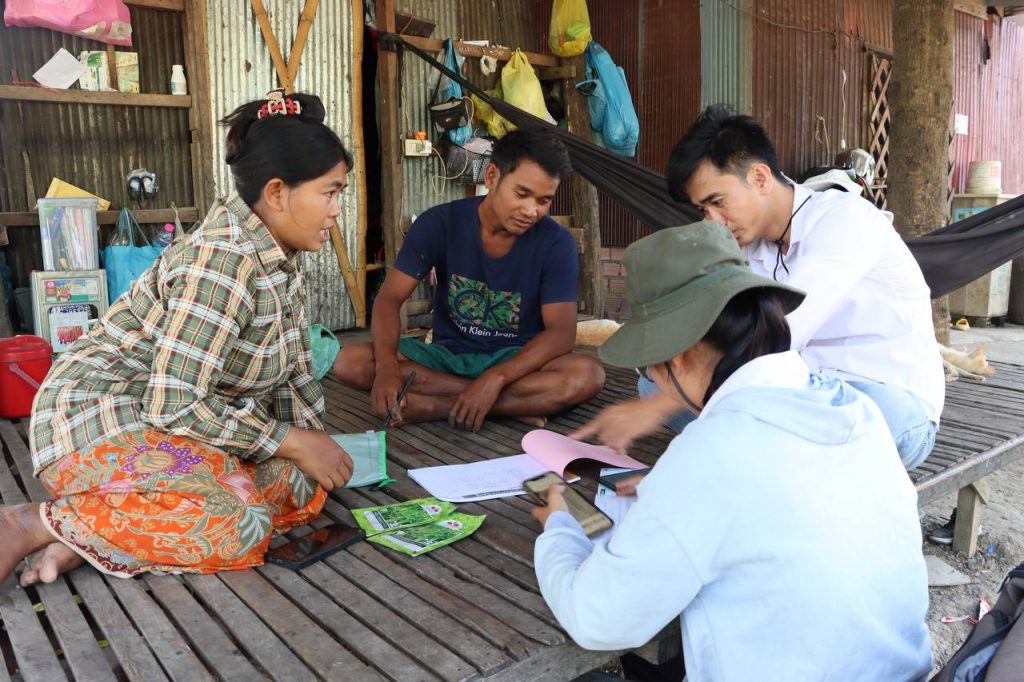
Market alignment starts with business planning. Suon Sorm has trained with the Knowledge Transfer team on how to enhance her vegetables’ value by growing types and varieties that are appropriate for each season. She also has learned how to sort and label her vegetables for the market.
She now cultivates vegetables based on market needs, receiving further advice from vegetable traders. These steps have ensured that her crops are sold at the time of harvest, alleviating her concerns about finding buyers for her vegetables.
Since joining the project, Suon Sorm has harvested seven times. In her first demonstration crop with EWS-KT, she cultivated 500 square meters of bitter gourd, achieving a net profit of 534,658 riels (US$136) and a return on investment of 126%. For her second demo crop, she cultivated 400 square meters of cucumber, earning a net profit of 697,984 riels (US$175), with a return on investment of 180%.
She stated, “With advice from the Knowledge Transfer team, I first grew bitter gourd, then cucumber, and subsequently yard long beans. I had never grown rotation crops before, and my crops have improved with this experience.”
Leading Her Community & Planning for the Future
When Suon Sorm’s neighbors noticed her successful crop growth, they sought her advice. She gladly shared what she had learned from the Nurture Veg project, explaining the improved techniques she employs at each stage of cultivation and her use of only natural pesticides in the period leading up to harvest to ensure safety for consumers.
Thanks to her steady water sources—a pond and a well—she can cultivate crops throughout both the rainy and dry seasons on her 4,800 square meters of land. She plans to grow onions, cauliflower, broccoli, and carrots next. She has also learned about grafting tomato plants to reduce the incidence of bacterial wilt, and she intends to apply this new technique in the next growing cycle.
“I am sincerely thankful for the valuable knowledge I have received from EWS-KT and Nurture Veg. Without their support, I would not have been able to expand my crops or improve my income,” she said.