

Mathew’s Empowering Change Through Best Farming Practices
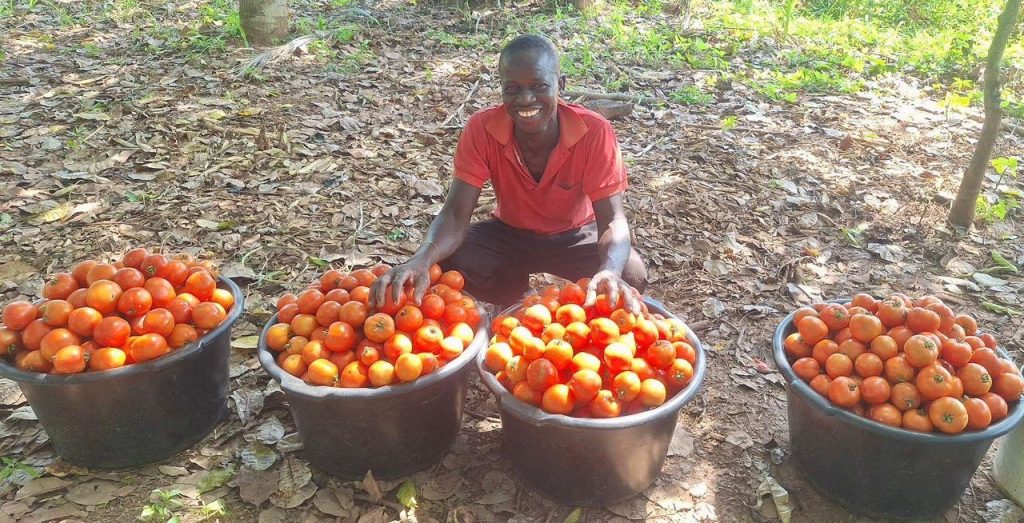
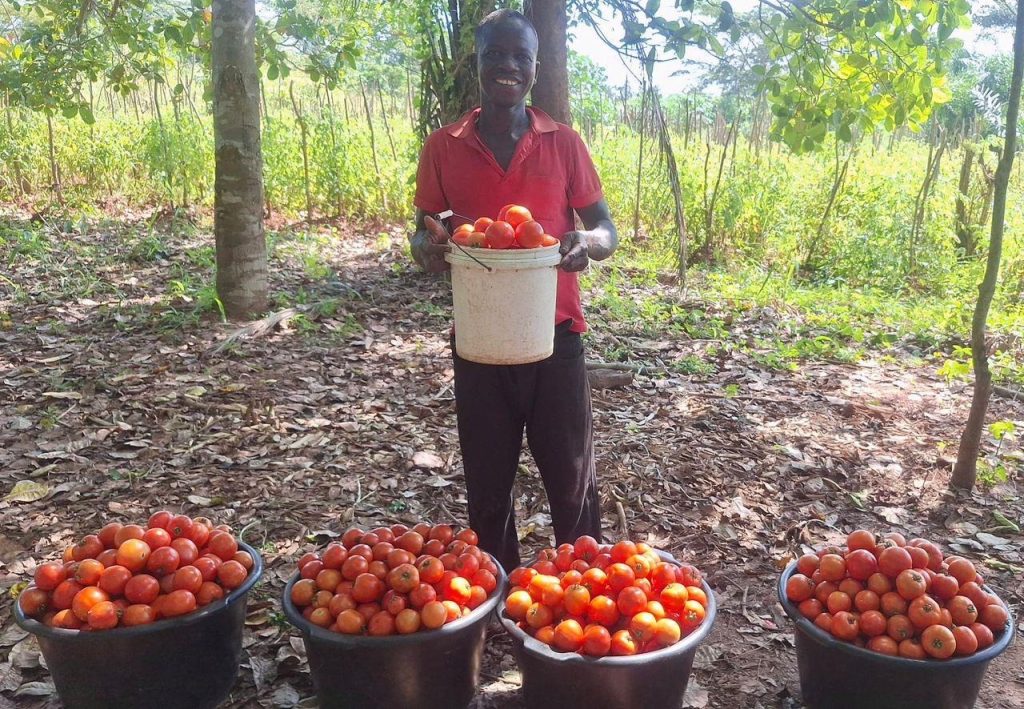
BONO EAST REGION, GHANA – In the farming community of Bianhyew, one farmer is steadily becoming a source of inspiration to many. With guidance from Technical Field Officer Nicholas Dadzie from East-West Seed Knowledge Transfer Foundation (EWS-KT), farmer Mathew Mensah has adopted modern and sustainable practices that are transforming the way tomatoes are produced in his community.
Choosing the Right Variety
Selecting the right tomato variety has been a key factor in Mathew’s success. In keeping with the business plan he developed, Mathew was seeking high productivity and resistance to diseases like bacterial wilt, along with tomatoes that were firm and red to attract more buyers in the market. Choosing a tomato variety with these attributes has provided him with a reliable harvest, ensuring both profitability and sustainability.
Transplanting and Trellising
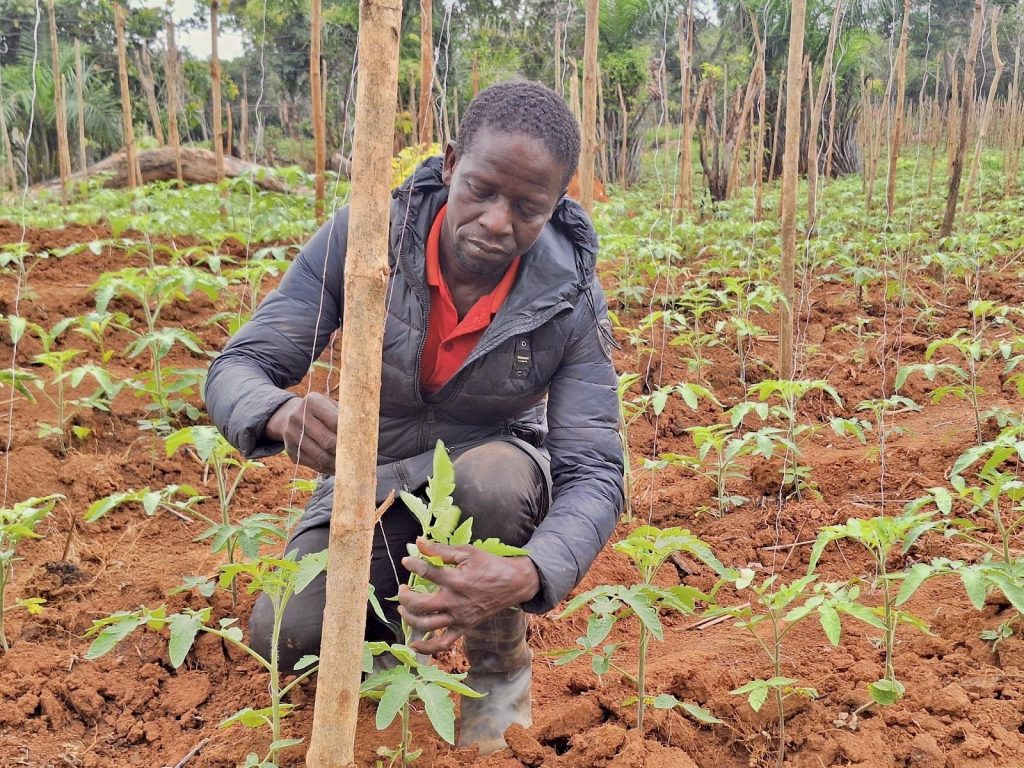
With in-person guidance from the Technical Field Officer, Mathew has mastered effective transplanting and trellising techniques. Proper spacing and plant support have improved air circulation, reduced pest pressure, and enhanced fruit quality. These simple but impactful practices have also made harvesting easier and minimized fruit damage.
Plant Nutrition and Soil Health
Mathew applies a balanced approach to plant nutrition, using both organic fertilizers like neem extract and inorganic fertilizers in the right proportions. He understands that healthy soil means healthy crops, and his attention to soil fertility has significantly improved yields.
Responsible Use of Pesticides
Food safety and environmental protection are central to Mathew’s practices. He now uses pesticides only when necessary and applies them responsibly, following the right dosage and timing and avoiding treatments close to harvest. This ensures safe produce for consumers while maintaining ecological balance.
Using Ridges for Better Results
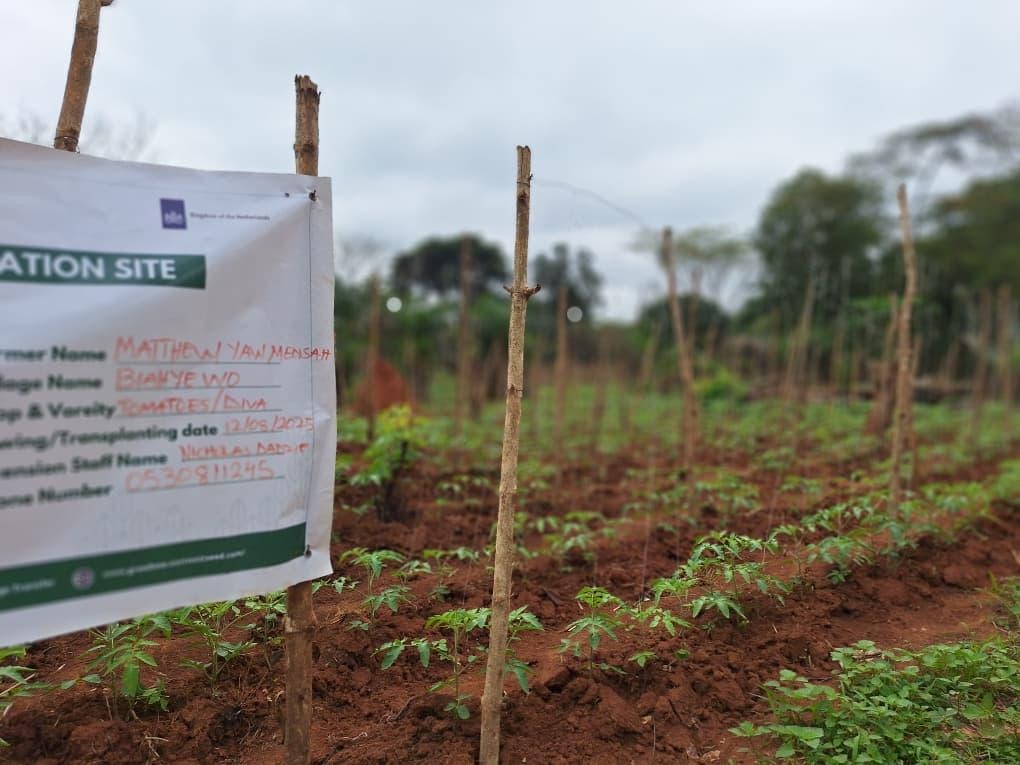
Another practice that has made a difference for Mathew is the use of ridges. These ridges improve drainage and root development, especially during the rainy season, allowing plants to thrive even under challenging weather conditions.
Harvesting and Post-Harvest Handling
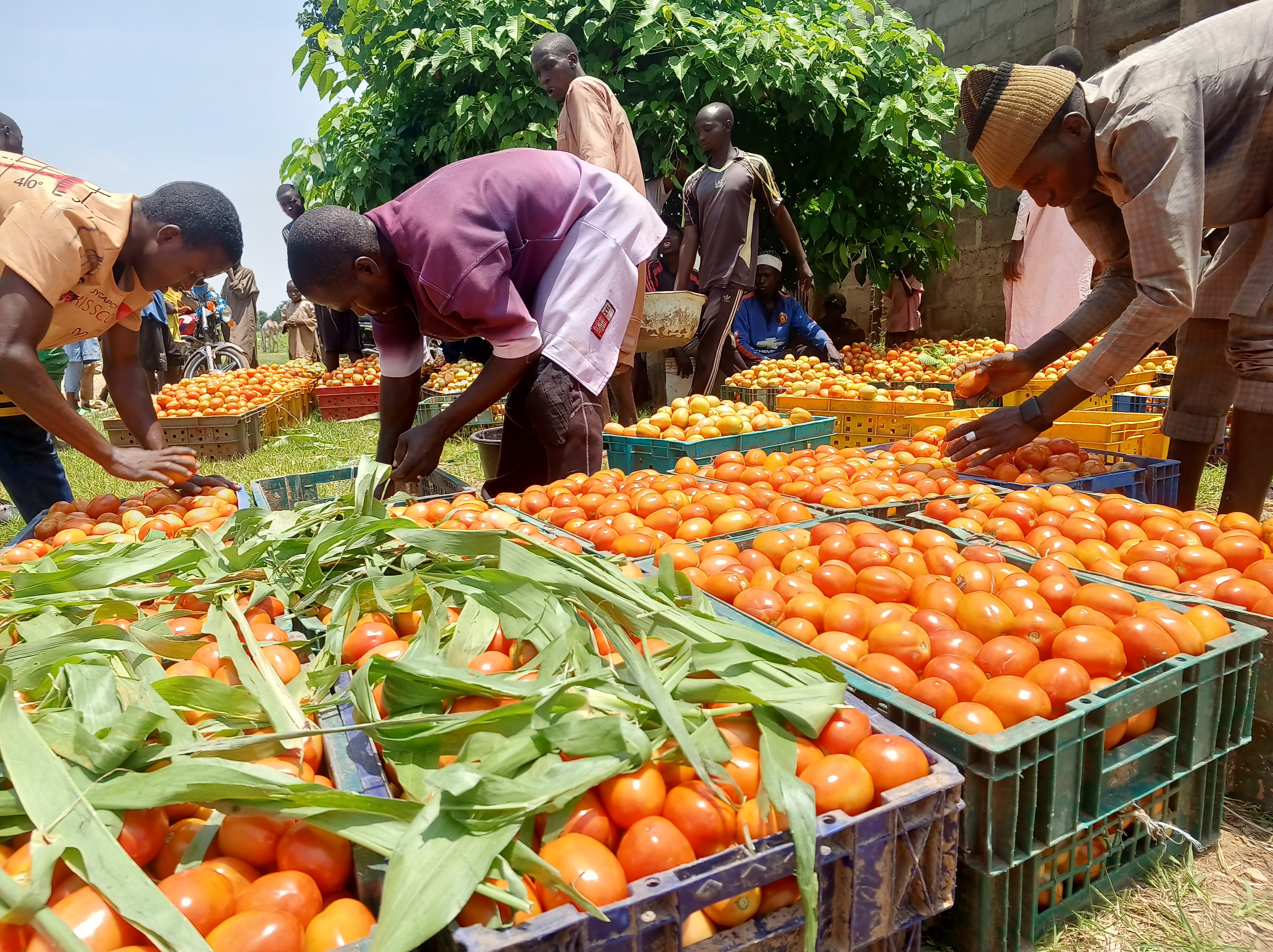
Mathew takes great care during and after harvesting to maximize profits and minimize waste. He harvests tomatoes at the right maturity stage, collects them in clean plastic containers to limit exposure to damaging microorganisms, and packs them in wooden crates to avoid bruising during transport. This attention to detail ensures that his tomatoes reach the market fresh, firm, and attractive to buyers.
This season, Mathew harvested and sold 50 boxes of tomatoes, earning a total of 90,000 cedis (US$7,860). After taking into account his 35,000 cedis (US$3,056) in crop costs, he realized 55,000 cedis (US$4,804) in net profit, a 157% return on investment.
A Community Role Model
Through his dedication and the continued support from EWS-KT, Mathew has become a model farmer in Bianhyew, with more than 25 farmers learning effective tomato cultivation techniques in his field. His story shows that with the right knowledge and improved practices, smallholder farmers can achieve impressive results. He continues to inspire others in his community to embrace good agronomic practices and sustainable tomato production.
Mathew has been receiving training and guidance from EWS-KT under the Transforming Vegetable Farming as a Business project, which is supported by the Embassy of the Kingdom of the Netherlands in Accra.