



From Home Garden to Sustainable Income in Indonesia
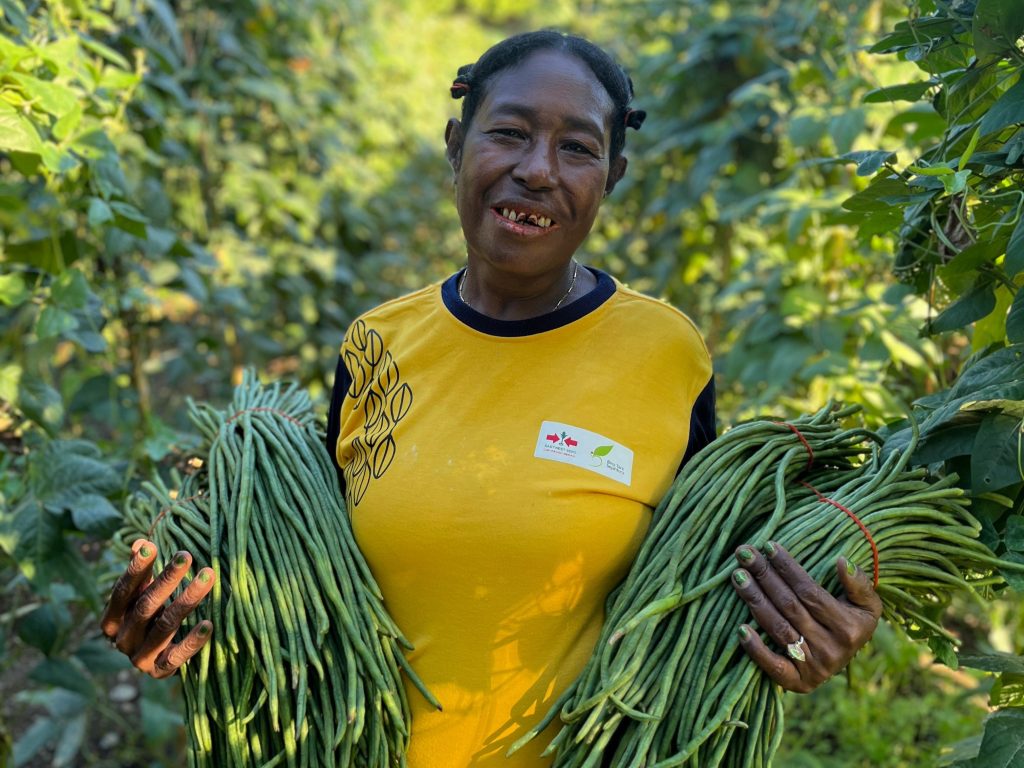
WEST PAPUA, INDONESIA – For many years, Elisabet Fakdewer relied on traditional farming practices in Yongnam, a village in North Manokwari District. However, pest attacks, poor soil conditions, and irregular crop management made farming an unreliable source of income for her household. As she recalled, “Before, I planted without knowing what to expect. The harvest depended on luck, and sometimes there was very little to sell.”
Her situation began to change with the Enhancing Smallholder Farmers’ Income and Livelihoods with Profitable Vegetable Production Practices project, implemented by East-West Seed Knowledge Transfer Foundation (EWS-KT) sister organization Yayasan Bina Tani Sejahtera (YBTS) with support from De Eik Foundation and EWS-KT. YBTS provided training in Good Agricultural Practices, along with regular field monitoring for participating farmers.
Elisabet gradually adopted improved cultivation practices for her home garden, including proper land preparation, more accurate fertilizer application, and consistent pest management. Reflecting on this transition, she shared, “Simple changes in how I prepare the land and care for my crops have made a big difference. I now understand that good farming starts with good knowledge.”
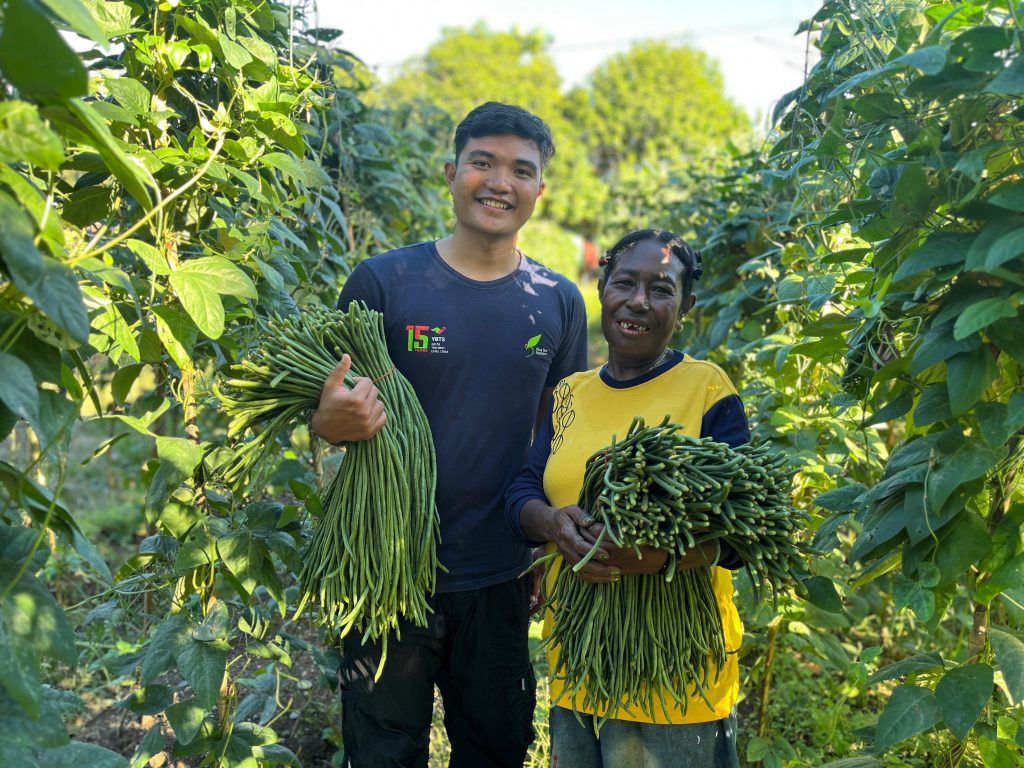
These improvements soon translated into tangible results, supported by assistance in market access and sales coordination from YBTS’s Market Access and Linkage Officer. The yard long beans grown in her home garden produced 15 harvests. In all, Elisabet sold 411 bundles at 5,000 rupiahs (US$0.30) each, generating an income of approximately 2,055,000 rupiahs (US$120). “Selling my harvest regularly has helped me contribute more to my household income and plan ahead with greater certainty,” she explained.
Encouraged by these outcomes, Elisabet is now looking at the future with renewed confidence. She plans to expand her cultivation area and introduce additional vegetables to further strengthen her livelihood. “I want to continue learning, expand my garden, and grow more crops so that farming can remain a reliable source of income for my family,” she said.


