

Farming Transformation in Bauphal, Bangladesh
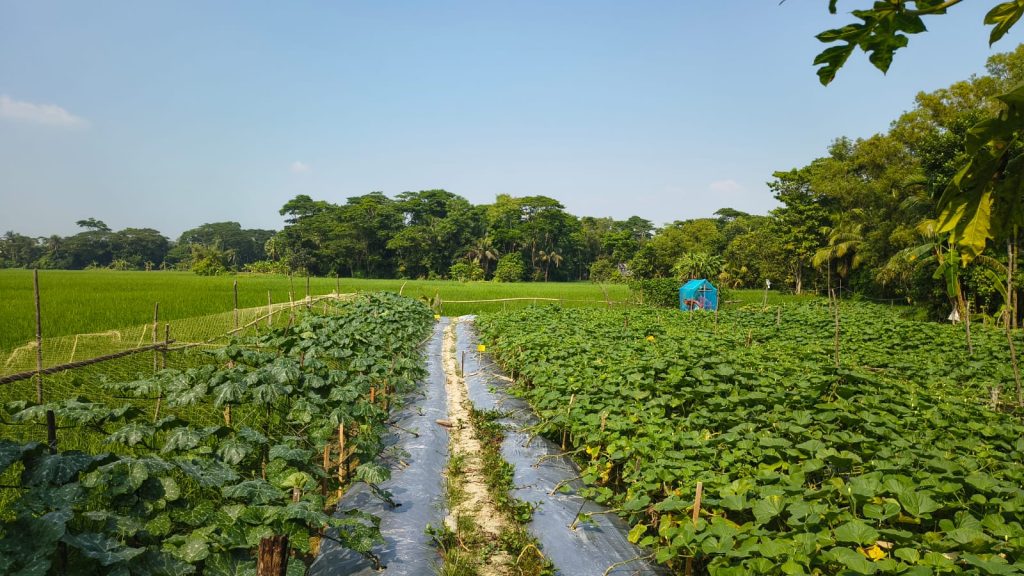
PATUAKHALI DISTRICT, BANGLADESH – Over the past 2 years, the villages of Choto Dalima and Boro Dalima have undergone an impressive transformation, with rice farmers increasingly embracing vegetable production.
In 2023, two key farmers here stepped forward to learn climate-resilient vegetable farming techniques with East-West Seed Knowledge Transfer. Today, more than 30 farmers cultivate vegetables year-round in these two villages, which are located in Bauphal upazila.
Prior to our work here under the Smart Farming, Healthy Food initiative, only hot peppers and leafy vegetables were grown, and they were cultivated solely in the winter season. But as village farmers visited the two key farmers’ fields and gained experience in sustainable vegetable production, some began converting all or part of their land from rice to vegetables.
In 2024, 15 farmers started growing vegetables for the market. In 2025, this number doubled—and we expect more to follow.
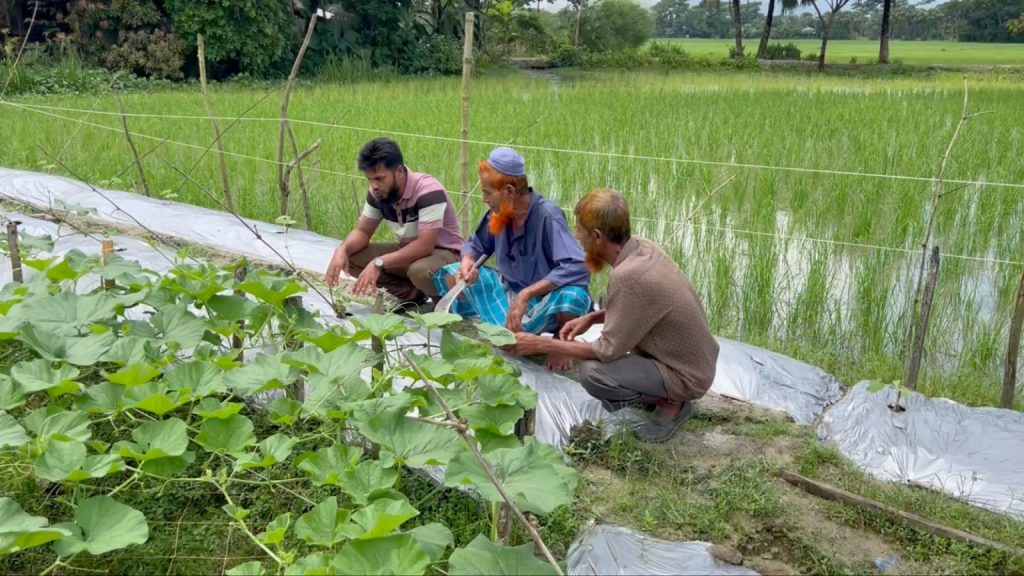
Pumpkin, bottle gourd, bitter gourd, hot pepper, and sponge gourd are now flourishing amid the rice fields in Choto Dalima and Boro Dalima. Most of the farmers are selecting high-quality vegetable varieties and growing their own seedlings. Instead of planting two seeds or seedlings in each hole in the field, they plant just one, confident in its potential. They use raised beds, cover the soil with organic or plastic mulch, and apply the right fertilizers at the right time.
These techniques are paying off. The average annual net profit from 1 acre of vegetables is US$4,386, compared to US$948 from 1 acre of rice, and the vegetables’ shorter time to harvest means more regular income throughout the year.
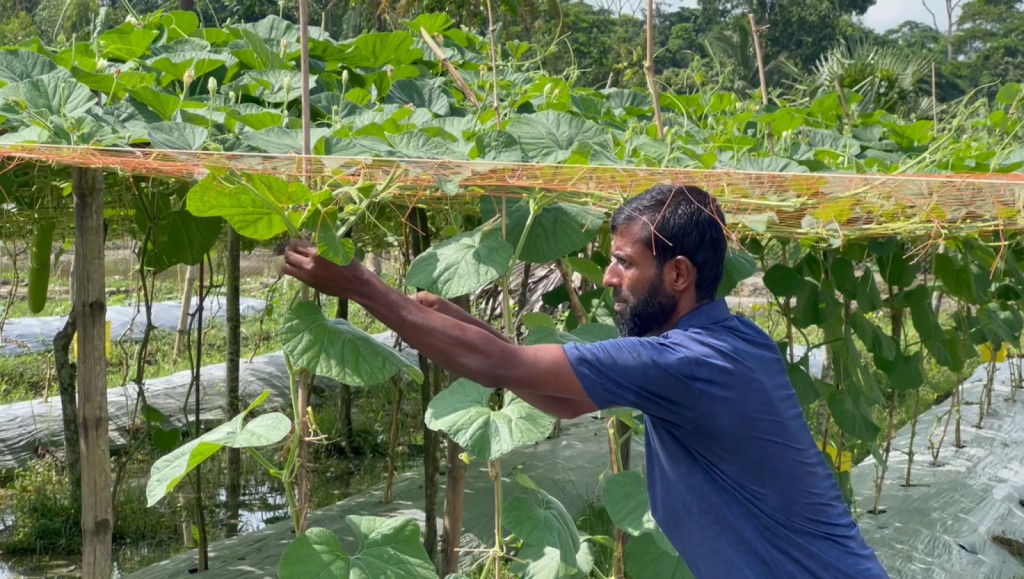
The expansion of the vegetable sector in these villages has also led to more entrepreneurial opportunities. For instance, in addition to playing a vital role in supporting these new vegetable farmers, one of our Community Farmer Facilitators is now earning extra income by selling seedlings and seeds to interested farmers.
In an area where locally grown fresh vegetables were previously rare in the market, new vegetable farmers are excitedly reaping the benefits of vegetable production while driving positive change in their communities.