

Board of Trustees Arrives in Bangladesh
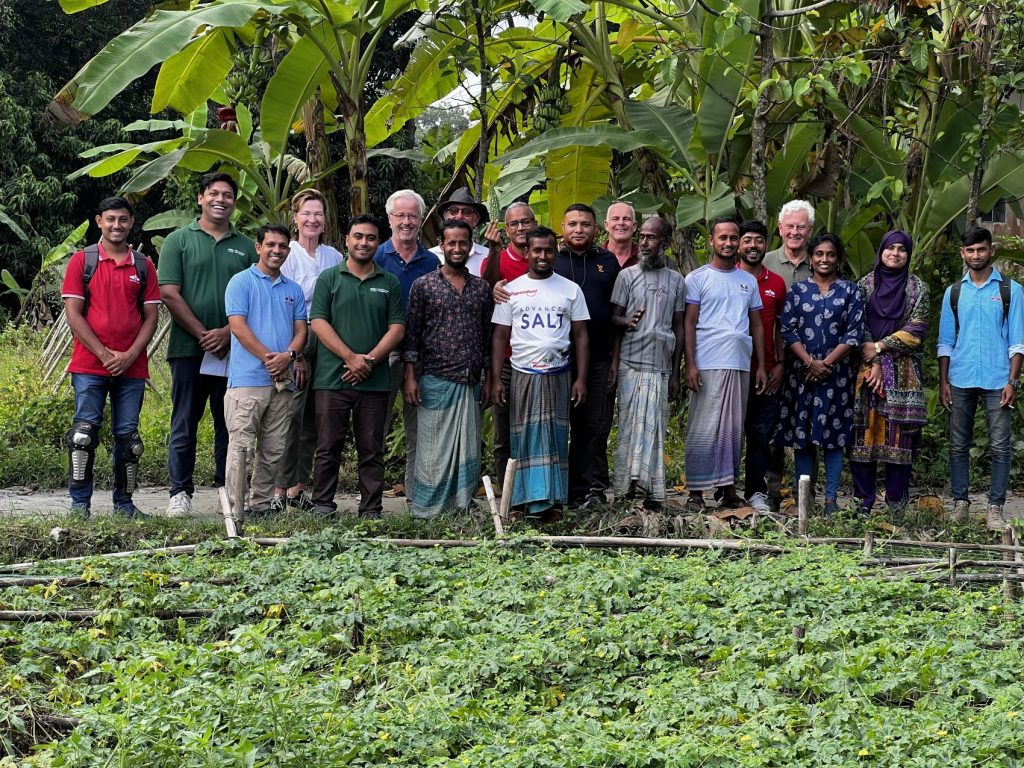
DHAKA, BANGLADESH – In early November, our team in Bangladesh hosted the East-West Seed Knowledge Transfer Foundation (EWS-KT) Board of Trustees for a 4-day visit. This trip gave the trustees an opportunity to witness field-level impact, talk with smallholder farmers, and explore ways to enhance the impact of our work in Bangladesh’s rural communities.
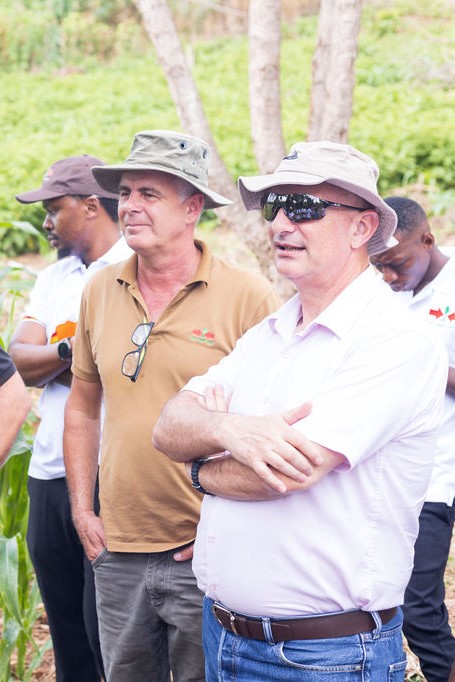
Board Chair Rutger Groot and board members Joan Boer, Joost Pekelharing, and Brigit van Dijk – van de Reijt began their visit at the EWS-KT office in Dhaka, where the Bangladesh team shared key updates on local initiatives, partners, and achievements, as well as future plans. So far, more than 43,000 farmers in the country have learned climate-resilient farming techniques from EWS-KT, achieving an average net profit of $255 per 500 square meters from an average investment of just $56.
Visiting the Field
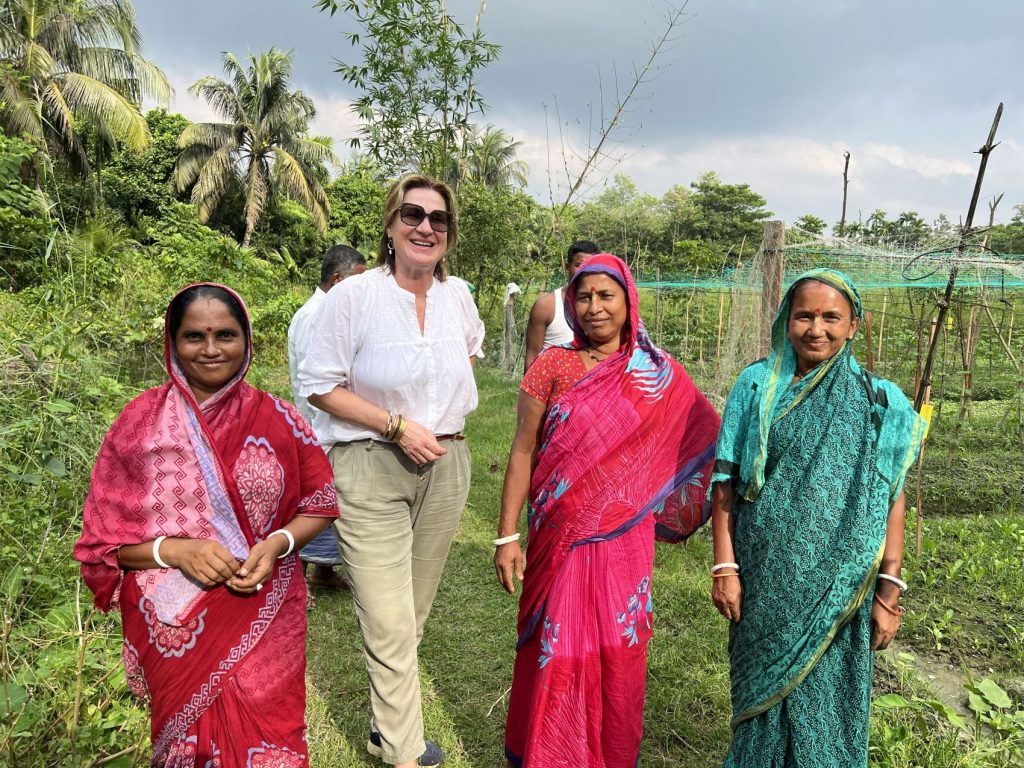
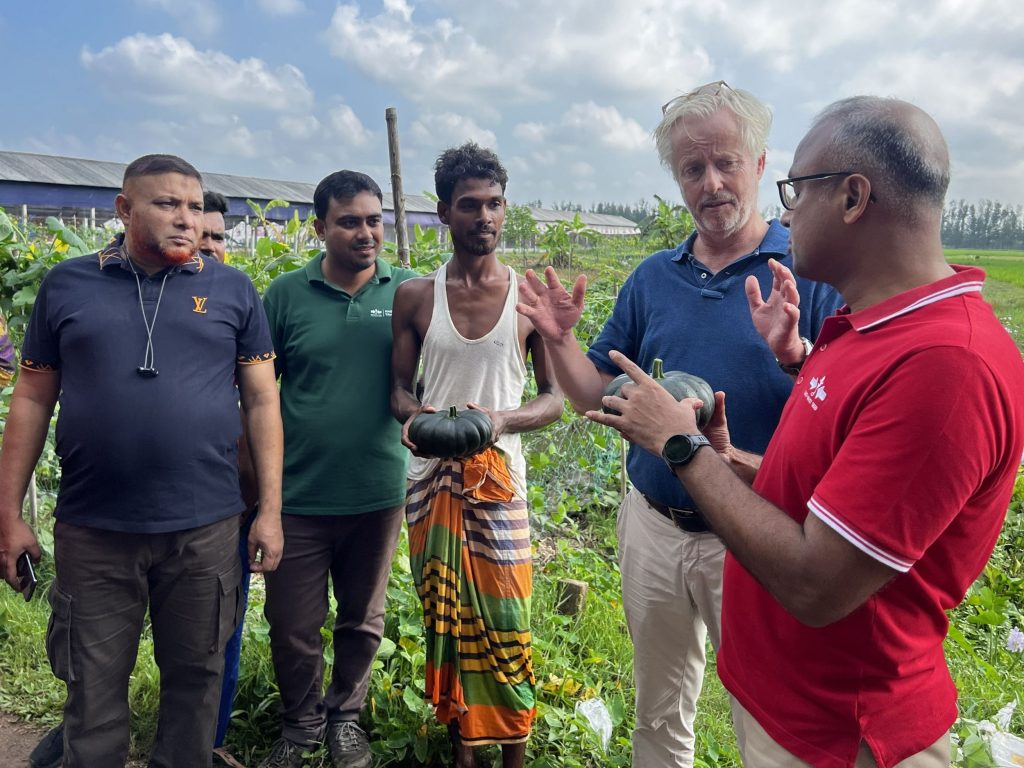
The trustees then traveled to Noakhali, Hatiya, and Subarnachar, visiting multiple project sites and engaging directly with farmers, agro-input retailers, and distributors. They were able to see firsthand EWS-KT’s impact in areas such as improved crop cultivation, adoption of modern techniques, women’s empowerment, and sustainable agri-business development.
While in the field, the trustees met with Community Farmer Facilitators trained by EWS-KT, women farmers’ groups, and local entrepreneurs, who shared how EWS-KT’s interventions have improved the productivity and livelihoods of smallholder farmers. The field visits highlighted the positive shift toward business-oriented, climate-resilient farming methods.
“KT techniques have improved our farming practices and increased crop yield. Now the farmers in my community understand the importance of choosing good quality seeds, growing seedlings in a raised nursery, and using mulching and trellising,” explained one Community Farmer Facilitator.
Learning Farm in Faridpur
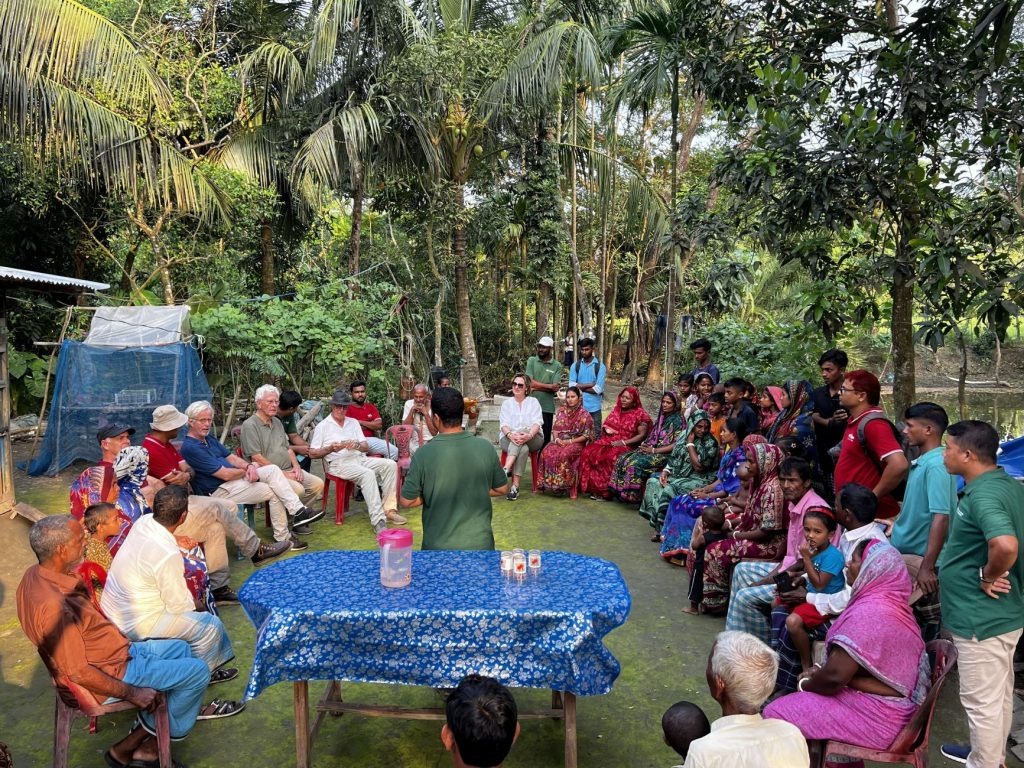
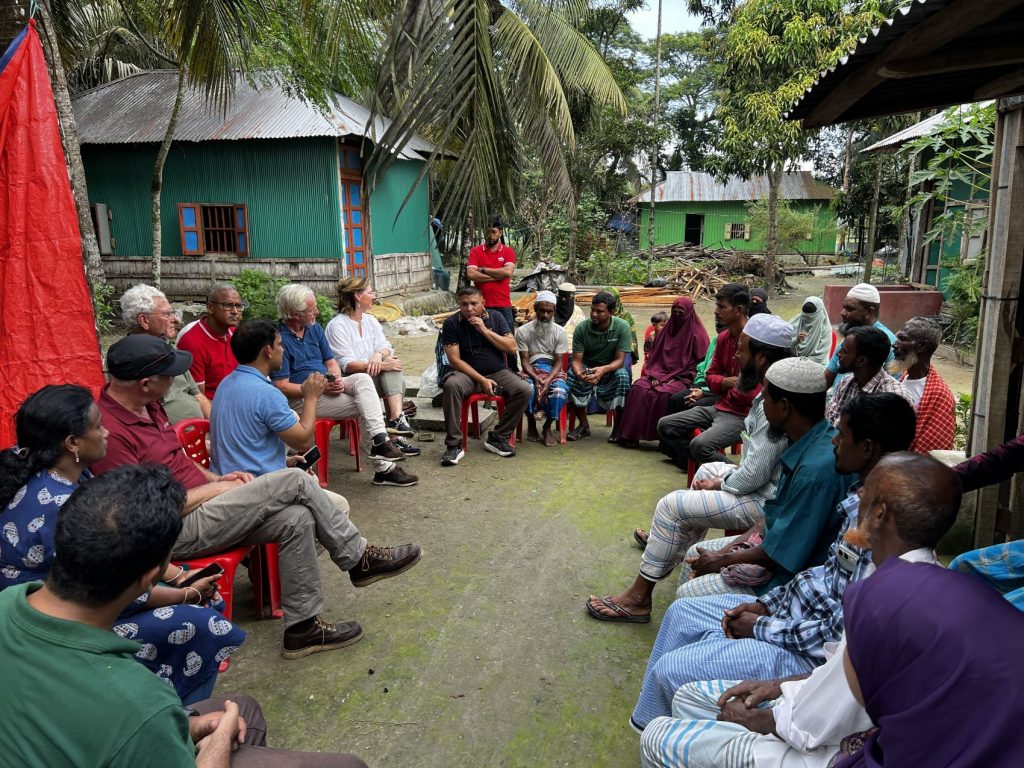
The visit concluded in Faridpur, with discussions on the EWS-KT learning farm’s progress and the impact it has had at both the national and community levels. Personnel from the Bangladesh Department of Agricultural Extension have received training in climate-smart techniques here, and several local NGOs bring farmers they are working with to the learning farm for training sessions. Farmers from neighboring communities also use this valuable resource. In all, over 1,700 farmers have benefited from the learning farm.
While in Faridpur, a small group of farmers from Patuakhali and Bhola spoke to the trustees and shared some of their challenges, such as heavy rainfall during the monsoon season, more frequent natural disasters due to climate change, and irrigation problems during the dry season, as well as their successes with EWS-KT techniques.
At the end of their action-packed visit, the Board of Trustees expressed their appreciation for the dedication of the Bangladesh team and reaffirmed their commitment to supporting the country’s journey toward more sustainable and inclusive agricultural growth.