

Pumpkin Revolution: How Odeta Became an Agent of Change in Kyaka II
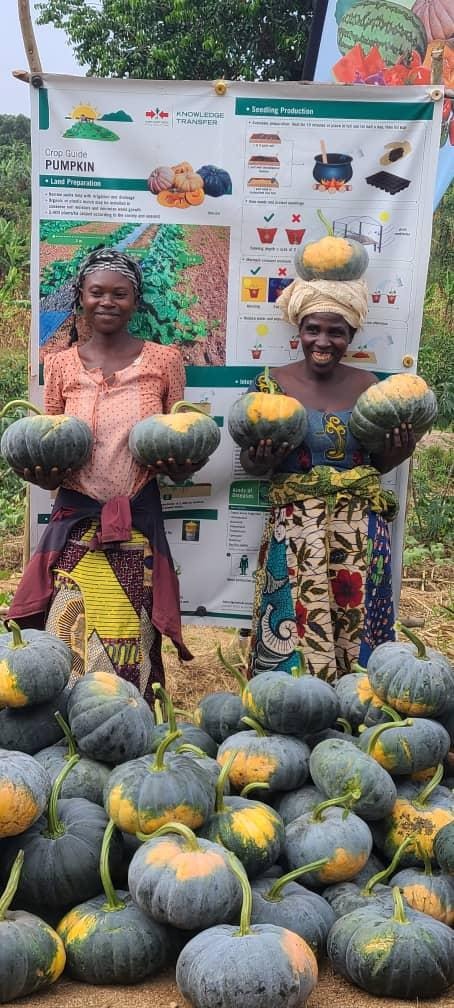
KYEGEGWA DISTRICT, UGANDA – Odeta Dukizmana, a 37-year-old mother of three from the Democratic Republic of Congo, is now a proud pumpkin farmer in western Uganda. This is her story.
I am a refugee from the Democratic Republic of Congo and have navigated a life defined by uncertainty in Kyaka II Refugee Settlement, where I am the secretary of the Maendeleo Mazuri village savings and loan group in Bwiriza village. Previously, my farming endeavors were marked by limited returns. However, this changed when East-West Seed Knowledge Transfer Foundation (EWS-KT) introduced a pumpkin farming initiative in our community.
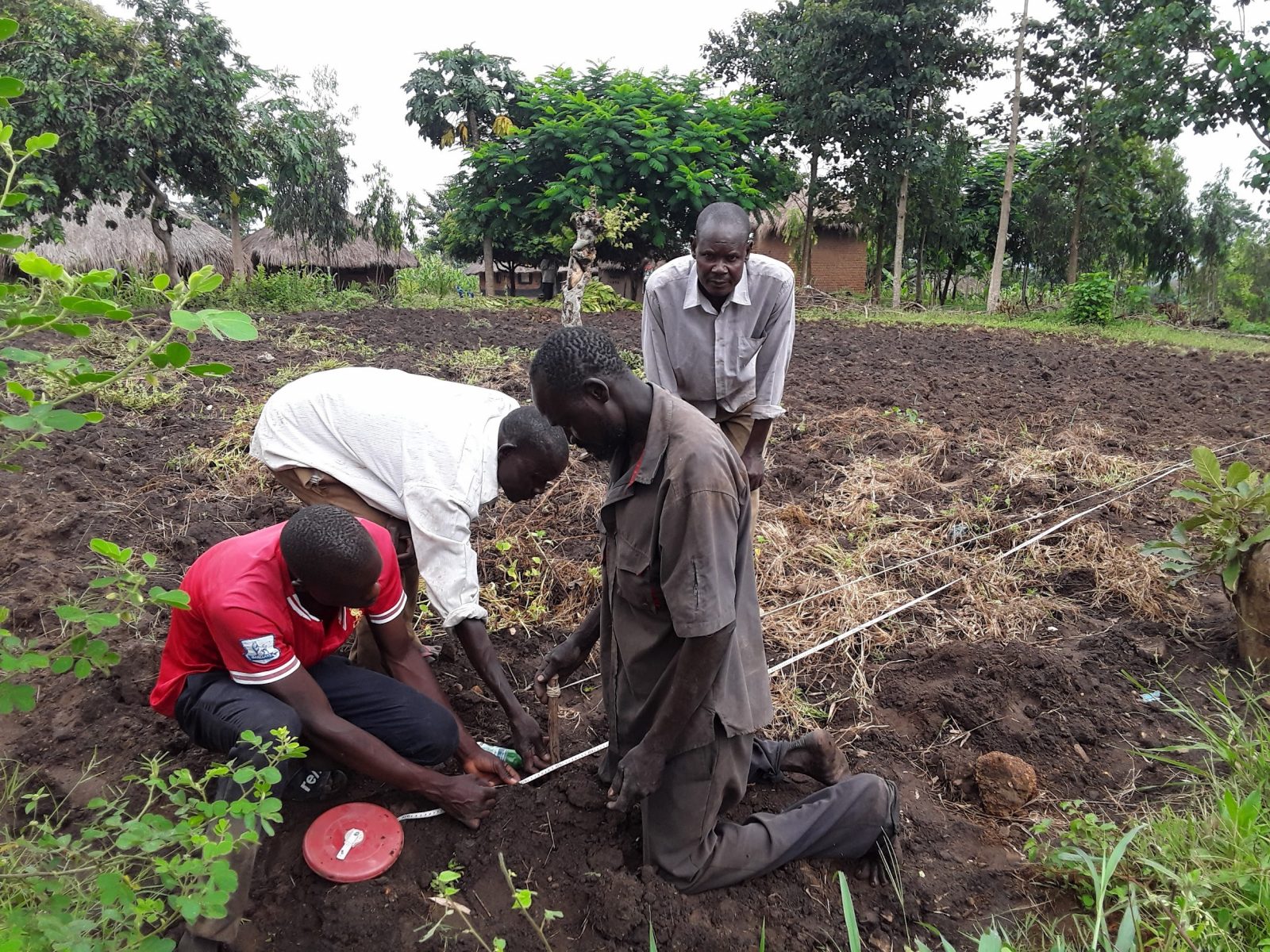
I made a bold decision and offered the only piece of land I had to host a pumpkin farming demonstration site. My neighbors laughed, questioning my choice to waste valuable land on a crop few grew. In truth, I was also doubtful about the pumpkin’s market value.
Two months after transplanting, the laughter from my neighbors stopped. These very same neighbors returned, begging for the highly nutritious pumpkin leaves. I seized the moment, quickly turning their interest into a profitable side business by selling the leaves at a fair price. My thriving pumpkin plants had transformed the community’s doubt into my first wave of customers.
The true test came when the pumpkins matured. With no commercial pumpkin farming in the settlement, I feared a marketing disaster. However, EWS-KT provided the strategic support needed by organizing a Farmers’ Field Day. The results were unbelievable: over 50 people attended, including community-based buyers, and every single pumpkin fruit we harvested was bought on the spot. I walked away without spending a single coin on transportation or marketing.
From that small 250-square-meter plot, I earned over UGX 470,000 (US$130). That was a massive increase compared to the mere UGX 100,000 (US$28) I typically earned from growing traditional crops, mainly maize and beans, on the same plot of land.
My demonstration plot not only proved the pumpkin’s value but also opened my eyes to the hidden pumpkin market in my community.
EWS-KT’s pumpkin farming initiative in Kyaka II is part of the Increasing Good Agricultural Practices and Access to Quality Horticultural Seeds in Kyaka II and Kyangwali Refugee Settlements and Host Communities project, which is supported by AVSI Foundation.