
How Divine Broke Down Barriers to Quality Seedlings in Uganda
KIKUUBE DISTRICT, UGANDA – In Kyangwali Refugee Settlement, a pre-project assessment revealed that local farmers often struggled to secure the success of their vegetable crops. Many farmers’ challenges started early on, at the seedling stage.
A complex mix of factors—limited access to and affordability of quality seeds, lack of technical knowledge, and time constraints—made seedling management risky and frustrating. Farmers either couldn’t buy quality seeds or lacked the dedicated time and expertise required for successful seedling production.
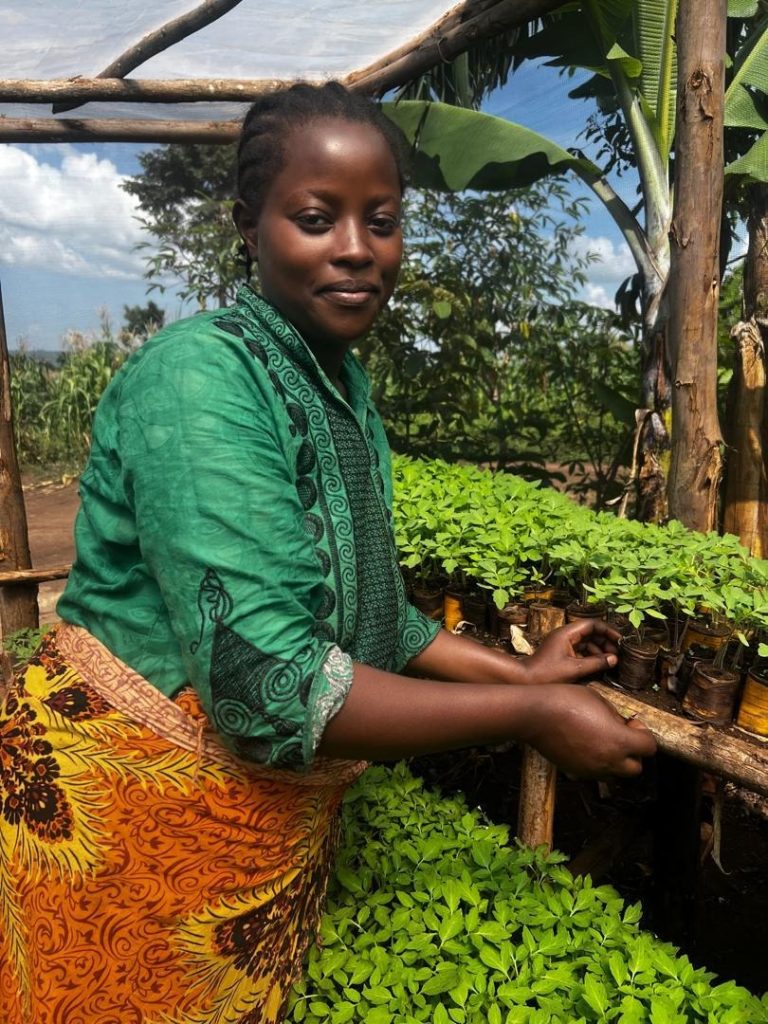
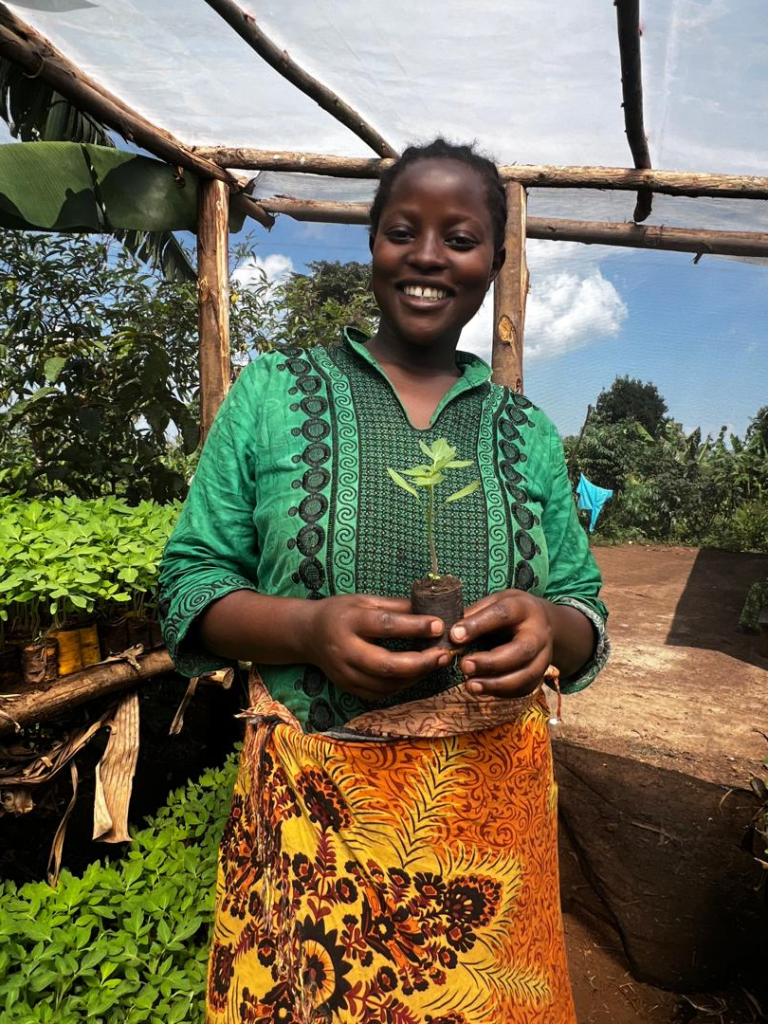
In Nyambogo village, 25-year-old Divine Uwera, a refugee from the Democratic Republic of Congo, took the initiative to address this gap by hosting a seedling production unit under the guidance of East-West Seed Knowledge Transfer Foundation (EWS-KT). The main parts of the seedling production unit, along with the soil media and leaf pots, were constructed using locally available, low-cost materials to ensure that the unit was easy to maintain and replicate—and, crucially, to demonstrate a model that future entrepreneurs could easily adopt.
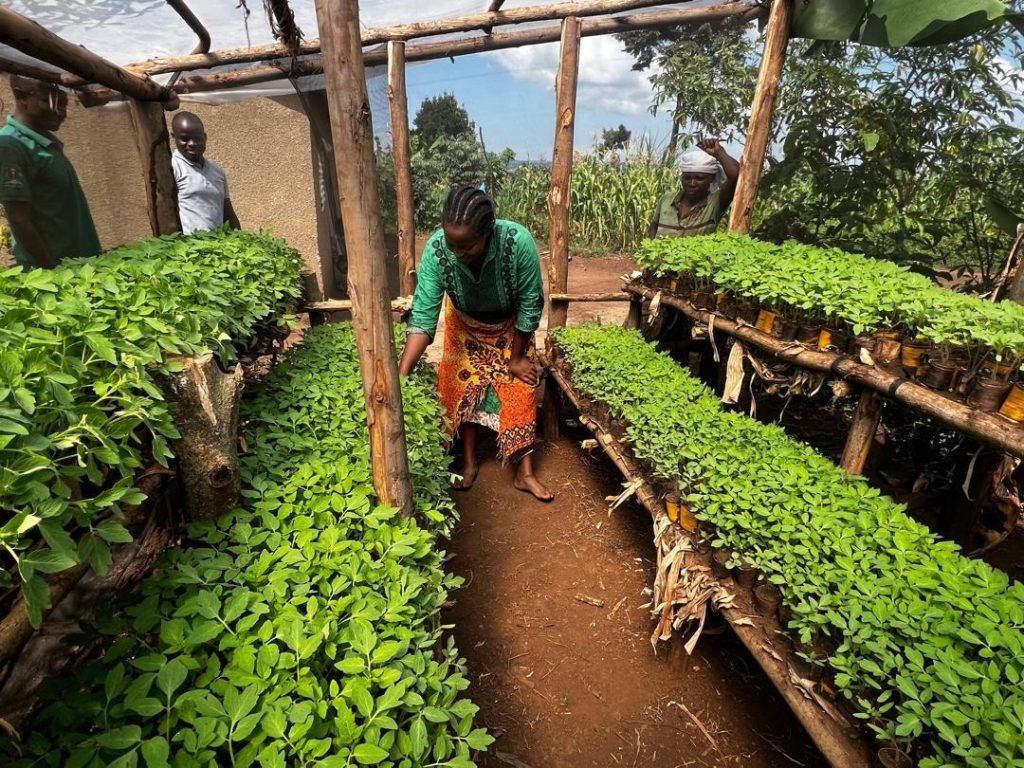
Divine’s enterprise quickly proved to be a powerful, dual-impact business, serving both her financial interests and the community’s agricultural needs. Established to address quality seed accessibility and affordability for farmers with limited resources, this service has become a crucial link for smallholder farmers in the settlement, who often have little production space. Instead of having to buy full seed packs (which require a larger upfront investment and can result in waste or expired inventory), they can now purchase the exact number of healthy, ready-to-transplant seedlings they need. This shift instantly lowers the financial barrier to engaging in high-value vegetable production and ensures that farmers start with robust, viable plants.
Beyond simple supply, Divine’s entrepreneurial venture solves two major technical difficulties for her clients: she is both de-risking seedling production and increasing time efficiency for busy farmers, freeing up time for vital field preparation and crop management tasks. By taking on this important role in the vegetable value chain, she has created a sustainable, income-generating business for herself while simultaneously establishing herself as a critical resource for her neighborhood.
EWS-KT helped Divine to become a seedling producer as part of the Increasing Good Agricultural Practices and Access to Quality Horticultural Seeds in Kyaka II and Kyangwali Refugee Settlements and Host Communities project, which is supported by AVSI Foundation under the SMILES project.