

The Rise of Uganda’s Pumpkin Production Sector
By David Baguma, Senior Project Lead for East-West Seed Knowledge Transfer Foundation in Uganda
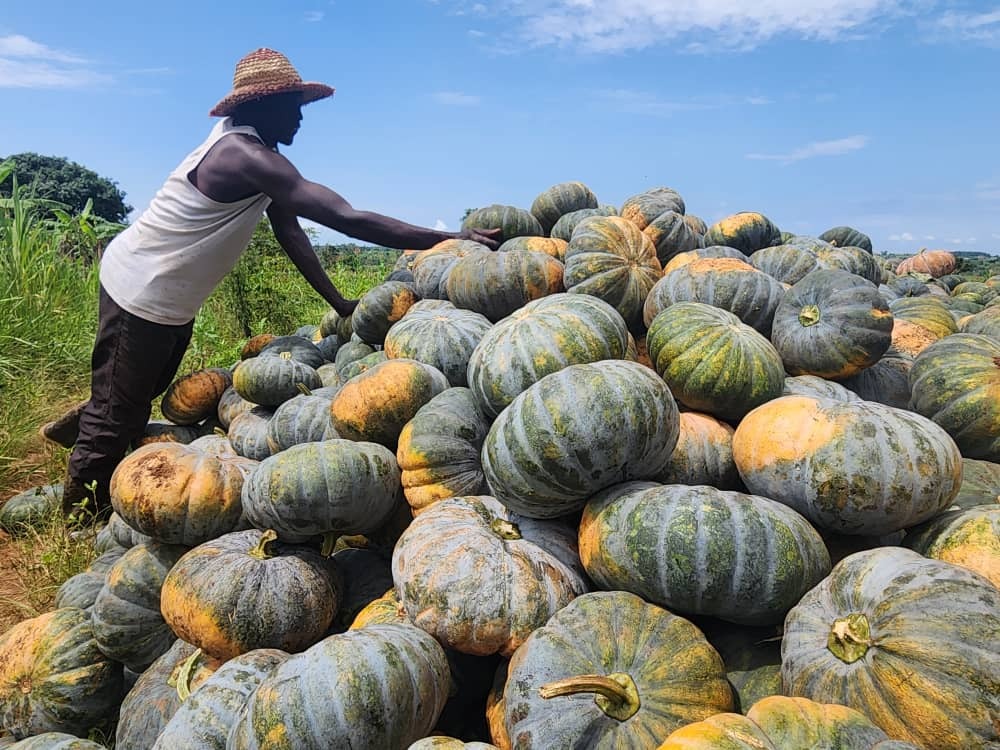
CENTRAL & WESTERN UGANDA – Two years ago, our Pumpkins in Africa project—which focused on introducing commercial pumpkin farming in Uganda—officially ended after training more than 14,000 farmers.
But the pumpkin story is far from over.
While key value chain and support structures—from community farmer trainers to agro-input dealers to vegetable brokers—were well established by the conclusion of the project, initial adoption of pumpkin farming was low.
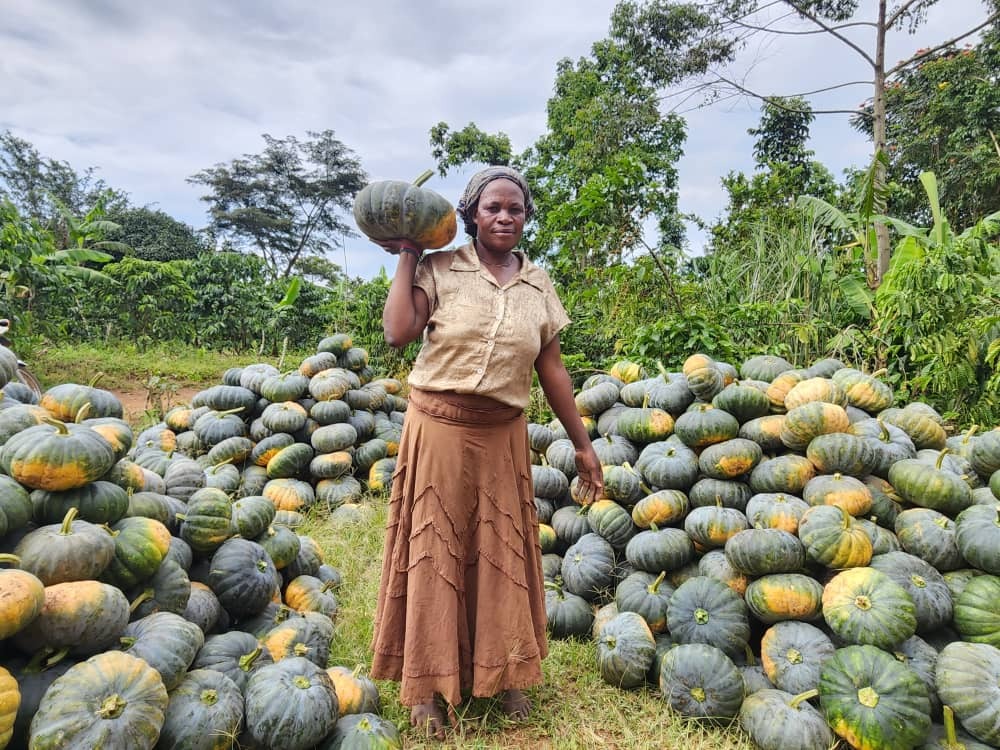
Today, the story is totally different. Hybrid pumpkin varieties and commercial pumpkin operations have exploded in popularity, transforming Mityana district—the heart of the Pumpkins in Africa project—into Uganda’s undisputed pumpkin hub.
Mityana: The Center of Commercial Pumpkin Farming
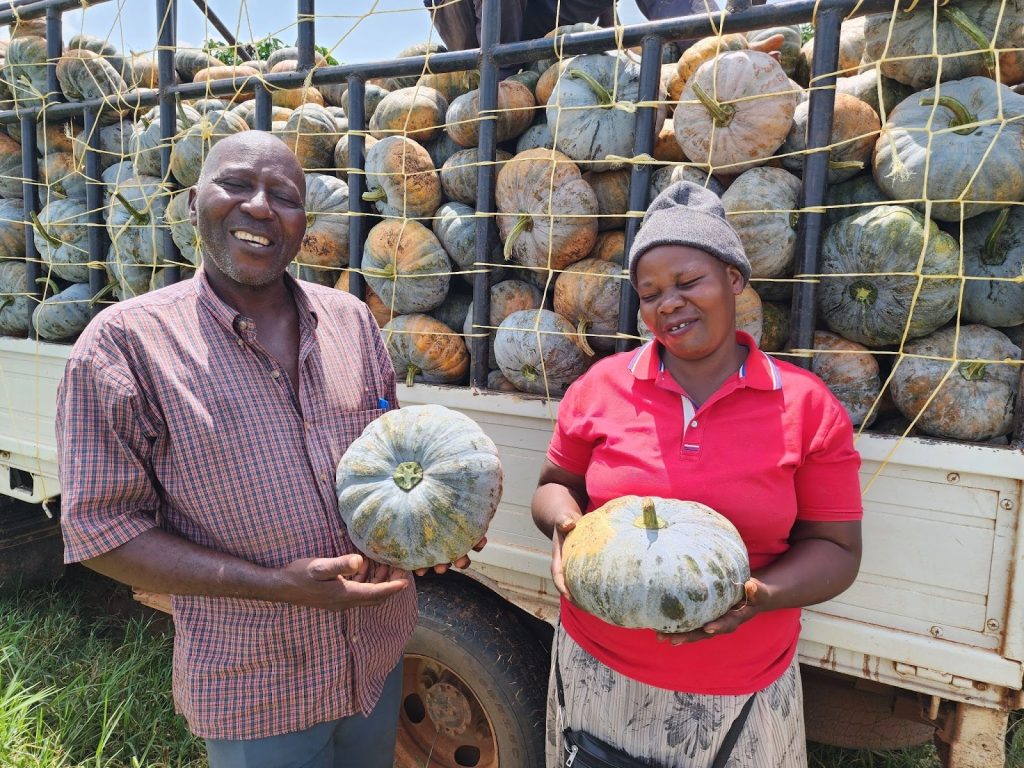
The high adoption rate in Mityana, with over 270 acres planted this season with hybrid pumpkin seeds, is a testament to shifting market forces and farmer ambitions.
The key driver behind this boom is rising demand, both domestically and internationally. Countries like Kenya, Rwanda, and Congo are actively seeking Mityana’s pumpkins. It’s not just about fresh consumption; the versatility of the fruits is fueling a value-addition revolution. Seeds are processed into oil, and flesh is processed into snacks and flour due to the pumpkin’s vast nutritional benefits.
This increased demand is fostering the expansion of pumpkin production acreage across the country, turning a regional initiative into a national movement.
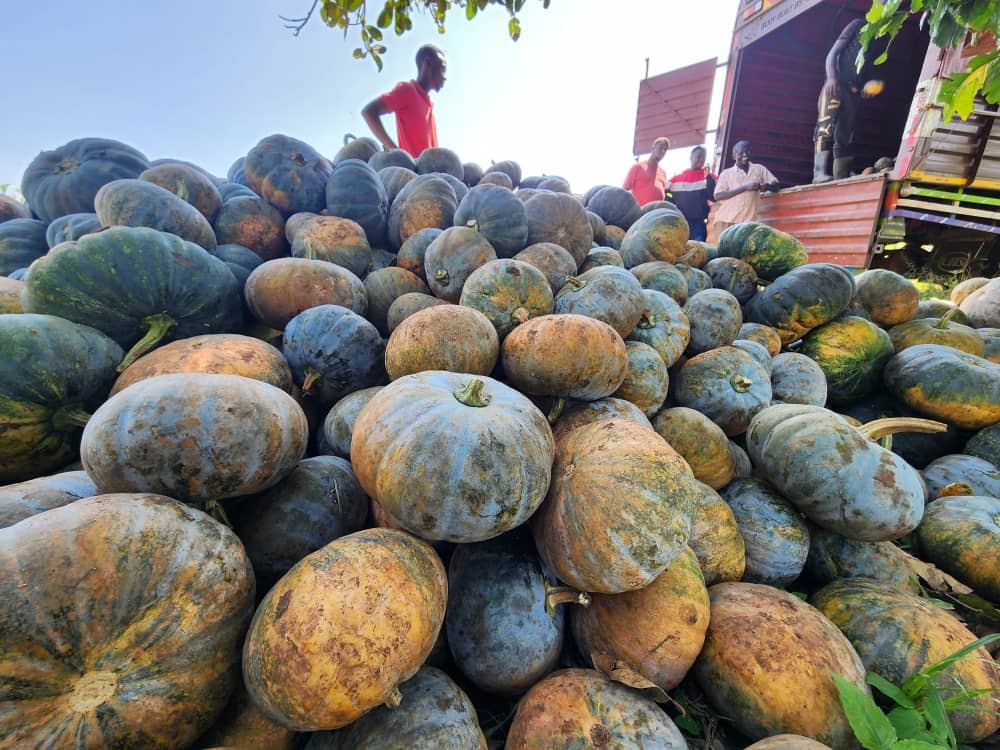
While the market is clearly growing, market price stability remains a challenge, with prices fluctuating based on supply, season, and demand. Knowledgeable Mityana farmers have developed a strategy to overcome this by heavily embracing off-season production—they plant during the low-production dry season (June, July, and early August), ensuring that their harvests are ready in September, October, and November, when prices are highest. In November alone, Mityana farmers were collectively harvesting over 10 metric tons of pumpkins weekly.
The international market has taken note. Kenyan traders are increasingly active, with prospects of setting up warehouses in Mityana to act as collection points, offering farmers year-round market access, and even raising their buying prices to stay competitive with local buyers.
Emerging Growth in Kikuube and Kyegegwa
While Mityana is flourishing, the story is different in districts like Kikuube and Kyegegwa, where the local economy is dominated by tobacco, banana, and cassava farming. Commercial pumpkin production is virtually unheard of.
This is where extension efforts step in. Under Phase 2 of the Increasing Good Agricultural Practices and Access to Quality Horticultural Seeds in Kyaka II and Kyangwali Refugee Settlements and Host Communities project, pumpkin demonstration gardens were established in Kikuube and Kyegegwa districts.
Despite initial skepticism about the market, motivated youth groups took a leap of faith, planting 4 acres of pumpkins. Without previous experience in vegetable cultivation, these young people had a lot to learn.
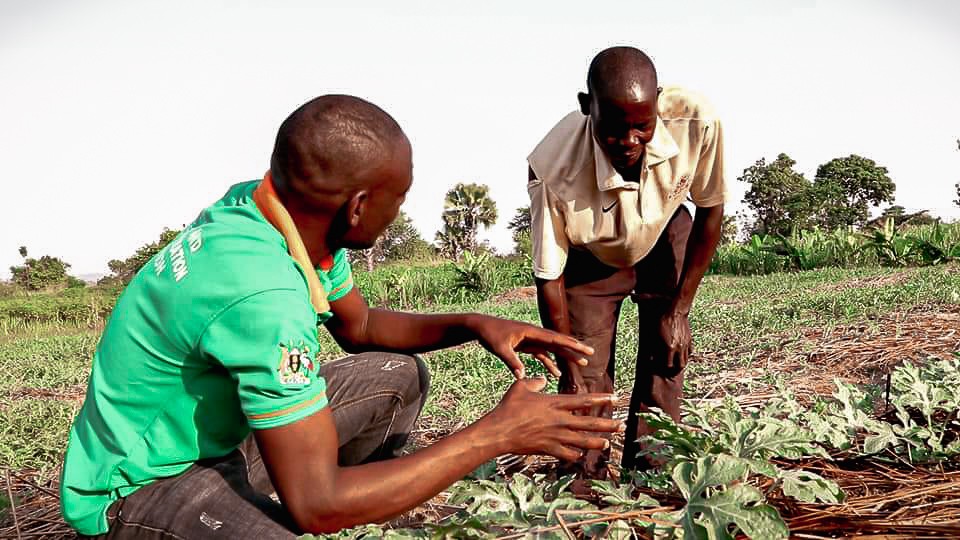
Our field staff guided them through everything from land preparation and how to select a quality pumpkin variety to how to fertilize the crop and harvest the fruits. Thanks to this dedicated on-ground support and the farmers’ consistent commitment, the crops thrived.
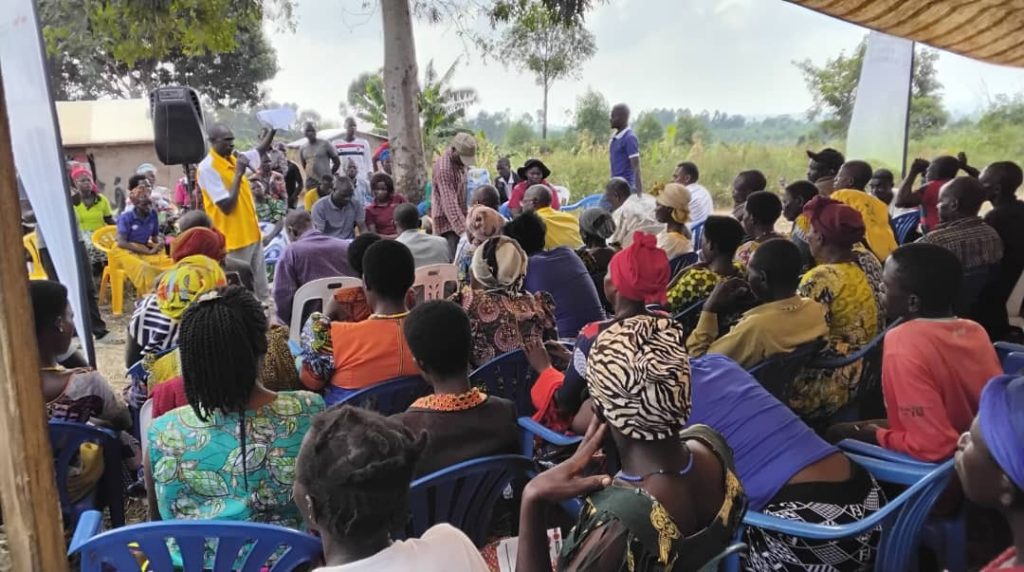
The youth groups’ success culminated in a massive Farmers’ Field Day, mobilizing over 200 agro-input dealers, government officials, community development and extension officers, and farmers.
Buyers also attended, eager to transport the newly harvested pumpkins they had purchased in advance. The event provided crucial market linkages and skills training, inspiring local farmers by highlighting pumpkin as a relatively easy-to-grow crop with serious income potential.
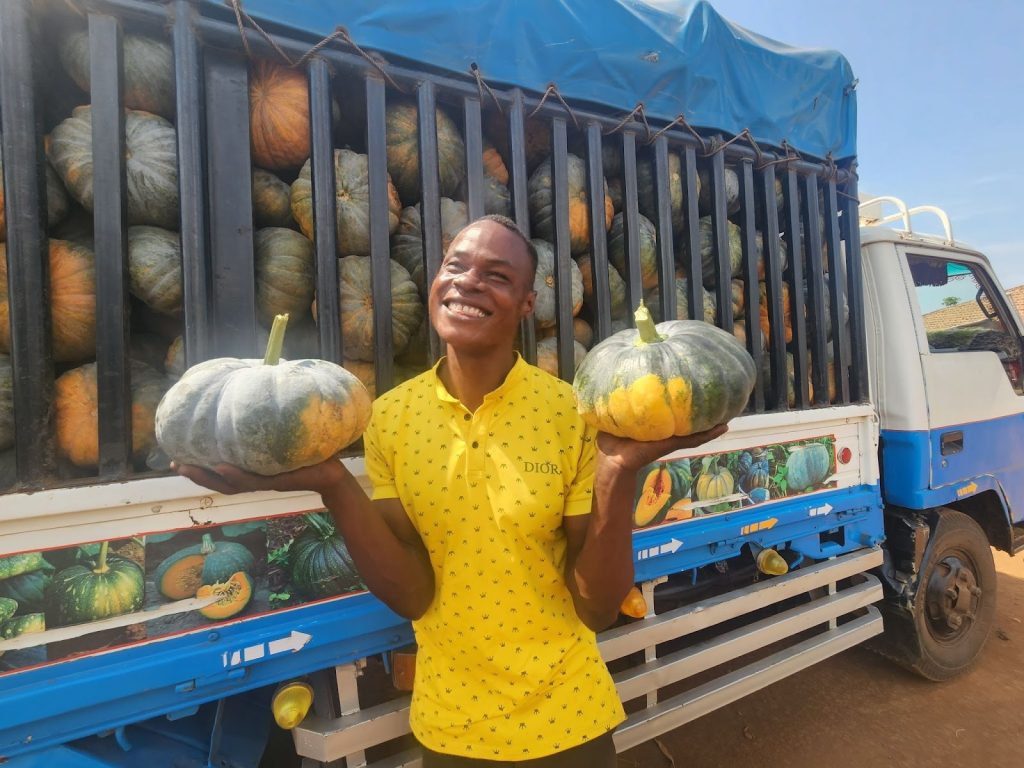
“Unlike our traditional income crops (tobacco, cassava, and maize), pumpkin has a shorter time until harvest, requires less capital investment, and less labor, making it ideal for everyone, even the youth and women who have less investment capital.”
– Robert Asiimwe, first-time commercial pumpkin farmer
Our pumpkin initiatives have evolved far beyond training; they have created sustainable market opportunities and demonstrated the power of commercially appropriate varieties backed by climate-resilient farming practices and strong market linkages. The success in Mityana is now becoming the blueprint for resilient and profitable agriculture across Uganda.
Building on the Pumpkins in Africa project, our team in Uganda continues to train farmers in pumpkin production through pumpkin-focused initiatives and more expansive partner projects. In Kikuube and Kyegegwa districts, we introduce farmers to commercial pumpkin production with support from AVSI Foundation.