

Leading the Way in Agar Malwa: Hokam’s Story
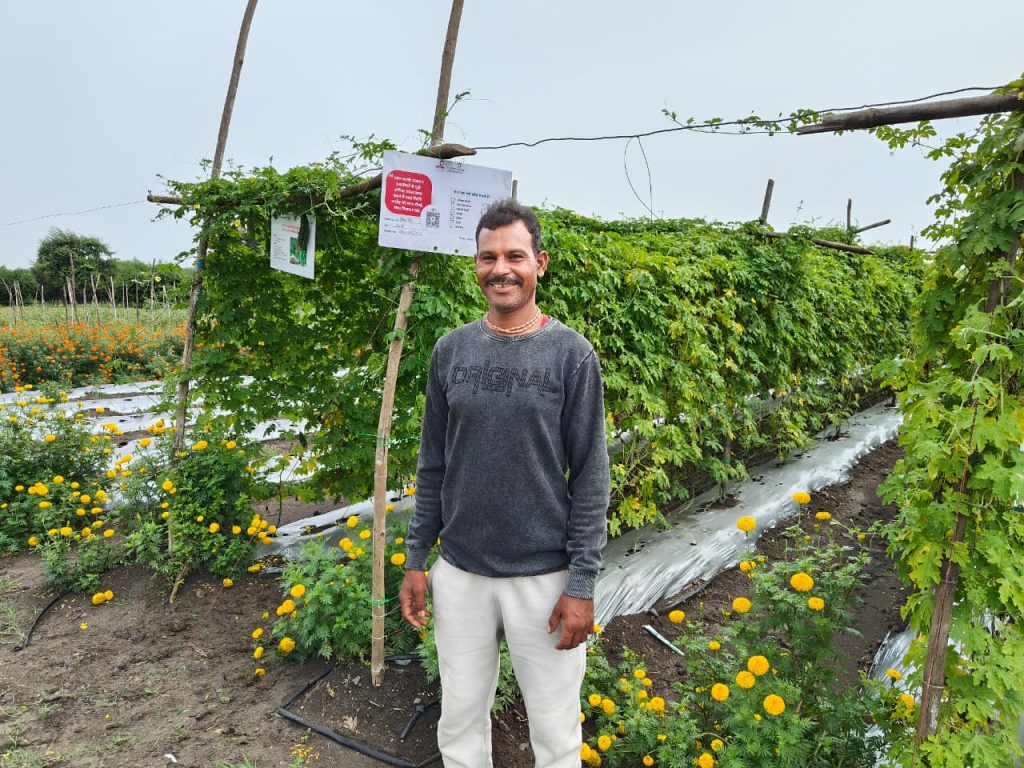
MADHYA PRADESH, INDIA – Hokam Singh, a forward-thinking farmer from Manasa village in Agar Malwa district, has always had a deep connection to his land. But what truly sets this 35-year-old apart is his willingness to learn, adapt, and lead the way in modern farming.
Transformed by Vegetables
Until recently, Hokam used his 4 acres of land to grow crops like wheat, soybeans, and chickpeas, earning an annual income of INR 50,000 to 60,000 ($565–$675). Now, he devotes 3 acres of land to vegetable production, and his earnings have more than tripled.
Hokam’s vegetable journey began in 2023, when he learned how to grow tomatoes from a farmer who was working with EWS-KT. After attending training at the other farmer’s demonstration plot, Hokam became an early adopter of improved tomato cultivation techniques, including raised beds, mulching, and trellising.
Encouraged by his success, Hokam asked EWS-KT Technical Field Advisor Mukesh Yadav to help him enhance his knowledge of vegetable production. In the first growing season of 2024, Hokam established a 400-square-meter sponge gourd demonstration plot, with Mukesh guiding him through everything from land preparation to harvesting.
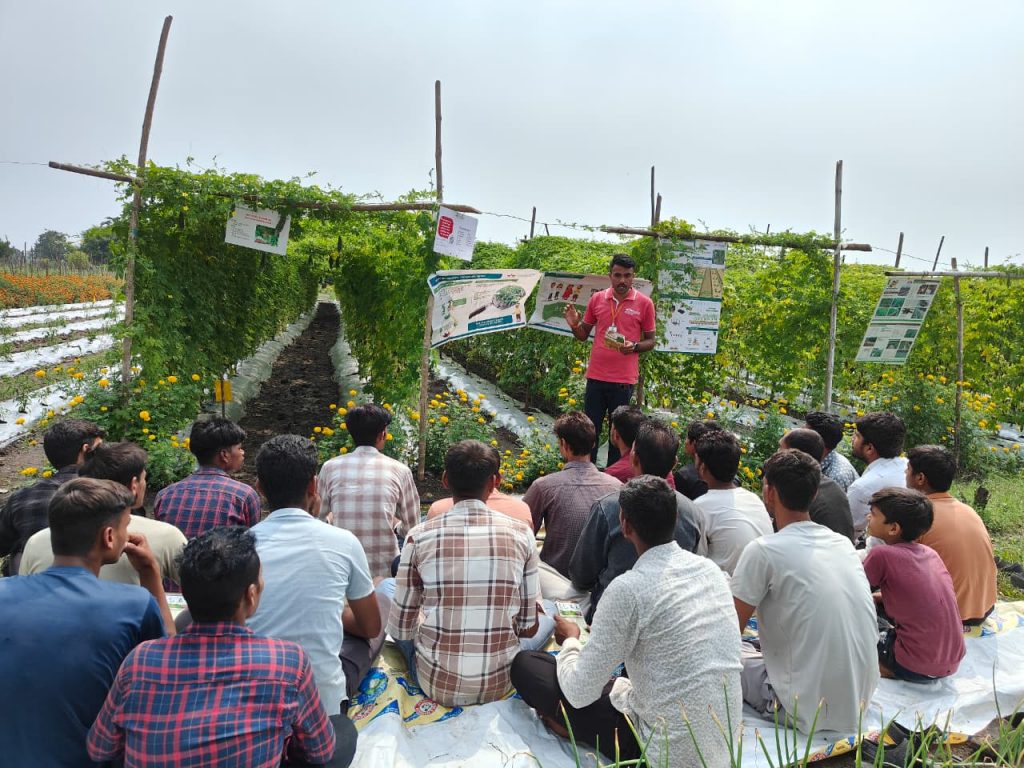
Hokam quickly realized how advantageous these modern techniques could be. From an investment of just INR 7,600 ($85), he earned a net profit of INR 14,800 ($165; a 194% return on investment) on the sponge gourd demonstration plot. He then applied these techniques to 1 acre of tomato and hot pepper, achieving an impressive profit of roughly INR 200,000 ($2,255).
Innovation Upon Innovation
One innovative technique that Hokam was particularly enthusiastic about was the use of raised beds. Raised beds create a favorable soil structure for healthy plant growth, reduce the risk of waterlogging, prevent soil compaction, and improve root development, all while making field activities—like pruning, monitoring for pests and diseases, and harvesting—more efficient.
Hokam quickly realized that using raised beds could be a game-changer for his vegetable crops. But there was a challenge: manually making raised beds across acres of land was labor intensive and time consuming.
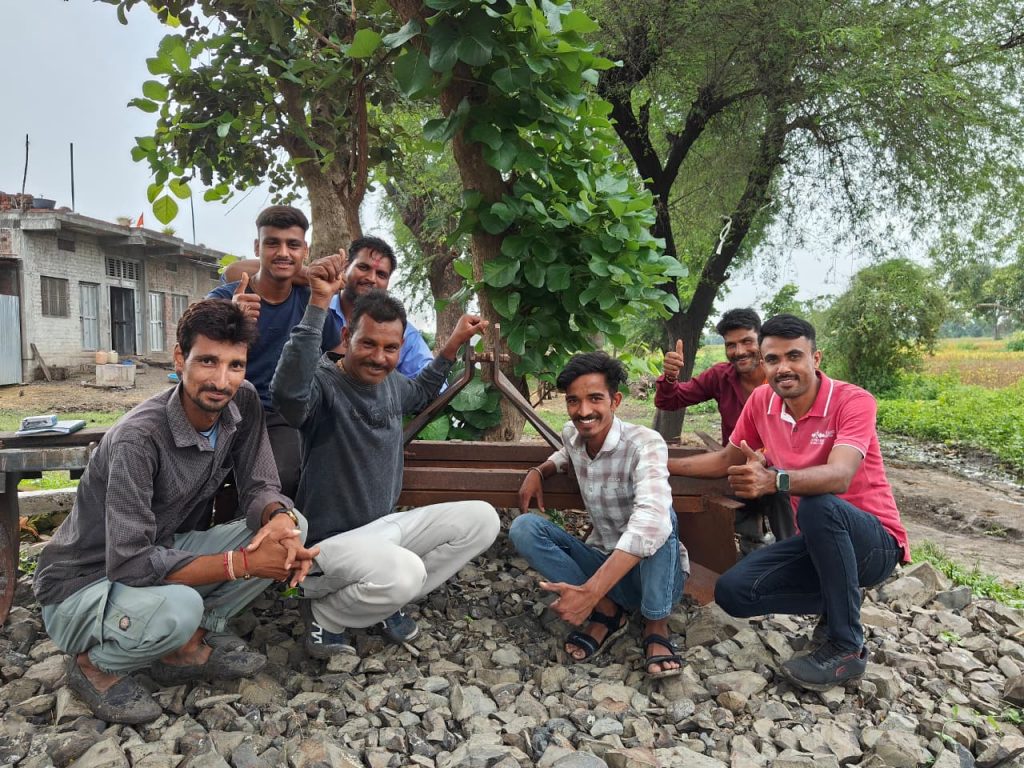
Determined not to let this hurdle hold him back, he decided to find a solution. With the help of a local engineer, he designed and built his own raised-bed-making machine—an innovation that made adopting this technique easier, faster, and more consistent.
Leading Change
Today, Hokam is successfully cultivating a variety of vegetable crops—including bitter gourd, cucumber, coriander, radish, and tomato—using raised beds and other improved farming techniques. Not only that, but he has inspired an entire farming community.
More than 11 farmers in Manasa are now growing vegetables, applying techniques like mulching, trellising, raised beds, and integrated pest management (IPM), which prioritizes prevention and monitoring. Hokam mentors farmers in Manasa and nearby villages as they venture into vegetable production, and he also rents his raised-bed-making machine to those who are interested.
He feels proud that other young farmers are trying something new that gives them a good income. As a pioneer in his community, Hokam isn’t just growing vegetables—he’s growing change.
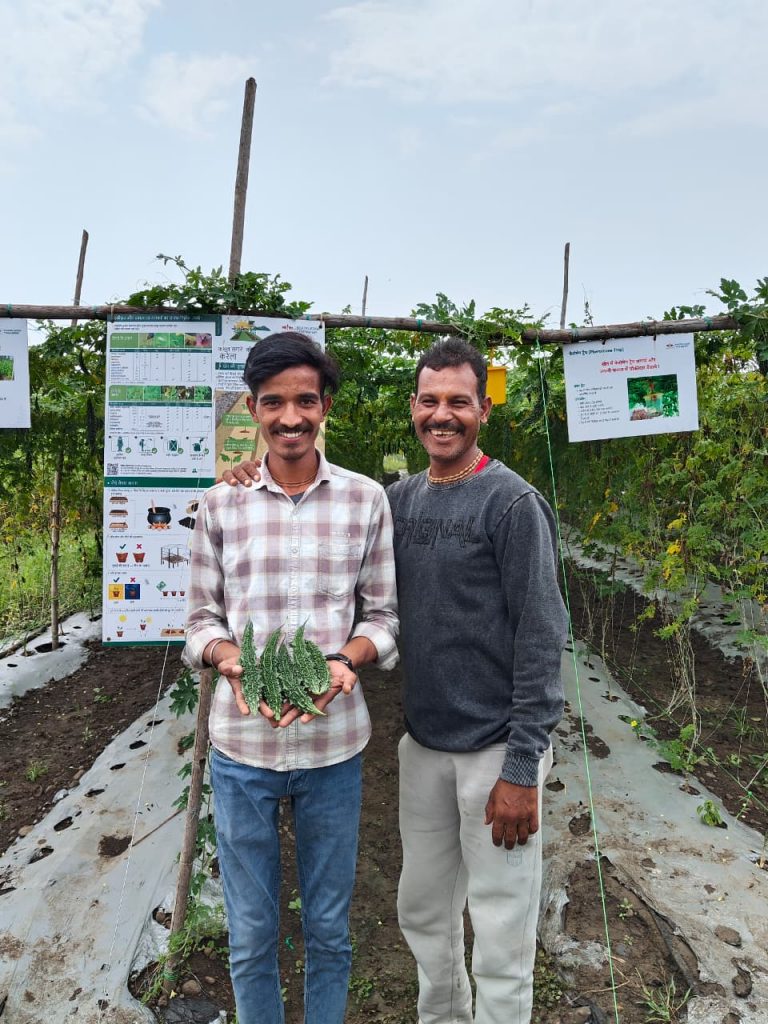
One of the farmers supported by Hokam is 23-year-old Hemraj Singh Sisodiya. By adopting raised beds, mulching, drip irrigation, and IPM techniques, Hemraj has seen healthier plants, fewer pest attacks, and improved vegetable quality. He has reduced his input costs by following balanced fertilizer application guidelines and has reduced his use of pesticides by using IPM practices.
“These techniques from EWS-KT are helping me to grow more with less,” said Hemraj. “They are saving me money and resulting in better-quality vegetables for the market.”