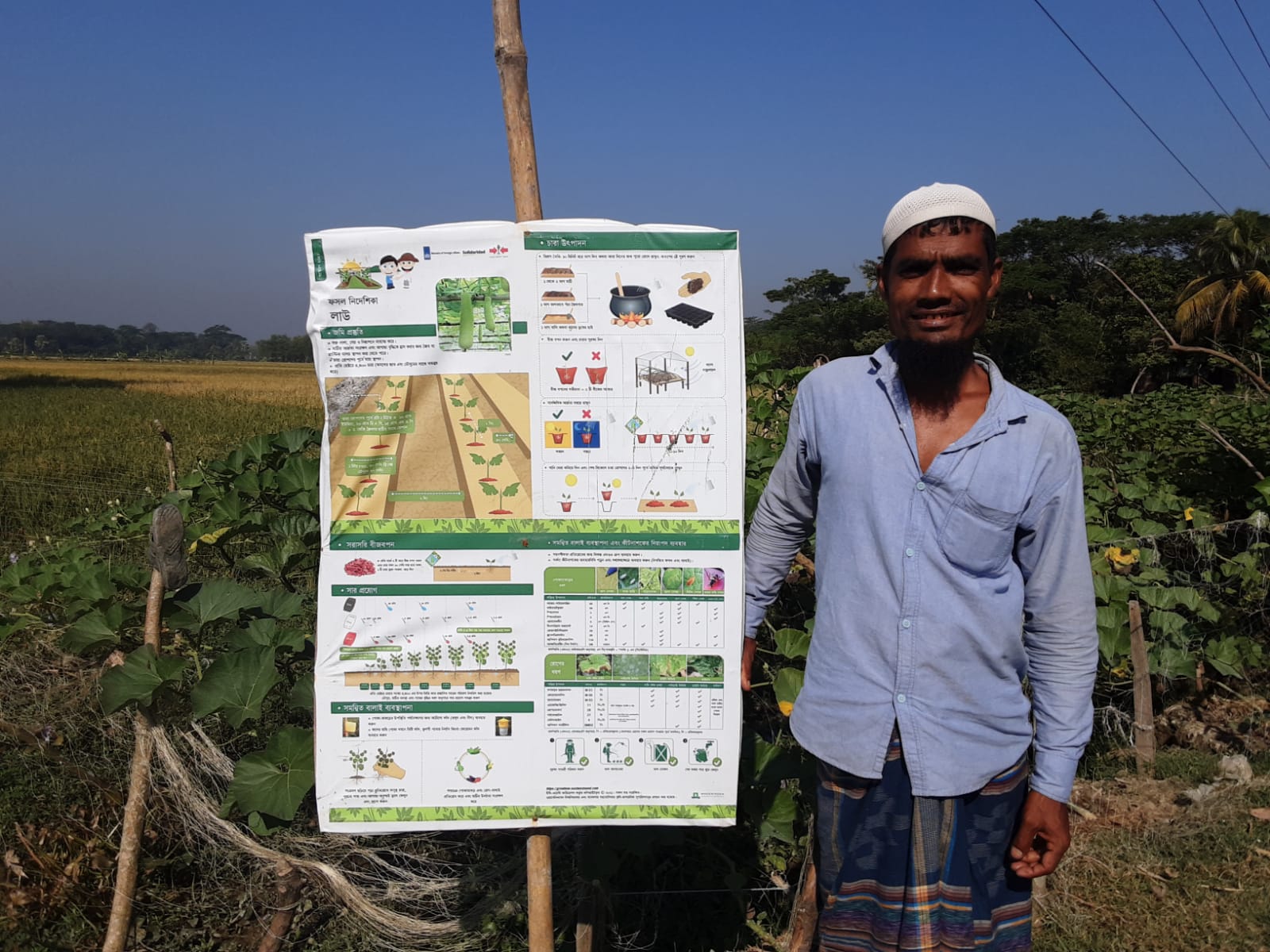


Hands-on Learning in South Sudan
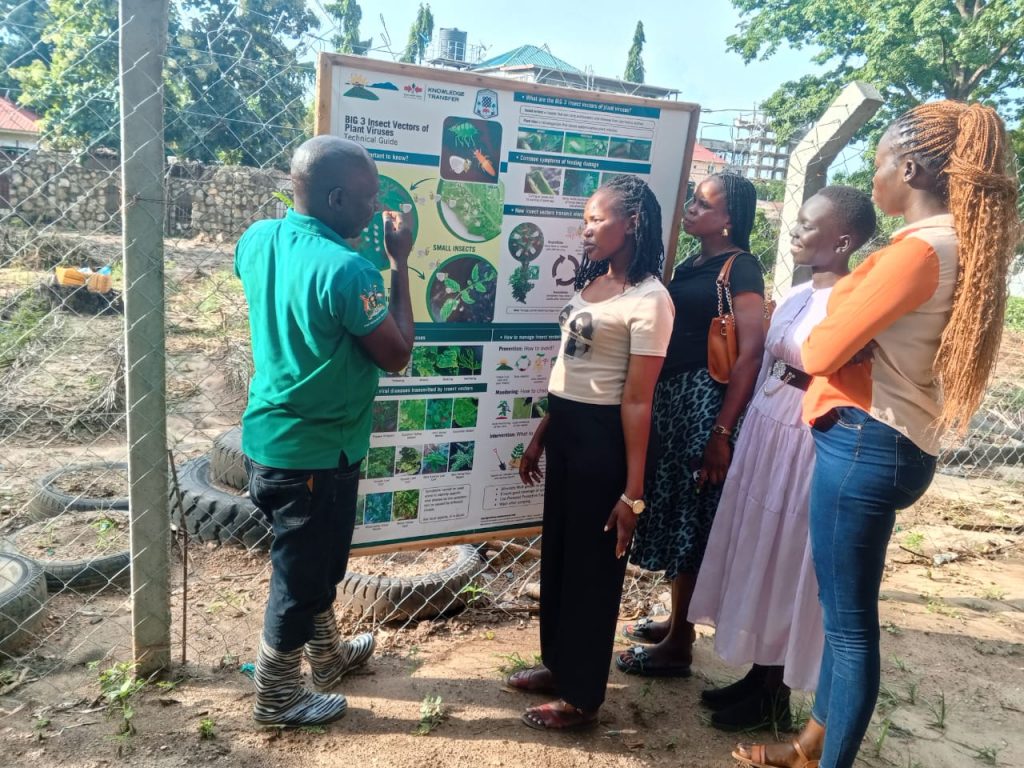
BOR & JUBA AREAS, SOUTH SUDAN – To contribute to the development of a resilient agricultural sector in South Sudan, we offer hands-on learning opportunities in vegetable production to farmers, agriculture students, and other stakeholders in the Bor and Juba areas. Climate-smart techniques and approaches like integrated pest management are key to farmers’ ability to sustainably grow vegetables for local markets.
Reaching Young People
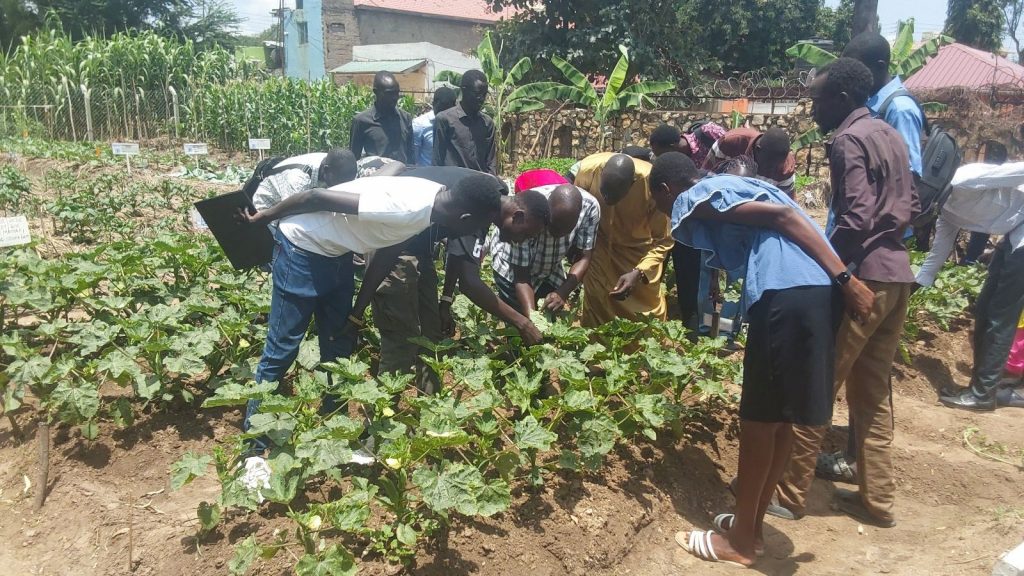
At the University of Juba, agriculture students recently learned how to identify common insect pests such as whiteflies, fruit flies, and green leafhoppers during a practical training by East-West Seed Knowledge Transfer Foundation (EWS-KT) staff. Held at the university’s vegetable production learning farm, this interactive session gave students the opportunity to apply their classroom education in a field setting.
Engaging Women
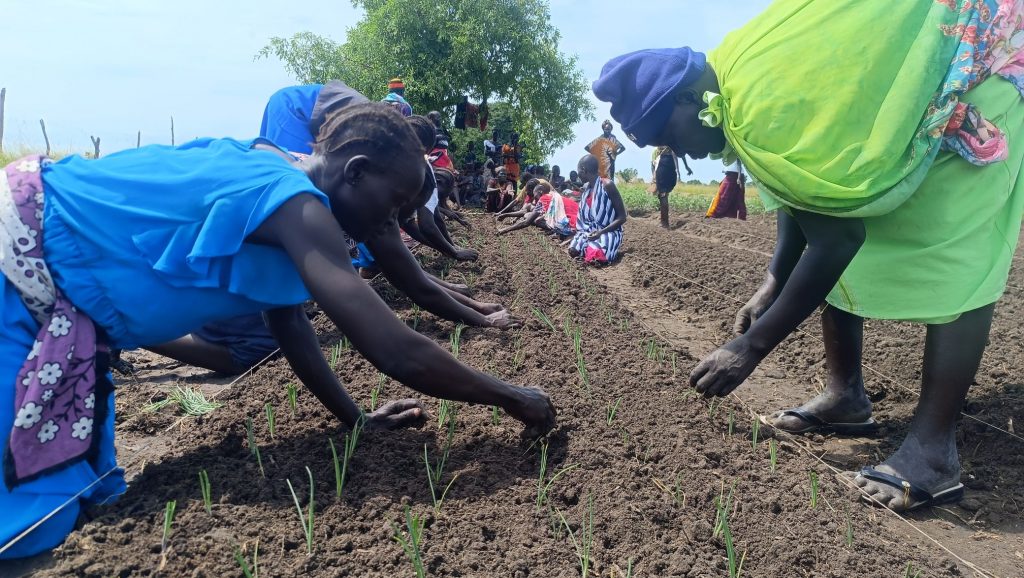
Farther north, in Jonglei state, the Kapaat Women Vegetables Group in the Bor area participated in a training on soil and water conservation, then learned how to transplant their onion seedlings. The women previously learned about seedling production, and the seedlings had reached the right stage for transplantation to the field. In the weeks to come, the group will take part in training sessions on weeding, pest and disease management, fertilization, harvest indicators, and post-harvest handling.
These women are gaining firsthand experience in improved vegetable cultivation techniques under the Accelerating Food Systems Resilience in South Sudan (AFSRiSS) project, which EWS-KT is implementing in collaboration with lead partner ZOA Dorcas and with support from the Netherlands Enterprise Agency.
While the women in the group are concentrating on growing onions in their own demonstration plot, they are also learning how to cultivate other vegetables at the learning farm on the campus of Dr. John Garang Memorial University of Science and Technology.
University Partnerships
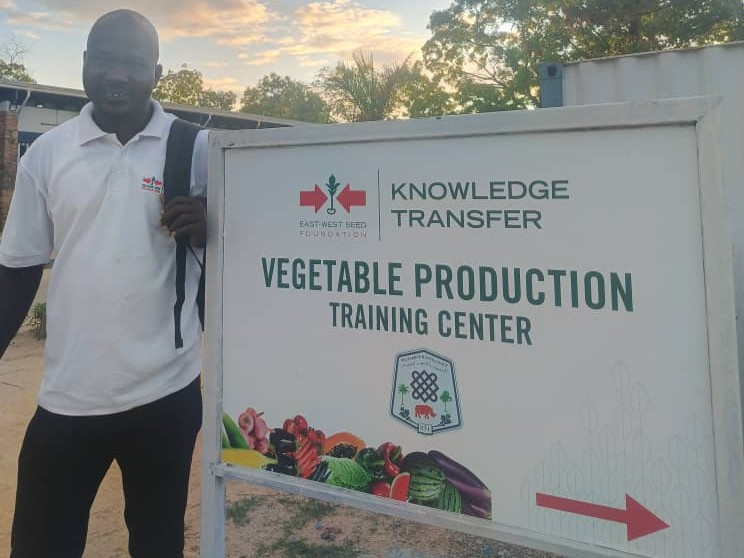
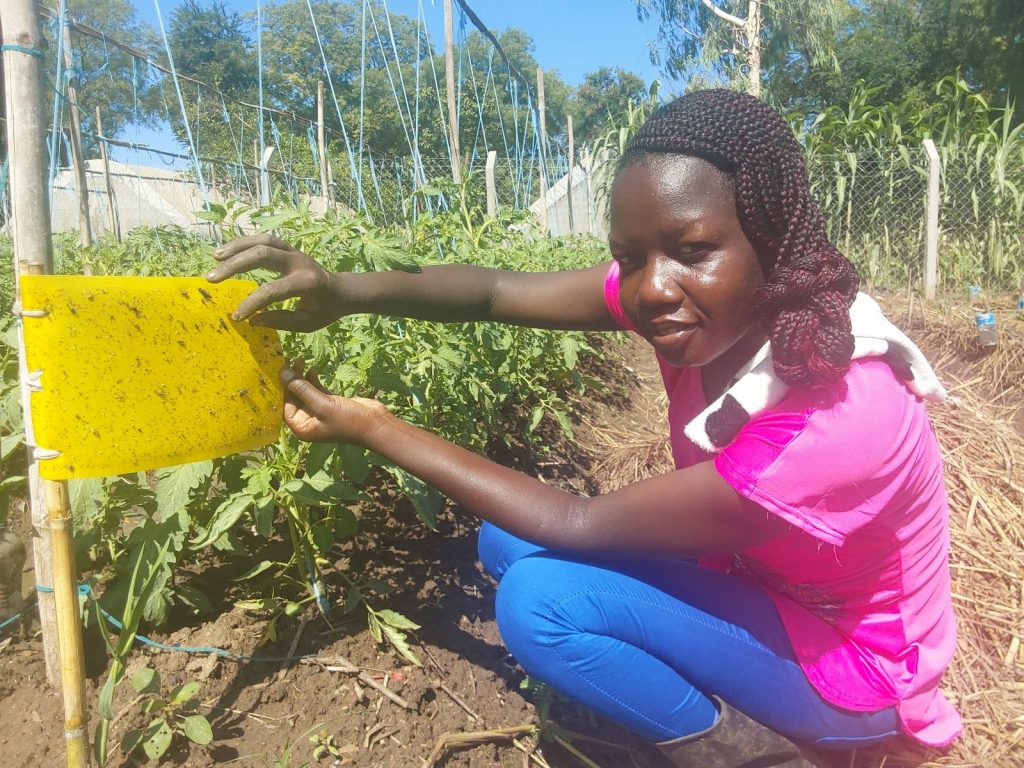
Our work in South Sudan is anchored by strong partnerships with the University of Juba, located in the country’s capital, and Dr. John Garang Memorial University of Science and Technology, in Bor. Vegetable production learning farms—developed with EWS-KT at the two universities’ campuses—serve as training centers for students, farmers, and agriculture sector professionals. They also attract dignitaries and government officials, who gain new appreciation for the opportunities that vegetable farming can provide.
Educating Communities
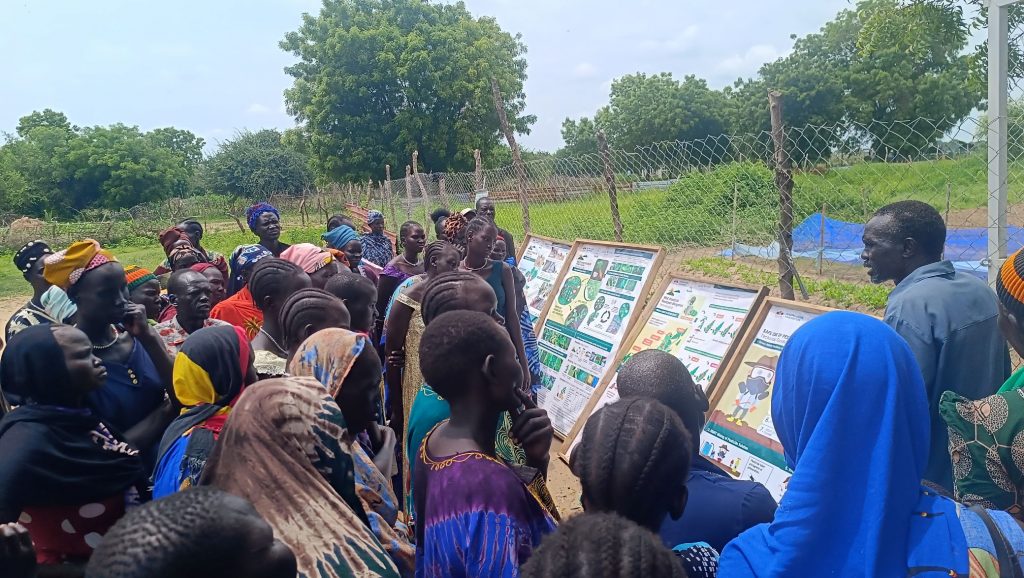
Farmer Field Days, held periodically at the two learning farms, showcase the high-quality vegetables and increased yields that result from using better farming methods. These public events also serve as training opportunities. At a Field Day in Bor earlier this year, 90 attendees learned about pest management and the 4 R’s of fertilizer use (right source, right rate, right time, right place), among other best practices.
By sharing improved vegetable farming techniques through a variety of approaches—directly training farmers at learning farms or in their communities, building trainers’ knowledge for long-term impact, and providing students with practical experience for future careers in agriculture—we are helping to build the foundation for a more robust vegetable sector in south-central South Sudan.