

Continued Learning for Sustainable Success: Joel’s Story
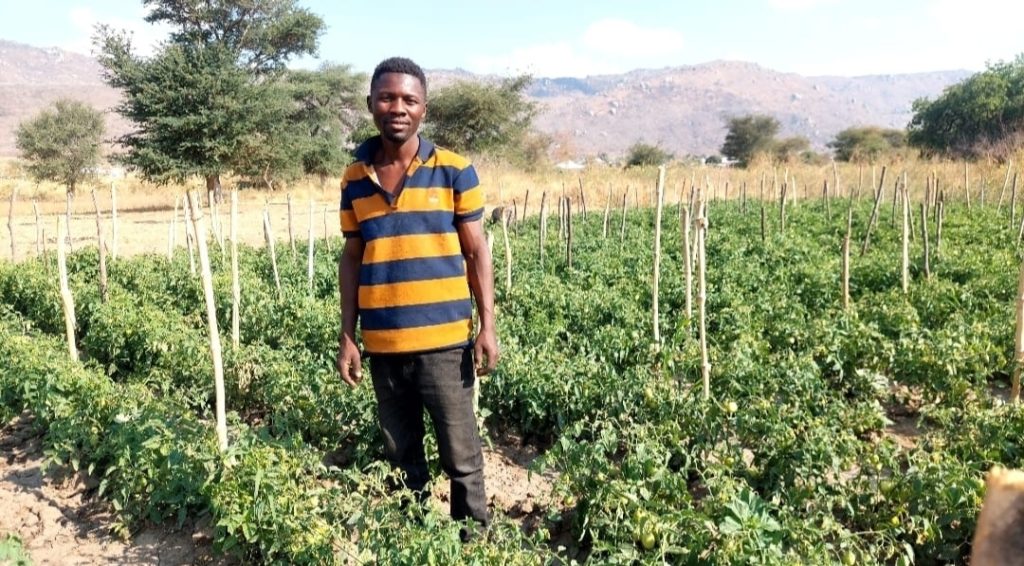
IRINGA REGION, TANZANIA – Joel Mwaisaka was struggling with low yields. A 34-year-old farmer from Sombeli, Joel had started farming without a plan in place and had little knowledge of basics like plant nutrition and pest management.
Building Knowledge for Better Yields
Motivated to turn his farm around, Joel became a key farmer with East-West Seed Knowledge Transfer (EWS-KT) in late 2024. Under the guidance of Technical Field Officer Hadija Lihumbo, he began at the beginning—with business planning, market requirements, and record keeping. Following his business plan, he prepared a tomato demonstration plot and planted 900 seedlings, carefully spaced 50 centimeters apart.
Hadija held group training sessions at Joel’s farm, explaining what nutrients his plants needed and how to effectively fertilize them. He also gained practical experience in crop maintenance and integrated pest management (IPM), prioritizing preventive techniques and learning how to identify and respond to insect pests and diseases.
His tomato plants kept growing and producing. “Before, I used to harvest only three or four times,” he said as the season progressed, “but now I am on my eighth harvest, and my tomatoes are still looking good.” With an investment of 400,000 shillings ($154), he ultimately earned over 1.4 million shillings ($538)—a profit of 1 million shillings.
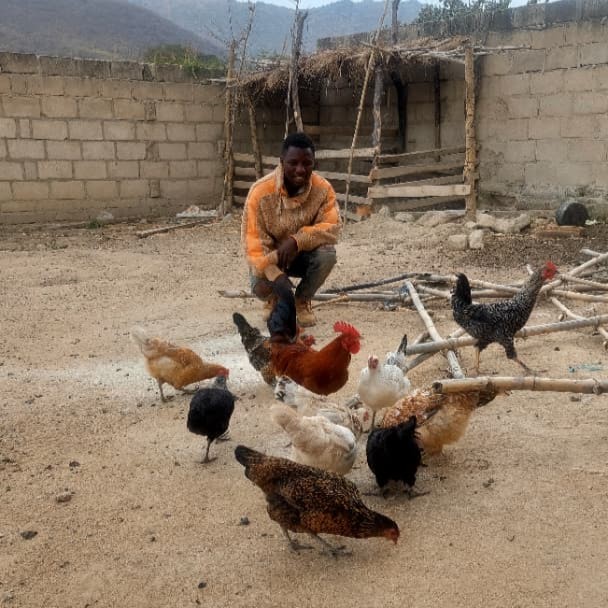
Joel’s success with the demonstration plot inspired him to expand. He started a new, larger tomato field and diversified his farm income by purchasing a flock of chickens.

Ongoing Support Spurs Continued Growth
With EWS-KT’s support over the next few months, Joel developed his ability to address issues affecting his crops. In November 2025, routine field monitoring uncovered leaf miners and signs of late and early blight. Joel quickly followed the Technical Field Officer’s recommendations—pruning affected plants, carefully disposing of diseased plant material, and controlling soil moisture to prevent blight recurrence.
Since then, Joel has more than quadrupled his tomato production, to 1,800 plants. But with his newly acquired understanding of market demands, he doesn’t start them all at the same time. Instead, he has divided his land into three plots and embraced staggered production, with one plot at the transplanting stage, another at the vegetative stage, and the third at the harvest stage. This strategic approach ensures continuous tomato production and results in higher and more stable income from the market.
“I now see farming as a real business,” he said. “EWS-KT has been my light, showing me the right path and hope in horticulture.”
As his vegetable farm continues to grow, Joel is devoting part of his profits to achieving another dream—opening an agro-input shop—and has begun coaching other young people who have been inspired by his fields to engage in agriculture.