

Project Summary
Fostering Climate Resilience by Empowering Smallholder Farmers for Sustainable Vegetable Production
India | 2025–2028
Context and Project Objective
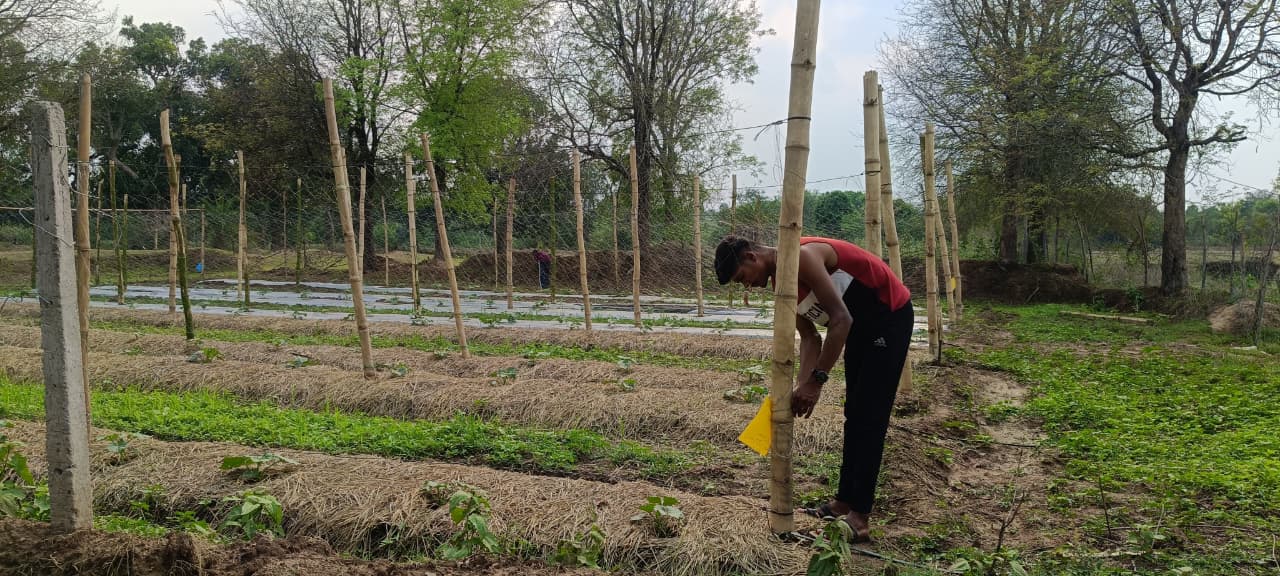
Smallholder farmers in Assam and Chhattisgarh face a combination of low soil fertility; climate-related risks, such as erratic monsoons that affect crop growth; and limited access to practical technical support. Vegetable yields in these two states are 10–15 tons per hectare, compared to a national average of 25 tons per hectare. Although vegetable production offers strong potential to improve rural incomes, many farmers still lack the knowledge, confidence, and local services needed to produce vegetables in a climate-smart and profitable way.
This project aims to strengthen the livelihoods of 45,240 farmers by supporting them in adopting sustainable vegetable production practices that improve yields, incomes, and resilience. EWS-KT will focus on practical farmer training, demonstration-based learning, and the development of local knowledge and advisory systems that continue to serve farming communities beyond the life of the project.
Activities
EWS-KT will work with farmers and local partners in northeastern Assam and in Chhattisgarh to build a strong foundation for climate-resilient vegetable production.
Core activities include:
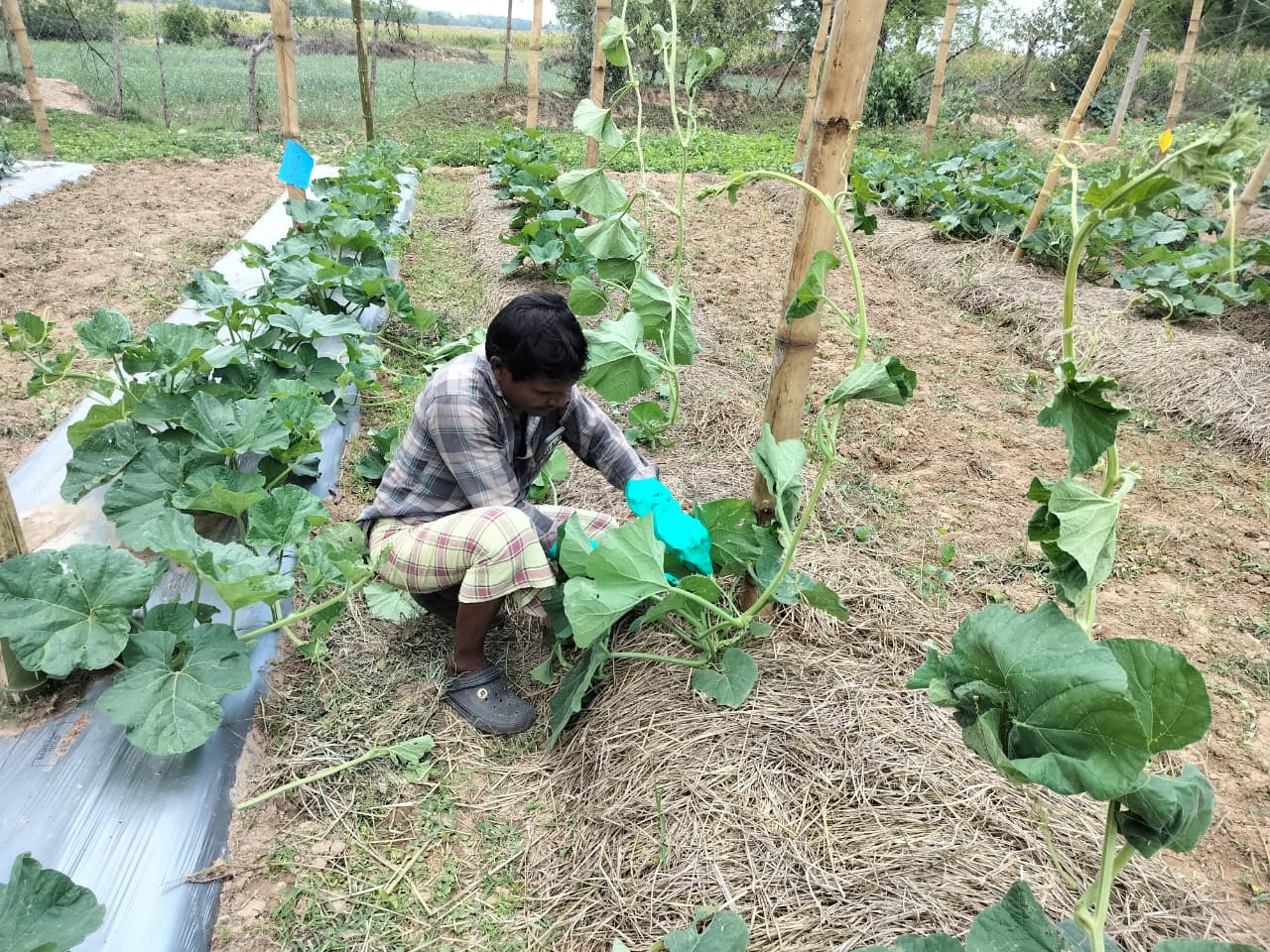
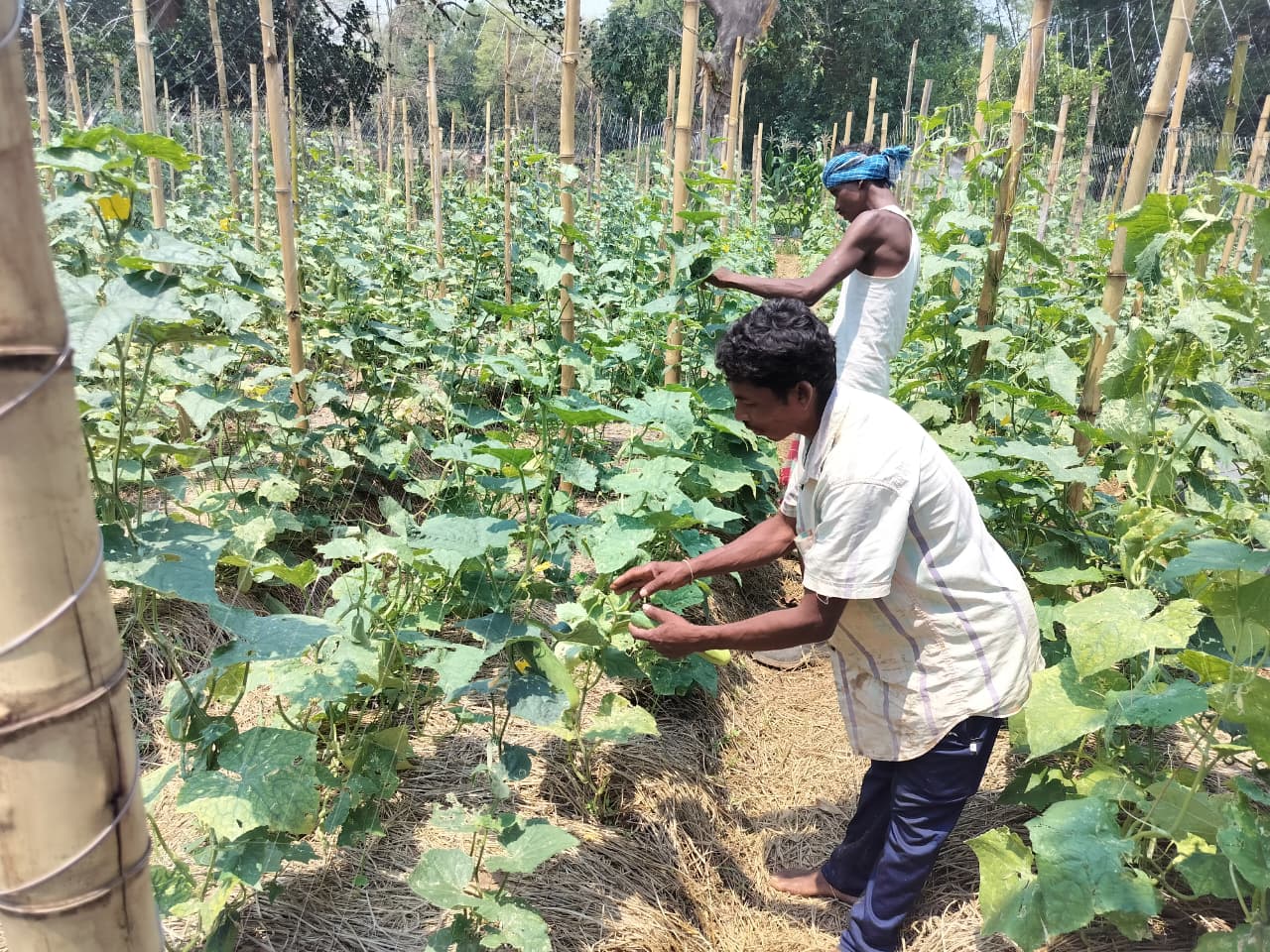
- Setting up 1,680 demonstration plots with 840 key farmers, and providing training and mentoring to these farmers across the crop cycles.
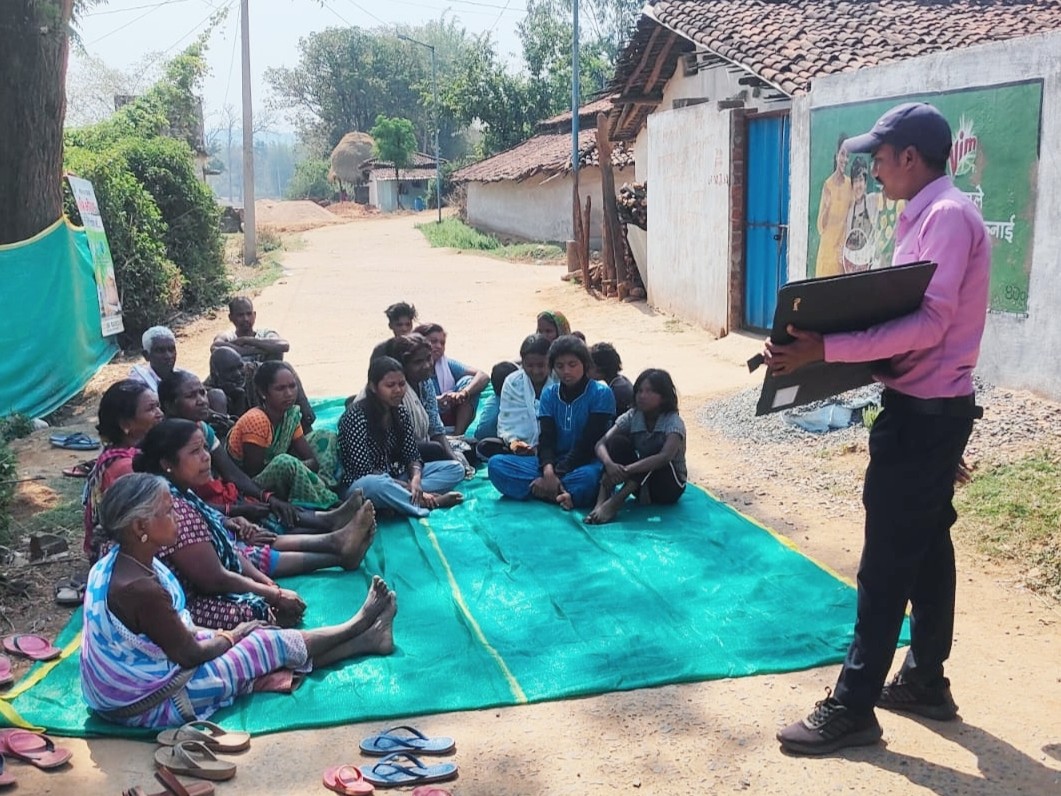
- Holding hands-on training sessions at the demo plots, reaching 4,200 neighboring farmers (attending 4-6 training sessions) and 25,200 additional farmers from the area (attending at least 3 training sessions).
- Establishing two Centre of Excellence learning farms—one in each project state—as longer-term hubs for testing, demonstration, training, and innovation exchange.
- Organizing 1,176 Field Days at demonstration plots and the Centres of Excellence, helping farmers compare practices, learn from results, and make better production decisions. A total of 15,000 additional farmers will be reached through the Field Days and exposure visits to demo plots.
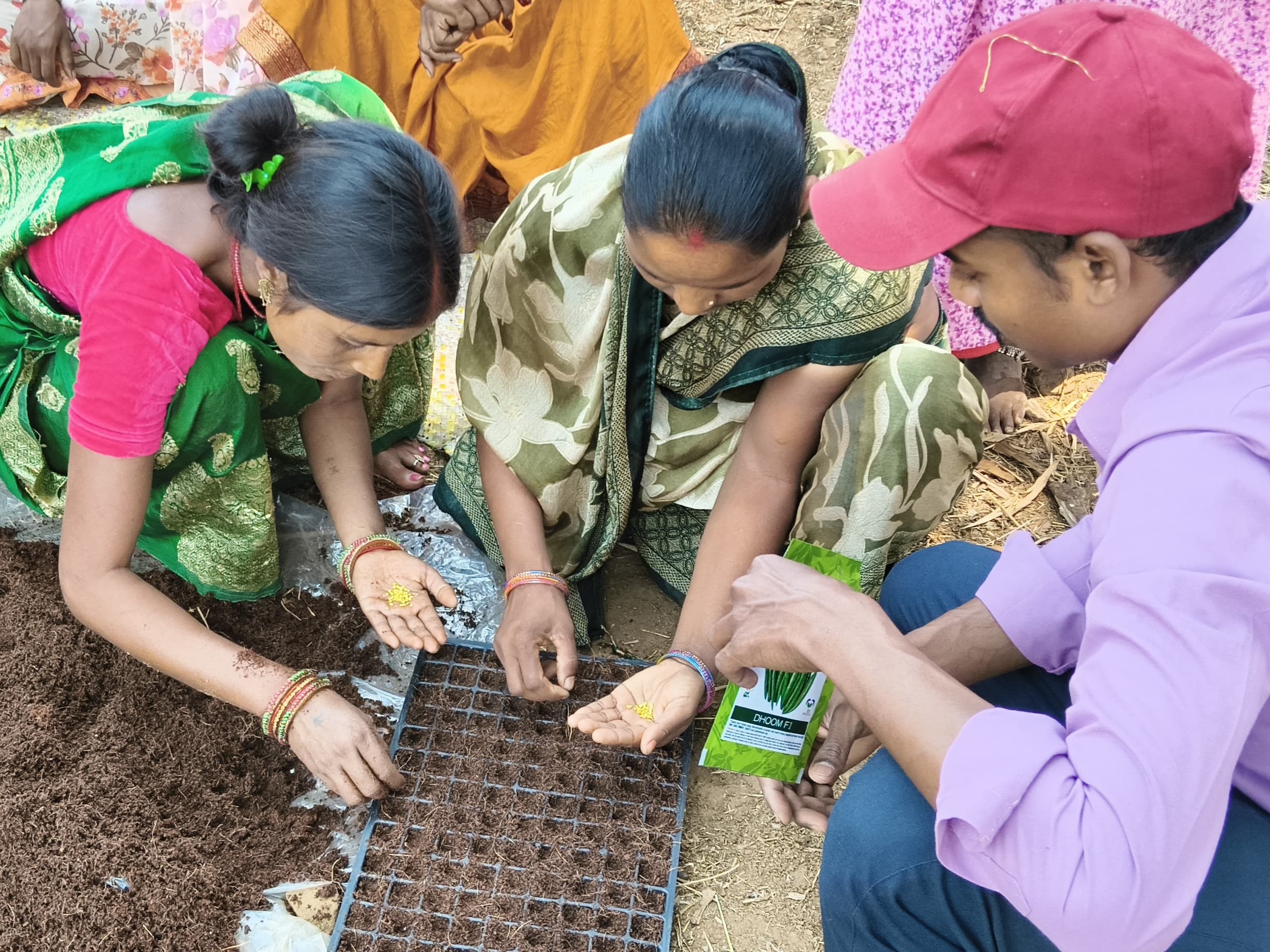
- Training 28 farmers as Rural Extension Workers (community-based trainers) to provide continued support and strengthen local advisory services.
- Engaging 100 agro-input dealers and 300 sector professionals through certification courses, exposure, and technical sessions to improve the wider support ecosystem around vegetable farming.
- Developing localized training content on crop production, climate-smart agriculture, business planning, and record-keeping, adapted to the needs of farmers in both states.
Expected Outcomes
- 45,240 farmers (at least 35% women and 40% youth) trained. Of these, 67% are expected to adopt improved vegetable production practices, doubling their yields and incomes in fields where these techniques are applied.
- Enduring access to technical farming advice through the project’s key farmers, Rural Extension Workers, certified agro-input dealers and sector professionals, and Centres of Excellence.
- An additional 23,546 metric tons of vegetables produced annually by the trained farmers as a group, earning a combined €5.8 million in additional net income.
Two years beyond the project period, farmers as a group are expected to produce an additional 65,461 metric tons of vegetables annually, earning over €16.3 million in additional net income, as implementation of improved practices continues to increase.
EWS-KT Partners
Funding partner: This project is co-financed by DEG Impulse from public funds of the German Federal Ministry for Economic Cooperation and Development.
Implementing partners: East-West International BV (lead partner) in collaboration with East-West Seed India, East-West Seed Knowledge Transfer Foundation, Wageningen University & Research, and local partners in Assam and Chhattisgarh
Project Period
1 December 2025 – 1 December 2028
Location
India: Assam and Chhattisgarh